Showing posts with label time. Show all posts

Monday, November 2, 2009

ishmael: thinking about gardens


It's Week 5 (beginning Week 6) here in Nuevo Laredo, which means my time here is rapidly approaching the half-way over mark. TIME! How do we go about measuring and conceiving it?? Every week that passes, I greet with astonishment: “Gosh, I can't believe I've been here for three weeks. Holy cow! A whole month in Nuevo Laredo! Hijole. Five weeks, over as quickly as it came...”

I've been a little obsessed with time lately. Time management of the present moment, how we conceive time and how we measure it personally. It's been a theme this year of mine, to flip through old journal entries and feel fascinated as I read what I did on the 2nd day of last month, two months ago, six months ago. Man, how crazy is it that I can read journal entries from 2006, or god forbid, 2005 or even further back than that, and recognize this distinct “voice” I had, as though I were reading a narrator in a novel! Within that recognition is also the acknowledgment that this voice of 2006 and backwards is no longer me: it was me, but it is no longer the voice that I use now. I guess this means in ten years, when I'm reading this blog entry (I wonder how that is going to work, exactly) I'm going to be freaking out even more.

The main event that got me thinking about time is fairly simple: I watched The Full Monty, the amusing British comedy lent to me in a stack of DVDs by my boss. The last time I watched The Full Monty was in 1997, when it first came out, when my sister and I were first really getting into seeing movies and renting them from blockbuster. Twelve years ago, I was twelve. When I was twelve, I couldn't even SAY the sentence “I remember twelve years ago when...”, because I would have remembered nothing! So this is one of the first times in my life when I could say “I remember twelve years ago...” What is it going to be like to say “I remember thirty years ago”? Or forty? Fifty? That was the main thing I wanted to ask my grandma, when she was showing me old photographs of her with her high school boyfriends. Did you ever think you would end up here Grandma? I wanted to say. Did you ever think you would be a Grandma? Did you ever think you would be eighty-five? Time, dude. It's a puzzler.

What else did I do when I was twelve? I was in sixth grade. I saw Titanic. I got really into reading all the movie reviews in the New York Times. I remember playing a game with my sister, where we would go to a page and then we would have to pick the one movie out of all the adds listed there that we wanted to see. (During Oscar season this game was fun, once February and March hit it definitely became an exercise in the lesser of two evils.) I guess I would say sixth grade was the time when I sort of became aware of culture, popular culture, and began wanting to integrate myself into it. Sixth grade was also the year I bought my first CD (the Titanic soundtrack—thanks, Mom!). I think it was also the summer before sixth grade that my sister and I first began buying music for ourselves in the form of cassette tapes: the Backstreet Boys, Hansen. Cassette tapes, dude!! Fortunately, we bought a cassette tape of Grammy nominees of '96 and Paula Cole, Fiona Apple and Shawn Colvin were on it, and our path for preferring sensitive female singer-songwriters with pianos or guitars seemed to be set.

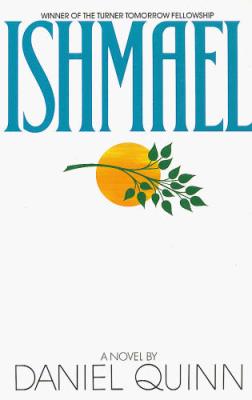
Another thing I did in sixth grade was read Ishmael. My brother was reading it for a class of his—social studies? World History? God knows, some hippie Canadian teacher assigned it to him. I always read my older brother's books and textbooks; I read one huge English Lit textbook of his from cover to cover, starting with Milton and ending with the play version of The Diary of Anne Frank. Reading “older kids' books” always felt tremendously exciting to me. I would always sneak into his room when he wasn't there and read them while lying on my stomach on his bed, my chin hanging off the edge and the book on the floor (I still read like this sometimes, but it makes all the blood rush to my head).

I was definitely way too young for Ishmael at the time. I think the only part I really “got” was the part about the creation myth, in the first 40-50 pages. I thought that was really clever, when the jellyfish said, all proudly, “And then, there were jellyfish!” as its conclusion to its story about the creation of the universe. It was an eye-opening moment, to say the least. I'd definitely never really thought about the world like that before, that we had a specific way of narrating about our place in the world. Even during Humanities 110 class, years later, in between the slides of the Greeks and Romans projected at the front of the auditorium, I would still think every once in the while “and then there were jellyfish...”

So these were some of the things I thought about while re-reading Ishmael in the Estacion Palabra reading cultural center, while little kids shouted and whooped while making Halloween decorations in the children's sections. At some point a girl dressed up as a pirate walked up to me and offered me candy; I took a green lollipop which broke as I was trying to unwrap it (I ate it anyway). I rushed through the last 60 pages in fear that I wouldn't be able to finish it before it got dark; I wanted to walk home while there was still some light outside.

It was a good book, and I enjoyed reading it. Ishmael places an interesting emphasis on how the control and use of food supply is so important for defining culture and the formation civilization. It feels very much ahead of its time for a book written in 1992, especially Quinn's commentary about First World farmers fueling Third World population explosion. It's missing the specificity and urgency that Michael Pollan brought to the argument, but it's definitely there. It feels very relevant.

It's an interesting book to read at this point in my life, as well as in this point of history. I love reading the articles about food and good eating and urban farming and agriculture that seem to be consistently appearing on the NY Times and Salon and Slate and so on... When I walked into Powell's to buy The Wings of the Dove and The Brothers K and other huge books to lug along with me to Mexico, in the front displays there was book after book about permaculture and bike riding and green living and good eating. It made my heart feel really warm. It made me want to believe that our consciousness is changing, that a very definitive, clear shift is taking place... I don't want to think that it's just Portland, either (though Portland is definitely a place where a lot of good things happen!)

I also think it's interesting how Ishmael focuses so much on this idea that things can't continue on this path for much longer, or else we're pretty much doomed. Doomed in what sense? The apocalypse is pretty scary to think about (I can't watch zombie movies for exactly that reason) but I find it SO interesting that the more people I meet who are interested in things like gardening, permaculture, gathering culinary mushrooms and sustainable development also seem to be very much comfortable (not sure if that's the right word? Aware, maybe) with the idea of apocalypse. I could go on a rift about apocalypse that adapts themes from my postmodern fiction class, but I think I will leave it at that and take it up in another blog entry.

The last thing I want to say about reading Ishmael is how freaking interesting it was to me to read this book and be like yup, this is definitely how I feel; yup, this is definitely a conclusion that I've reached. Consuming the world as our prison industry that keeps us trapped: check. Man belongs to the world instead of the other way round: check. Human settlement isn't against the law, it's subject to the law: check, check. Teaching is enough, you can't begin anywhere unless you begin changing people's minds: triple check unto infinity. I would even go so far that you can't begin anywhere unless you begin changing your mind. Oh my God, how can I possibly go about helping others unless I know how to help myself?! I think more than anything, this is the biggest lesson that I have learned in the past three years. It sounds so basic and self-explanatory, right? And yet, it is really revolutionary, but once you begin practicing kindness to yourself, it proceeds to open the door to oh so many other things...

I also REALLY liked how Ishmael tried to be positive at the end, so that I wasn't left with this feeling of “Great, we've messed up this planet and now we're screwed, start building the bunker.” Instead he does a good job of trying to make us feel good. He mainly does this by saying that we need a new vision of ourselves that's more inspiring that being scolded about how we need to recycle more and pollute less. Somehow, it's more helpful to view all of this as necessary. This lesson can be personal: If we didn't go through all of this, then we wouldn't have learned. It's more helpful to think that humans needed to go through all this, to be “the first species to experience it without being the last,” as Quinn puts it, in order to KNOW how to do things DIFFERENTLY. So instead of beating ourselves up about the past and thinking we're screwed, instead we can LEARN from our EXPERIENCES. How's that for constructive thinking?!

What I like best about this mentality is how well it works in regards to viewing ourselves as individuals. We can view our flaws and mistakes as these terrible things: “God, I've messed this thing up, this one side of my personality is like this, so now I'm basically screwed!” But instead of this vision of ourselves, we can have a vision of seeing these flaws as necessary. If you didn't have these tendencies, then how would you learn? And you can always learn. Now is never a better time.

The one last thing I want to say is that I found it incredibly ironic how after reading this book I went home to my apartment ate some ramen, the only food available in my apartment. Definitely not part of the Slow Food movement. But I figure that you gotta accept the gifts that are available to you... There's a time and a place for certain things. For example, in Portland, I can learn about gardening and permaculture and botany from Corey, who has really been quite influential and formative in setting me down this path. Oh, to date a botanist...
Urban gardening in Nuevo Laredo appears mostly in the form of papaya trees in people's front yards. Homegrown chiles are definitely the most popular.

Some songs about gardens:

Sunday, August 9, 2009

the circle game

There is always something terrifying about purchasing plane tickets, in all their stark finality:
September 12th- Fly from PDX to L.A.
- Visit Cara, Laura, other California people (Ana?)
September 16th- bus to San Luis Obispo to visit my Grandma
September 20th- bus to San Francisco
September 21st-25th- Intern training in San Francisco
September 26th- Fly from L.A. to Laredo
11pm that night CROSS BORDER INTO MEXICO (either that or sleep in the airport)
December 23rd- Fly from Laredo to PDX
August and September are gonna be some crazy months. Corey and I leave for England on August 17th. We get back on September 2nd. I work for one more week, and then I leave. AAAAAAH! Change can be scary. But change is good, I think.

I've been doing this thing since April where every day I write down in a little notebook What I Did That Day. No analysis, no introspection, just bare naked facts. My drive to record things amazes me, sometimes: how much do I really need? Paper journal, livejournal, this blog, and this notebook? Anyway, it's interesting to flip backwards and see What I Did on a certain day of the month. For example, here is What I Did on the 9th:
April 9th- sick day. Sleep a lot.

May 9th- Wake up early to go to coast with Solange and Aiden [visiting friends from Paris]. Long drive to Cannon beach. Play music from ipod. Beach windy, weather beautiful. Farmer's market in morning. Gumbo for dinner delish. Catch 4 fat mice in traps.

June 9th- Wake up from nightmare of falling in black void. Corey comforts me. Alarm at 6.20 AM. Roll out of bed and catch Max. Buy sandwiches at Safeway, $33. Big sandwich makes me sick, leave it by library for homeless. Arrive at work, program planning with Allie + Jose in Learning Center. All computers broken, I greedily grab #9, the only one that works. Trip to Starbucks with Alex for a soy latte. Talk about her caffeine overdose and hospitalization.

July 9th- Wake up late, 6.20. Bagel + coffee breakfast. Write sketch of book review and start typing up story. Take kids to Shute Park, Plaid Pantry field trip to buy seeds for bird feeders. Animal presentation by Zoo people underwhelming. Take 10-12 year olds to park in afternoon, Alexis left behind, cries. Long Max journey home. Caught without ticket by Max officer, given ticket. Cry hysterically on phone with Corey, feel better. Hang out with Laura at Laughing Planet and Hotboxx as she leaves for CA the next day.
And for an even more entertaining reference, here is What I Did in August of 2008, when we were in Ecuador!
August 9th- Rainy in morning. Wet boat ride to Cojimies, [seaside town where the Corvina or Sea Bass festival was taking place] meet up with Mariana [our tour guide friend]. 4-hour lunch. Beer and rum. [I didn't mention this, but Corey had the most amazing lunch, a soup filled with lobsters and crab and shrimp and Queen conch. Mmmmmmmmmmm.] B+J [Travel mates] leave for Quito. Corey and I watch volleyball game, dance to salsa band. Chris [other travel mate] harassed by drunk man. Bed early at 12:30pm.
Man, isn't the passage of time crazy?! I've been really fascinated with that lately: how time passes, who you were three months ago, three years ago, ten years ago. I was talking with my sister yesterday about 1999 and it's interesting the things we came up with when discussing what that year meant to us. The year we got really into movies saw Fight Club, American Beauty, Boys Don't Cry. The year we first started listening to Tori Amos. The start of 8th grade. Oh man. What do you think of, when you think of who and where you were in 1999?

Tori Amos' cover of Joni Mitchell's "The Circle Game" started playing on my shuffle just now as I type this, which is a little eerie. "We're captive on a carousel of time," indeed. I like this quote from this NY Times blog on happiness, on the difficulty of happiness and being in time:
"To really live is to accept that you live “for the time being,” and to fully enter that moment of time. Living is that, not building up an identity or a set of accomplishments or relationships, though of course we do that too. But primarily, fundamentally, to live is to embrace each moment as if it were the first, last, and all moments of time... I find it impressive how thoroughly normal it is be so tentative about the time of our lives, or so asleep within it, that we miss it entirely. Most of us don’t know what it actually feels like to be alive. We know about our problems, our desires, our goals and accomplishments, but we don’t know much about our lives."


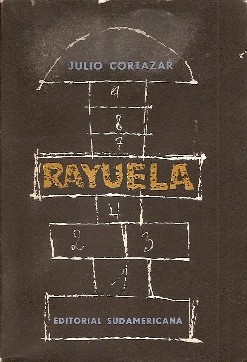
This emphasis on the present moment links in nicely with the quote from Rayuela which I used to close the last entry: "We must establish ourselves in the present once more." I think the central struggle of "Rayuela" (which I finally finished last week) is exactly that, how to fully enter the present moment of time. Oh god, I don't even know where to begin saying even a quarter of what there is to say about this book. (I feel like so many of my reviews begin with that sentiment.) I do know that I am definitely going to have to read this again. (Again, another phrase that is popping up more and more often here.) What do I say about Morelli, the author-like figure who dominates the 99 "expendable" chapters that readers "hopscotch" through?

My favorite thing about this novel was definitely the rapport between the groups of friends. Cortázar does an excellent job of capturing the rambling dialogue of friendships that have lasted a long time. This characteristic is closely related to the other aspect I liked best about the novel, which was how much it reminded me of Bolaño. As I wrote earlier, characters sitting around, drinking, bitching, wandering, pontificating: it all feels very relevant to the mid-20's, post-college lifestyle.

I have no idea where I read this (somewhere online--I swear!), but I read a quote by Cortázar, in which he said that "Rayuela" was his homage to people of his bohemian generation, and how they dealt with whole getting old and feeling irrelevant and purposeless. He also said that it was interesting that it was the young Latin American youth of the 60's who ended up really connecting with his book, as opposed to his generation. (I am gonna try to find the source for this quote, I swear.)

I dunno, it all makes me think of this letter from my favorite advice column, and how the advice he gives is really true. When I read old entries from this blog, or my paper journal, or my livejournal, or any of the 1001 ways that I've tried to record all the craziness that goes on in the small box of consciousness that I call Myself and My World, what keeps coming up for me, again and again, is how I've changed. In this case, change is definitely, definitely a good thing. I am so unspeakably and inexplicably glad and relieved that for whatever reason, over the past year I have significantly drifted away from the crushing pressure of the assumptions that Cary Tennis critiques in his column. Doing well at tasks does notbring us happiness. These preconceived, ridiculous standards and notions of what it means to "succeed" and be a successful college graduate are just... they make me want to vomit in my mouth a little. I'm smart enough to know now that it's not a game... but if it were, I'd definitely say that I'm winning. (And not in what you'd consider the traditional way, either.)

And so again: here's to not always looking to the future and instead embracing the prsent. It's Wacky Water Week with the 8 & 9-year-olds this week at the Club, and it's gonna be a week they'll never forget.

Saturday, April 4, 2009

The emerging monster: La casa verde


At first I tried reading this book in Spanish. After 3 weeks I'd read about 50 pages. Depressed and defeated, I conceded by putting down La casa verde and picking up The green house. (Trans. Gregory Rabassa. New York: Harper, 1968.)Reading it in English wasn't that much easier, but at least I wasn't looking up all these jungle-related and boat navigation terms at WordReference every 10 seconds.

It took me a while to realize that the structure of the book is like the film 21 Grams: a lot of cutting back and forth between scenes from the past and from the future, and it's only until you're well into the book that you learn the chronology. Umberto Eco said that he was aware that the first hundred pages of The Name of the Rose were the hardest, because he wanted the act of reading to be like an initiation ritual for the reader: like the monks, the reader was meant to be immersed in this really stressful, dense experience that makes you wonder “My God, how am I going to be able to get all the way through this?” Thankfully enough (as tends to be the case for these sorts of books) once you get used to the language and the structure, it's relatively smooth sailing. I'm definitely left with the feeling that I'm going to have to read this again, in order to let all of its nuances and complexities sink in properly. For the time being, I'm going to offer up this paltry review.

Overall, I'm very impressed by the narrative structure and writing style of La Casa Verde. Mario must have had post-its stuck all over his desk in order to keep track of the chronology (or who knows, maybe even he isn't completely sure of it). This would be an ideal book on which to write a dissertation because there's a lot of stuff to unpack in here. Civilization vs. barbarity (modernity vs. savagery) is obviously a big one. There's a lot of scenes of people's eyes floating greedily over beads, jewels and rubber, feeling that Sacred Hunger. Most of the relationships between people originates from commerce and trade. The main character is an Indian girl called Bonificia, who is kidnapped from her family by the military and nuns in the opening scene of the novel. If I had to say what this novel is about in one sentence, I'd have to say it's about Bonificia, and how she goes from living “saved” by the nuns to becoming a prostitute called Wildflower. Her story reminded me a lot of Pocohantus in The New World, especially in the scenes involving her relationship with her shoes.

There's another narrative thread involving Fushia, a guy with Japanese ancestry who runs away with this girl called Lalita and they end up living in the jungle together, and their dealings with Aquilino, an old man who rides his boat up and down the jungle river and trades canned goods and weapons for rubber with the Indians. There's a group of four friends who go to a bar. I'm not even going to get into the criminal gang led by this master boat captain Nieves because I'm not sure I fully understood it. And then lurking in the background above it all is the story of the Green House, how it was founded by this mysterious guy called Don Anselmo, who reminded me of Jewel from As I Lay Dying in the beginning, frolicking about on his horses, but turns into this withered lonely old man. He remains very much an enigma to the end. One of the characters call him “the one who brought civilization to Piura.” Whether that civilization is good or bad is a whole 'nother bag o' beans.

The important thing about all of these characters is that none of them are depicted as bad guys. Fushia is a little deplorable in his treatment of Lalita in the jungle, but he probably doesn't deserve the fate he ends up with (not many people would). Even the nuns have a sympathetic scene with Bonificia. Near the very end of the novel, after a description of a torture scene that sheds a lot of light in events earlier in the book, someone describes the Captain involved: “He had his weaknesses, like any human being, Don Pedro: but on the whole he was a good person.” (361) I see a lot of parallel themes between La casa verde and Sacred Hunger, especially concerning the question of how far will humans go in their treatment of each other in order for material goods.

The blind girl that Don Anselmo (the founder of the titular Green House brothel) has a relationship with is also very intriguing. The fact that she's blind isn't just in itself interesting, but the way she got blind—I don't want to spoil it—let me just say that it was grisly enough for me to put the book down for a minute, and that the blind girl is essentially a corpse come back to life. During one of Don Anselmo's monologues, he says a few things that I think may be quite key to the whole work:

And you didn't realize, you I'm so stupid, how terrible not to understand, sweet, never knowing what's going on with you, unable to guess. And there, again, your heart is like a fountain, and the questions, her sparkling, what do you think I'm like, and the inmates, and their faces, and the ground you're walking on, where does what you hear come from, what are you like, what do those sounds mean, do you think that everybody is like you?, that we hear and do not answer?, that somebody feeds us, puts us to bed, and helps us upstairs?

I found the question raised by this passage particularly relevant to some of the topics I touched upon in the previous post: how do we go about relating with other people? "How terrible not to understand," indeed. It's all the more pertinent since the book itself is difficult to understand, and Vargas Llosa obviously knew that. The most obvious example is the dialogue that's written without any breaks or signs to indicate that it is in fact two different conversations taking place at two different points at time (I hope that makes sense). By doing so, Vargos Llosa appears to be challenging the reader's concept of the "present"--that when we read, we are reading events in a certain order. In The Green House the present is all mixed up. What a provocative word, the present. Living in the present moment is difficult. And yet it's what a lot of us are striving to do. I spent a lot of time this weekend really sick from yet another cold (I am officially clipping a bottle of hand sanitizer this week) and spent a lot of time in bed reading blogs about meditation retreats and ashrams. There's so many people out there, trying to figure out the secret behind truly living in the present. It's no wonder that novels that mess with time feel particularly meaningful.

In this talk by Vargas Llosa, he discusses how in colonial times (back when the Spanish were still tramping all over Latin Americ), the language of novels was seen as this intensely subversive force. The two greatest forces in colonial Latin America were the church and the military, and the language endorsed by both didn't have much space for language in which signs were muddled and unclear. Novels were seen as frivolous, sinful even—a language of lies. It was the kind of environment where Don Quixote had to be smuggled over from Spain in the bottom of wine barrels in order to reach South American audiences. Reading a novel back then must have evoked an illicit thrill; the experience must have been a lot like reading Orwell's “1984” in Burma today. I think one of the things Vargas Llosa is trying to do in La casa verde is evoke that same subversive power that the novel must have had back then, through using this innovative language.

I am definitely going to read this book again someday. I feel like I'm just skimming the surface of the potential ideas and theories it has to offer about human nature, language and literature. Right now I can see what elements and ideas stuck out for me; in the future it'd be cool to develop a theory and argument in more detail.

Medidating on the word "present" immediately brought to mind a passage from Virginia Woolf's "The Waves" that I memorized for a final exam, way back in 2007.I feel like it is connected to the mission of this blog (specifically concerning the attempt to connect "the present moment" to poetic forms) in some vitally important yet oblique way:
"It is the first day of the summer holidays. And now, as the train passes by these red rocks, by this blue sea, the term, done with, forms itself into one shape behind me. I see its colour. June was white. I see the fields white with daisies, and white with dresses; and tennis courts marked with white. Then there was wind and violent thunder. There was a star riding through clouds one night, and I said to the star, 'Consume me.' That was at midsummer, after the garden party, and my humiliation at the garden party. Wind and storm coloured July. Also, in the middle, cadaverous, awful, lay the grey puddle in the courtyard, when, holding an envelope in my hand, I carried a message. I came to the puddle. I could not cross it. Identity failed me. We are nothing, I said, and fell. I was blown like a feather. I was wafted down tunnels. Then very gingerly, I pushed my foot across. I laid my hand against a brick wall. I returned very painfully, drawing myself back into my body over the grey, cadaverous space of the puddle. This is life then to which I am committed."

"This I say is the present moment; this is the first day of the summer holidays. This is part of the emerging monster to whom we are attached."