Showing posts with label non-fiction. Show all posts

Saturday, September 19, 2009

"poor" people


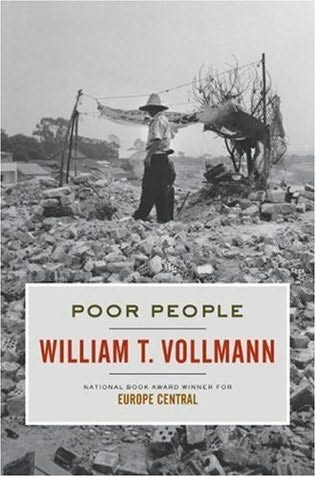
Poor People is not a pleasant read. Indeed, it is a very difficult and challenging read, and I don't doubt that its author intended it that way. There is nothing I can say in critique (or in praise) of this book that hasn't already been said by writers more articulate and with more experience and clout than me. For me, it's enough to read the title and listen to myself as I say it aloud and hear everything implicit and subtly lurking behind that phrase: “poor people. Poor, poor people. Poor! People!” In those words I hear pity, fear and inevitable relief, that the speaker by default cannot be considered as one of the “poor,” since she/he can speak of them as something seperate and apart, something radically other and different from themselves. Disconnected. If you can view others as poor and thus by default radically separate from yourself, are you automatically saying that you by definition must be considered rich?

I read this book in between all the microfinance-related reading I've been doing over the past two weeks or so in preparation for my rapidly impending internship with Kiva (I'm getting on a bus to head to San Francisco for training tomorrow). I've read some pretty interesting stuff (especially the discussions about the commercialization of microfinance and the tension in MF about being focused on economic development or the marketplace, poverty vs. profit). Depressingly enough, I don't think microfinance would offer much in the way of a solution to the “poor people” profiled in this book. To be given a loan to start a business or purchase supplies or improve your house, it's already implied that you have already have started with something, as opposed to absolutely nothing. The people in these book really have nothing: they're the the sickly old beggar women, the smelly drunk and indigent, the crippled, the beggars in subway stations holding out palms or rattling plastic cups full of coins, the refugees, the fevered mothers holding their babies and staring down at the ground before them. God, this book is depressing.

I did not particularly enjoy reading this book, which makes it hard for me to recommend it to people. I first stumbled upon it several years ago, in my stacks-shelving job at the college library. I flipped through the black and white portraits at the end and was intrigued by the number of photos that were of people from Colombia, and it's never really left my mind since. The images of beggar women in burqas in Afghanistan during Taliban rule are definitely remain the most affecting (Vollmann's discussion of poverty-as-invisibility ties in nicely to these images). The strongest bits of this book involve Vollmann-as-reporter, during which he simply profiles the folks he's interviewing. I liked the portrayal of the Russian family in which the husband was too sick from Chernobyl to work, and his foray into an off-limits oil refinery in Kazakhstan has the elements of a really angry documentary. He veers away from this simple reporting in the middle part of the book, instead going off on long tangents from his personal list of what defines poverty, such as “accident prone-ness” and “unwantedness.”

At one point in one of my flights and bus rides (it's hard to keep track of them lately!), I started doodling in my journal a list of WHY SHOULD WE FIGHT AGAINST POVERTY? The main reasons I came up with weren't so much academic as they were from my emotional gut. reason #1: Empathy: we're all born in this crazy ass world without really asking for it, and being that we're all in this sick mess together, we might as well help each other out... be a giver rather than a taker. Reason #2: Karma (in its most simplified definition): by helping others, you're helping yourself, and more importantly you're putting out a little positive energy out there into the black toilet hole of a universe for future use. Not exactly award-winning reasons, but for what it's worth that's what I succeeded in skimming off the top of my curdled-by-Greyhound brain.

I'm sure I'll have a lot more interesting things to say about poverty after I start Kiva internship, which I plan to blog about in more detail than I have so far in this space. In the meantime, one thing that really stood out for me in the wiki biography of Vollmann's life is how he dropped out of a Comparative Literature program at Berkeley “after one year with the intention of engaging life instead of just studying.” What an interesting phrase, “engaging life.” How does one go about doing that, pray? Is life something you just walk around and eventually find if you keep your mind open enough, or do you have to adopt a more proactive, aggressively-seeking approach?

For me at least, life as I've engaged it in the past week has been pretty pleasant, visiting my various girlfriends in Los Angeles and staying with my grandma in San Luis Obispo county. This evening my grandma and I looked at old photographs and I learned about Cosmo and Al, the guys my grandma “went with” before she met my grandfather. Poor Cosmo (a Navy fellow) was rejected on the account of insulting my great-grandfather's lawn, and Al (whom she “went with” for three years—long-term relationship, grandma!) went so far as to get her a ring, a fur coat and some kind of fancy box thing, all of which she rejected because “I didn't have feelings for him that way.” Poor Al.

(You can check out the non-profit(s) I'll be interning for until Christmas here and here.)

Friday, May 22, 2009

Oh, Ernesto


The person who wrote these notes died upon stepping once again onto Argentine soil; he who edits and polishes them, 'I' am not I; at least I am not the same I was before. That vagabonding through our 'America' has changed me more than I thought.


The whole month of May has been swallowed by the 750-page behemoth that is Jon Lee Anderson's biography of Che Guevara. I've been keeping Corey fully updated on the different stages of Che's life for the past three weeks: “Che's bumming around in Guatemala with not much idea of what to do with himself. God, it makes me feel so much better about my life!” “Che just arrived in the Congo. Things are not looking good.”

This whole month of May feels like it just got swallowed. I could write something about how it's been a year since I've graduated and so now I have this great manifesto... but I don't, so I won't.

My favorite part of the book was the first part, entitled “Unquiet Youth,” mainly because it dealt with what I was most interested in: what Ernesto was like as a young man and what drove him to pick his particular life path. This was my favorite part because it was what felt most relevant to me personally, as a young person still trying to figure out the best way to manage my freedom, my privilege and my choices. It was almost with a sense of relief that I read about Ernesto's lack of direction and pervasive sense of uncertainty following his graduation from medical school. I thought it was really interesting that even though Ernesto was surrounded by all these radical Communists, Socialists and Marxists in Mexico and Guatemela, it wasn't until after (as opposed to before, or during) the American intervention/CIA overthrow that he made the decision that he wanted to be more involved. As he wrote in a letter to his mother, “The bad thing is that at the same time I haven't taken the decisive attitude that I should have taken a long time ago, because deep down (and on the surface) I am a complete bum and I don't feel like having my career interrupted by an iron discipline.” (162-163) I almost felt like cheering when I read this: Ernesto gives a big stamp of approval on bumming around for a couple of years!

I thought it was fascinating to read about the gradual formation and changes of Ernesto's sense of self. It was really interesting to me reading about how your childhood can have such a monumental effect on you throughout your life: as a little kid, Ernesto was so constantly sick with asthma, he was babied a lot by his mother, but also developed this incredibly fierce iron will to compete (like in rugby) and be considered as “good” as the other kids. As the biographer describes it, his asthma also led to his sense of isolation and resulting craving for camaraderie, which the author sees as the main reason for Ernesto's fierce adoption of the Cuban cause and intense loyalty to Fidel Castro. Being a guerrilla made him feel like he was a part of a group, that he had friends, he had comrades. God, it makes me wonder how my childhood is affecting my current life. It also makes me wonder if life can really be seen as a narrative this convenient, that this straight lines can be drawn from our childhood right up to the present day. I guess it's helpful to think so.

When Ernesto adopts 'Che' as his name, I couldn't help but think of Into the Wild and Alexander Supertramp. “Call each thing by it's proper name,” he writes in his journal near the end of the movie, signing his death note with his birth name, Christopher. Man, how hard is that, trying to figure out what your proper name is! Talk about easy say, hard do. It's something that might take a lifetime to do.

At one point, one of Che's comrades says, “In spite of everything, you can't help admiring him. He knows what he wants better than we do. And he lives entirely for it.” I think this is an accurate reflection of my own feelings. I could never, ever live like Che Guevara—hell, very few of us could! It takes an incredible iron will to do so. At times, he was a hardcore maniac to the point of insanity, justifying the executions in Cuba as “justice at the service of future justice.” (458) I thought it was funny how he was particularly enraged by “individualistic” university students with “middle-class' mentalities: “perhaps in the students he saw his self-absorbed former self, and it rankled him. He had given up his self, his 'vocation' for the revolution; why couldn't they?” The answer, Che, is we're all different. We are all different people with different paths in life, and it's not helpful to say that one path is better than others or is the “right” path or whatever. Some of us are constantly seeking happiness and contentment, others find it pretty quickly and effortlessly. That's just the way it is. That's what makes us so valuable as human beings, right? Our individual, crazy, unique messed-up selves, these ridiculous consciousness we're carrying around in the mushy gray matter enveloped behind our thick skulls?

In the biography there are some parts that indicate that Che felt isolated at times, like he was living this double life, due to his commitment to the “revolutionary cause.” At one point he says to Alberto (his old travel companion from The Motorcyle Diaries) “I live like someone torn in two, twenty-four hours a day, completely torn in two, and I haven't got anybody to tell it to. Even if I did, they would never believe me.” (608) As he writes to his mother, “I am still the loner I used to be, looking for my path without personal help, but now I possess the sense of my historic duty. I have no home, no woman, no children [I'm sure his wife and daughter were a bit bummed to read this], nor parents, nor brothers nor sisters, my friends are my friends as long as they think politically like I do and yet I am content, I feel something in life, not just a powerful internal strength, which I always felt, but also the power to inject others, and an absolutely fatalistic sense of my mission which strips me of all fear.” (433-434) I don't know if I could throw my life in a similarly all-in fashion in pursuit of one single goal.

It makes me feel so young saying this, but I remember watching The Motorcycle Diaries with my freshman year boyfriend in theaters on our very first date together and being extraordinarily moved. I was particularly struck by the montage of black and white photos at the end of the different people that Alberto and Ernesto. Here's an excerpt from my personal journal that I wrote on March 19th, 2005, (Gaaaah!) shortly after I came back from the spring break service trip to Juarez:

These are some things that I cannot quite get my head around yet:

1) The difficulty between making a connection between what you think and what you do. This is something I was discussing with Ian the other day in the rhodadendron (god help me, I can never spell that word) gardens. It’s very easy to think that “I”m liberal” or “I’m creative” or “I’m a good person”, but if you don’t acutally DO anything physical in this world that serves as a concrete, physical testament to that belief, well then it just doesn’t sound very realistic to say it anymore, innit? This is something that I admire very greatly about Che Guevara upon reading “The Motorcycle Diaries”: say whatever you might like about him, but he was extremely effective at forming a connection between his ideas and his actions. The equal images of a clenched fist and a mouth streaming ideas, resting side by side... I think I’m going to have to check out some books from the library in order to learn more about him and Cuba from a more academic, scholarly point of view, because all I’m going on here is the adoring worship of the people that I’ve been surrounded by throughout my life. I think it’s creepy that “The Motorcycle Diaries” affected me much more than I ever thought it would. At the time I just thought it was a big deal because it was my first American date or whatever, but look at me, I don’t know how many months later and still thinking about it. I guess it must have resonated very deeply within me, and I have this picture of my soul being struck like a guitar string and still quivering back and forth, months later.


I went on to rant a little about how I was changing my major to General Literature or Spanish as opposed to English and Creative Writing, because I felt it would be more useful. I used an interesting phrase, about "learning to balance the Howard Roark and the mother in me." A struggle that still continues to this day. God, I'd forgotten how excruciating reading old journal entries can be. If nothing else, they serve as a reaffirming validation that yes, it is possible for people to change, and yes, I *have* changed since I was a freshman. Thank god. Anyway, I just thought it was funny, reading what I wrote all the way back then, in context of me in the process of finishing this enormous biography.

It was fun reading about Ernesto's early life because his writings were equally melodramatic. I think he brought a very good definition to being a traveler rather than a tourist: roughing it, being dirty (his lifelong nickname was “El Chancho” (the pig) from how infrequently he changed his clothes and how nasty he consequently smelled), being as open and receptive as possible. I've been thinking lately that I want to try to be more like a “tourist” in my everyday life; that is, to adopt the same mind frame that I aspire to have while I'm traveling here in what I consider my “static” period: working, living in Portland. My definition of being a good traveler is to be as open as possible to new experiences, to try to stay away from judgment. When you're having an experience, to not so much worry about quickly judging it or summarizing it as “good” or “bad,” but instead try to reflect that “oh, this is an experience that I'm having,” and just kind of try to be in the moment, and then reflect upon it in full later. I think this is a good way to avoid the kind of stress you inevitably run into while traveling: late buses, mean people, bad food. I mean, I run into that kind of stuff here in Portland as well, but to some degree it feels less heightened, less intense than it does when I'm in a different country... maybe because I've been living here for a while now.

Here's to being a good tourist in everyday life.


Lying introspectively like Jorge Malabia on his back: a common motif among young brooding men of the Rio Plata region.

Thursday, May 7, 2009

April Books


Deep Economy: The Wealth of Communities and the Durable Future

A very well-written, readable and well-argued book. McKibben basically argues that we need to redefine our understanding of classic economics: namely that more doesn't always necessarily equal better, not just for sustainable reasons (we're running out of resources on our planet) but for personal reasons (more stuff, bigger businesses and expanding economies aren't making us happier). It's an interesting argument and he follows through with it pretty well with practical suggestions on how we can refocus our energies on building more local economies and communities. I really enjoyed McKibben's discussion of behavioral economics and the science of happiness, two topics I find really interesting and know very little about. There are a few moments that are a little too "oh god, you are such an environmentalist from Vermont," like when he suggests giving bus drivers your personal mix CDs to slap on the stereo. Also, McKibeen seems to be writing for an audience that he automatically assumes is anti neoliberal and free trade, so if you're not, that might be a problem for you. (Disclaimer: it wasn't for me, I'm just trying to be fair and balanced here.) However, overall McKibben does quite a good job of making practical suggestions for how to make the world a better place and how to be more hopeful in general, which is a nice change from the more general "oh-god-we're-all-doomed" feeling of recent months.

The one part of the book that I keep summarizing and quoting to all of my co-workers and friends is the section where McKibben talks about the science of happiness. He asks the very interesting question of what was the time in our lives when most of us would say that we were happiest. For most people, they would say volunteering, with family, with friends, etc.... being around others. Being *out* of yourself and your chatty little head, and instead feeling like you're a part of something bigger than yourself. That really hit the nail on the head for me, and put into words something I'd been struggling to articulate to myself for a while now: what has brought me some of the highest levels of joy in my life was when I felt like I was "out of myself," part of something larger, whether in the hugeness of nature or within a community of people (like Los Embajadores in Tijuana), not as this self-internalizing super efficient/proficient utility machine.

Whether my enjoyment of finally having this particular feeling put into words actually leads to me doing or deciding something concrete remains to be seen. I think of my advisor's advice to me of why not to go to graduate school, at least not for literature, and it really rings more and more true for me by the day. He was like "travel! Get out in the world! Work with kids!" This summer, I'm gonna garden.

Rating: Read This Book Before You Die


Keep the Aspidistra Flying (George Orwell)

An enjoyable if not earth shattering read. Orwell is the master of succinct, perfect sentences. Along with watching "Revolutionary Road," this book definitely helped put me in a weird mindset about the whole settling down into a comfortable career and lifestyle deal, while thinking that you're this person who's "better" than everyone else around you. The happy ending feels a little forced; if Orwell had been truer to the tone of earlier parts of the book, the characters' fate would have been a lot darker. Orwell said in a letter that when he wrote it, "I was half starved and had to turn out something to bring in £100," which explains a lot. All in all, a nice fictional companion to "Down and Out in Paris and London."

Rating: Read This If You're An Orwell Fan


El Juguete Rabioso / The Mad Toy (Roberto Arlt)

Another book about a character whose life is really affected by money (namely his lack of it). I would have really dug this book in high school, a lot, and probably would have had a little bit of a crush on Silvio, the main character.

The Mad Toy took me a long time to get through, despite its 142 pages. I don't really know why. I don't exactly know what to make of this book. I'm not sure what the title refers to, for one. I guess "the mad toy" is Silvio himself, and the title refers to the way in which he often finds himself inevitably being used as "a toy" by people in power and by the mentors he consistently keeps seeking (and failing) to find. The final chapter (ominously titled "Judas Iscariot"), in which Silvio deliberately betrays a mentor/friend, can be understood as Silvio's attempt to subvert this feeling of always feeling like a plaything to others whims, and instead claim some agency of his own (at the stake of his friend, which is troublesome).

The first chapter is about Silvio as a young boy and his adventures in inventing amateur weapons of war and his life of crime as a book thief, smuggling encyclopedias and Baudelaire out of the school library. I love the sentence that he uses to introduce an anecdote about one of his inventions, copying the language of the pirate and Dumas paperbacks he loves. "A resounding adventure was that of my cannon, and happy am I to recall it." I like to repeat this phrase quietly to myself. It adds so much, narrating the events in our lives with a deliberate aesthetic style!

Needless to say, it says a lot about Silvio that his first career is as a book thief. He goes on to try working as a bookstore assistant, an apprentice airplane mechanic for the military, and a paper salesman, without finding much satisfaction. However, what seems to keep him going is his ability to aesthetically narrate his life and his surroundings, infusing it with what he experiences as an inexplicable joy:
I'm not crazy, one thing is certain, though... I know that life will always be extraordinarily beautiful for me. I don't know whether other people will experience the force of life as I do, but inside me there is joy, a full, unconscious kind of joy. Everything surprises me. Sometimes I have the feeling that it's just an hour since I arrived on earth, and everything is flaming new, fresh, beautiful. (150)


Silvio's goals by the end of the book are to "see glaciers and mountains and clouds." That sounds pretty good to me. The last sentence of the book is "I tripped over a chair, and kept going." It reminded me a lot of the last sentence of Catch-22. You jump out of the way of the whore's knife, life tangles you up and catches you off guard, but you gotta keep going.

Silvio's final mentor figure is the policeman who receives his confession/ratting out his friend, but doesn't arrest him. The wisdom he imparts to Silvio is "we obey a brutal law that's inside us. That's it. We obey the law of the jungle." A very true thing it is, human brutality. And yet it's not the only true thing. We feel as human beings, profoundly and deeply. What is it that drives some people to not just see life as a drudgery and a chore, life as 9-5, as a series of steps: college, job, marriage, children, retirement death? What is it that drives some people to make the conscious choice to love life, to see it as sweet?

I'd like to keep joy inside me. I'd like to aesthetically narrate my life, my day-to-day.

Love, poetry, gratitude toward life, toward books, and toward the world would send an electrical charge through the blue sinews of my soul.
It wasn't me, but the god inside me, a god fashioned from pieces of mountain, forest, sky and memory.
(123)


Rating: Read This Before You Die


When Things Fall Apart: Heart Advice for Difficult Times by Pema Chödrön

A self-help book written by a Buddhist Canadian nun. I first heard of this book when my yoga teacher read aloud a passage at the end of one class that really connected to me. I recognized a lot of her advice from stuff my counselor gave me to read way back in junior year. She talks a lot about loving compassion, the importance of breathing in and out, exercising non-judgment. It's not just all theoretical, there's a lot of practical advice in her. All in all, a very wise book by a very wise lady. Even if you're not in a time of your life where things are falling apart, there's definitely some stuff in here that you could use.

Rating: Read This Book Before You Die

In April I also read Phillip K. Dick's Flow My Tears the Policeman Said and Ubik, both good reads if you're a Dick fan (hee), but not necessarily vital. I also read Faulkner's The Wild Palms, which hopefully I'll be able to devote an entire post to this weekend. And that was my April.

Sunday, March 15, 2009

Here an Intellectual, There an Intellectual, Where to Put the Intellectual?

The concern of the intellectual is by definition the conscience. An intellectual who fails to understand what is happening in his time and in his country is a walking contradiction, and those who understand but do nothing will have a place reserved in the anthology of tears but not in the living history of their land.--Rodolfo Walsh, Seminario CGT, May 1st 1968


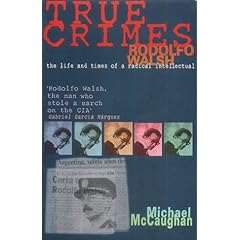
I've been reading a biography of Rodolfo Walsh (True Crimes: Rodolfo Walsh and the Role of the Intellectual in Latin American Politics by Michael McCaughan, Latin American Bureau 2000) which is also an anthology of his fiction and journalism translated into English. Not only has it been an interesting read, but it also has some eerily appropriate parallel themes with my current ponderings. Walsh was an Argentine writer and journalist, born of Irish ancestry and raised in a Catholic boarding school, wrote a In Cold Blood-like non-fiction work called Operacion Masacre, went to Cuba shortly after the Castro revolution in order to work in the news industry there and weirdly enough ended up intercepting a code from the CIA that gave away the location for the Bay of Pigs invasion, abandoned fiction to devote himself full-time to journalism and underground resistance work in the 70's once the political situation in Argentina really went down the drain, and was shot and killed in a shoot-out by the military in the middle of the street (his body was never recovered). He is counted as one of Argentina's 30,000 “disappeared” of that period. Isn't that weird, how you can sum someone's life up like that, in a couple of greatest-hits sentences? (I inevitably wonder what my own sentences will consist of...)

I haven't finished the book yet (I'm at the part where he gets really intensely involved in underground resistance), but there have definitely been some moments in the book that have given me pause and thus merit some reflection here. The short stories are excellent, particularly "Footnote" and "Esa mujer" (check them out). There's a lot of discussion in the book (as indicated by the subtitle) about Walsh's struggle with the role of the intellectual in society, which I found personally quite relevant... I feel uncomfortable about calling myself an “intellectual,” but I definitely read a lot, and like thinking about things that probably a lot of people would consider quite silly, such as “what is the role of the intellectual in society?” (After Barry-O's election and Georgie's reign, this question has been given a bit more attention.) I went to an expensive college, my parents are well-educated. I like reading fiction, writing fiction (goes without saying I need to do this one more), writing and talking about fiction. Yeah... I am pretty much a bourgeois intellectual.

I guess I struggle a lot with how relevant all of this is (the reading and writing and talking about fiction). I like doing a lot of other stuff to, outside of this—I like working with people, I like being with people, I like doing things that feel like they make more of a difference in a day-to-day sense. My job isn't super prestigious or super high paying or anything like that, but someone's got to hang out with these kids and give them something positive in their lives, you know? I dunno, I'll just say that I find it relevant and then leave it at that. My struggle (which I was reminded of again and again in this book) is finding a balance between these two things: the whole isolated hermetic ivory tower writer and intellectual tradition versus the nitty-gritty, down and dirty, involved in the world role. Is there a way to combine the two? Does it really come down to choosing one or the other? Is the role of books in my life destined to be restricted to a hobby, a sideline entertainment, or will it become a career? (The latter's up to me to decide, I guess.) Interestingly enough, in some of the interviews with family members and friends, a lot of them express frustration about Walsh's choice of journalism over politics... there's a certain attitude in their words of "oh, he could have been one of the greatest Argentinean fiction writers, he had so much potential, but then he went ahead and got involved in politics and justice." I don't think there's really a right or wrong choice; it's just a matter of the type of person you are... some of us are content, others of us are a little more scattered and need to explore different roles and careers in order to find that kind of satisfied fulfillment...

I folded over the upper-right corner on the page where Walsh is having a conversation with another young aspiring author, in his early 20's (this really hits home in terms of the theme of this blog):

“These are different times, Nicolas, and this is a time for a bigger undertaking. When you're trying to change important things, then you realize that a short story, a novel, aren't worth it and won't satisfy you. Beautiful bourgeois art! They taught us that it was the supreme spiritual value. But when you have people who gave their lives, and continue to, literature is no longer your loyal and sweet lover—it's a cheap whore. There are times when ... every spectator is a coward or a traitor. This might be a pain for the more intimate questions of the soul but that's the time we're living in.” (218)


You see this same question in a lot of Roberto Bolaño works. I just read La estrella distante (Distant Star), a 140-page novella that makes for a quick and thought-provoking one-day read. This book talks more about writers and poets than anything else, specifically one poet, Alberto Ruiz-Tagle, who gets involved with the Pinochet Regine by writing state-approved poetry in the sky. If you like Bolaño, you should definitely read this work. I never realized how influenced by Borges he was, either. I'm starting to see this as a common denominator in a lot of the stuff I've been reading or re-reading lately (Lolita, The Island of the Day Before). I don't want to give too much away about the book (part of its impact is being shocked by its unexpected development), but the novel deals with the same question discussed in the Walsh biography: what is the relationship between literature and real events? Is turning to literature when unimaginably violent events are taking place in your immediate world brave or just blind and stupid? The insightful New York Times book review of Bolaño's The Savage Detectives makes an important point:
What can it mean, he asks us and himself, in his dark, extraordinary, stinging novella "By Night in Chile," that the intellectual elite can write poetry, paint and discuss the finer points of avant-garde theater as the junta tortures people in basements? The word has no national loyalty, no fundamental political bent; it's a genie that can be summoned by any would-be master. Part of Bolaño's genius is to ask, via ironies so sharp you can cut your hands on his pages, if we perhaps find a too-easy comfort in art, if we use it as anesthetic, excuse and hide-out in a world that is very busy doing very real things to very real human beings. Is it courageous to read Plato during a military coup or is it something else?

Yeah... I'm just trying to figure stuff out, I guess. I am in a certain position of power and privilege, in the sense that I have choices of what to do with my life. And just like in Spiderman, "with great power comes great responsibility." So I am trying to figure what I want to do with my brain, and how I can find something to do with my brain that feels both worthwhile and valuable. So it goes.


Maybe getting glasses is the common denominator behind figuring everything out.

Saturday, February 28, 2009

Bowing, Not Knowing to What


I like thinking (and reading) about death. Maybe that makes me sound a little too much like Woody Allen. I've kind of been feeling like Woody Allen lately, specifically like the scenes in Annie Hall where he buys her all the books on death theory, and then at the end of the movie when she packs them all up to return to him. It used to scare me a lot: the idea of not existing anymore, of simply not-being. "What about me!" the little voice inside my brain squeaks out. "What about all the things I have built and constituted and gathered over the years? All the books I have read, the songs I have listened to?" There's something very freaky about all that just being wiped out—erased, vanished, like a poor dead computer. There's a really great part in David Lodge's Thinks...:
" 'So you think that when we die we just cease to exist?' she says, when the waitress has gone.
'Not in an absolute sense. The atoms of my body are indestructible.'
'But your self, your spirit, your soul...?'
'As far as I'm concerned those are just ways of talking about certain kinds of brain activity. When the brain ceases to function, they necessarrily cease too.'
'And that doesn't fill you with despair?'
'No,' he says cheerfully, twisting creamy ribbons of tagliatelle on his fork. 'Why should it?' He thrusts the steaming pasta into his mouth and munches vigorously.
'Well, it seems pointles to spend years and years acquiring knowledge, accumulating experience, trying to be good, struggling to make something of yourself, as the saying goes, if nothing of that self survives deat. It's like building a beautiful sandcastle below the tideline.'
'That's the only part of the beach you can build a sandcastle...'"

This is a pretty good representation of the internal dialogue in my head re: death (spaghetti-twirling and all). Mine is a little more hippy dippy, lately. I can't find the quote right now, but Tori Amos said something about her album from the choirgirl hotel once, written in the aftermath of several miscarriages, that it was her attempt to hold hands with death, to laugh and play with it a little. This is something I can relate to, in regards to trying to do concrete, day-to-day little changes and efforts in my everyday life... just hold hands with death a little, from time to time, not let it drag me around, but be aware. Not deny it, not run from it, not let it make me panicky and small-feeling and frenzied. Come to terms with it, that it's there. Death does not come from the outside, it comes from within.

Thinking about death has been my strategy as of late to put things in perspective. Over sushi last night with Corey, he asked what I thought of the first 2 months-ish of Barry O's presidency, specifically regarding his escalation of the conflict in Afghanistan. Maybe it was the terrible ginger cocktail, but my response was "well, we're all going to die anyway, aren't we?" He said my comment wasn't particularly helpful, and kind of a terrible perspective to live with. Agreed. I guess what would have been a better answer was that politicians will be politicians, you know, and in the end, we're all just going to have to live our lives...

Faust writes a very interesting, readable history on the Civil War, using death as a jumping-off point in order to discuss the Confederate defeat and the Reconstruction in a new way. The emphasis in this review ought to be on "readable"; man, they sure teach them at Harvard to write those topic sentences! It's so easy to follow Faust's arguments in this book. I especially like the one-word gimmick for the chapter titles, making it easier to remember what they're about: Dying. Killing. Burying. Naming. Accounting. Good stuff.

Basically, Faust discusses how the kind of death produced by the Civil War--specfically death on a massive, unprecedented scale, caused by technologies whose effect on battle strategies was not foreseen--affected a lot of different things: the desire for the Civil War to end and the formation of a strong federal state post-war, to give the two most-discussed examples.

My favorite parts of the book were Faust's discussion of citizens' understanding of waht constituted "a good death": the proper way to die. Home, on your bed, surrounded by family and friends, able to give your last words in a clear and understandable fashion, make it clear that you're happy about going off to hang with God, etc. The Civil War made this form of the hors mori a tad difficult. You could get blown to pieces on the battlefield, making the issue of resurrection on Judgement Day a very iffy question, if you had no body to be buried (and thus raised). You could get shot randomly by snipers while drinking your morning coffee. You could be one of so many dead that it was very unlikely that you would get a proper burial and would instead have to settle for a mass grave (probably after rotting for a while on the battlefield first). Faust's chapter on bodies and burying is one of the most interesting of the book; she mentiones how Gettysburg citizens walked around for months afterwards pressing perfumed handkerchiefs to their faces because the smell of rot and decay just overwhelmed the town. The little mentioned facts of history.

Over that same sushi meal, I asked Corey what he wanted to do before he died. Mine are:
1- Go to India and Nepal
2- Write and publish a book
3- Travel through the rest of South America
4- Hold my child in my arms
If I can do these things, I think I will be a pretty happy camper come my own hors mori. Here's to doing what little we can to prepare for the inevitable.

FOR THE ANNIVERSARY OF MY DEATH by W.S. Merwin
Every year without knowing it I have passed the day
When the last fires will wave to me
And the silence will set out
Tireless traveler
Like the beam of a lightless star

Then I will no longer
Find myself in life as in a strange garment
Surprised at the earth
And the love of one women
And the shamelessness of men
As today writing after three days of rain
Hearing the wren sing and the falling cease
And bowing not knowing to what

Thursday, January 1, 2009

"Team of Rivals: the Political Genius of Abraham Lincoln"


I chose to read “Team of Rivals” because reference to it became increasingly fashionable in the media following Obama’s election, particularly in the frenzied Who’s-It-Gonna-Be coverage of his cabinet picks. It got to the point that some articles were even making ironic, self-aware references to the media’s obsession with the term, commenting sarcastically “insert obligatory ‘Team-of-Rivals’ reference here!’” Rather than being overrated, "Team of Rivals" deserves the accolades: it's an exceptionally involving, very readable, engaging history book. Goodwin has plenty to interest everyone here, from the hardcore Lincoln scholars, to the Civil War battle plan and strategy aficionados, to the "people's history of the U.S." fans. There's a lot of eerie parallels between present and past that make for particularly fun reading--I folded the corner of the page over every time I read something that reminded me of Obama's campaign or lifestory, so the first half of the book (which deals with Lincoln's pre-president vida) is dog-eared with all these little folds (hopefully things will end better for Barry-O than they did for Abraham). 750 pages is a little dautning, so maybe save this one for when you have long commutes on a bus or subway, or an extended Christmas vacation/snowpocalypse, like I fortunately had.

It can be tricky to go beyond the more obvious parallels between this book and the current state of things—little known Senator from Illinois, famed for his eloquent speeches, goes on to win the presidency in an election where Ohio is a decisive state, winning the party ticket nomination in an upset over his rival, a long-time experienced Senator from New York who was assumed to be the favorite (stop me if this is starting to sound familiar to you). Time will tell if current events continue to reflect (follow?) the path previously set by history (for example, I will be okay with Hilarly and Obama becoming best buds on the level of Lincoln and Seward’s friendship, but I am definitely not okay with a deathbed or assassination scene).

The central thesis of the book is that Lincoln was a cool, chill dude whose biggest asset (or what specifically made him a “political genius”, as described by the book’s subtitle) was his ability to emphasize with others, to put himself into other people’s positions. Near the end of the book, Tolstoy is quoted as describing Washington as classically American, Napoleon as classically French, and Lincoln as the classic humanitarian, thus explaining his appeal to not only starry-eyed hopeful American presidential candidates, but also to wild white-haired Russian authors.

I’ve read at least one article/review arguing that the basic premise of constructing a “team of rivals” is fundamentally false, because by building a team out of political rivals, Lincoln gave himself a lot of unnecessary crap and drama to deal with. This is definitely true in the case of the unfortunately named Salmon P. Chase, one of Lincoln’s rivals of the Republican nomination, who doesn’t come off too kindly in the latter half of the book (i.e. even after Lincoln gives him the prestigious Treasury Main Boss position, he comes off as a whiny pants consumed by the delusional belief that the presidential nomination was still his to be had in the future, instead of just making the best of things with his current position like Seward). However, I’d say for the most part Godwin effectively argues that Lincoln’s “Team of Rivals” (last time I use that phrase in this review, I promise) did a pretty good job, all things considering. Stanton’s badass military plans in particular make Lincoln look pretty smart for choosing him for Secretary of War. Goodwin argues that by choosing the men he thought would be the best for the job, instead of his friends or people who were just going to suck up to him, Lincoln revealed himself to have the admirable quality of being capable of burying old grudges (such as Stanton calling him “a long-armed ape” upon their first encounter as lawyers in Illinois) instead of being bitter or petty. Lincoln also demonstrates an admirable capacity of taking the blame for things (even for things he definitely didn’t need to take the blame for). My general impression from this book is that so much of politics seems to involve this very fine dilly-dalling dance, hopping back and forth between the thin line of offending one person or damaging the pride of another. Que stress. Good luck, Barry.

The book departs from the premise that by understanding the character and conduct of the men who were on Lincoln’s cabinet, Lincoln’s own exceptional qualities as a politician will stand out more clearly. Goodwin does an excellent job at this. By explaining how Seward and Chase had made enemies by appealing to the abolitionists and using a lot of blatant anti-slavery rhetoric in their speeches, Goodwin in turn explains why Lincoln took such a moderate stance on slavery throughout the years of his presidency (doing so without excusing said moderate stance). As I understand it, one of the reasons why Lincoln won the nomination (and then the presidency) was because he simply hadn’t been in politics long enough to make enough enemies, like Seward and Chase (and Clinton).

One of the more interesting points Goodwin makes in the book is that no one can ever know for sure Lincoln’s personal feelings on race, save for the man himself. However, she points out in all the Lincoln scholarship, in all the countless letters and memos and notes he and his secretaries and contemporaries left behind, there is not a single act of racial bigotry or racial slur to be found. Lincoln also gets plenty of respect and kudos from Fredrick Douglas once they finally meet each other (before meeting Lincoln, Douglas bitches a lot about how he isn’t doing enough to help the slaves—fair enough, in my view). It sucks that Lincoln wasn’t this totally radical, ahead of his time guy who from the beginning was like “Aight bitches, no more slaves, equal educational and employment opportunities for all, and lots of other good stuff,” … but as Goodwin argues, that simply wasn’t what the country was ready for at the time. As I understood it, a lot of what being president often entails is taking the middle ground. That being said, the Emancipation Proclamation was a totally great, non-middle ground thing to do (there’s a very dramatic scene that would be great in Spielberg’s movie version, where Lincoln takes a deep breath and tries to calm down before signing the Emancipation act because he doesn’t want his signature to come out shaky and thus leave people believing that he was hesitant). And this is where the whole Lincoln’s Great Empathy Quality comes in again. Lincoln’s empathy entailed him to put himself in the place of the American people, to understand how they felt and what they were thinking and where exactly they stood in public sentiment, what they were ready for. With the Emancipation Proclamation, Lincoln kind of adopted a common reverse child-psychology technique: when you expect great things from people (and make it clear that you expect them), it’s easier for people to do great things. (This feels incredibly reminiscent to me of Obama’s call to young people for service and political participation)

The book starts out with a biographical description of each man’s early lives. Once Lincoln wins the presidency, he naturally assumes a more central role. I found the latter half of the book the most interesting, as it describes the Civil War and the dealings of Lincoln’s administration in great detail. The book kind of splutters out at the end in the last chapter describing Lincoln’s last term, but perhaps that is to be expected of a 759 volume.

One interesting theme that emerged in this book was Lincoln’s relationship with death. It makes me want to read that recent academic-looking book about Death and the Civil War (hello, Chapter Two of thesis again—maybe I should go all the way and start attacking all kinds of Death Criticism in general). In the early sections (which I’m afraid I can’t remember all too well—so many hundreds of pages ago!) Goodwin talks about the death of Lincoln’s childhood sweetheart and how that affected Lincoln’s attitude towards death. Unlike his peers Seward and Chase, who populated their speeches with grandiose religious imagery and references to a “better life” following this one and the “designs” of a creator, Lincoln tended to avoid such imagery in his speeches. Instead, his rhetorical flourishes were more grounded in man himself, in the individual's capacity for self-betterment, in earthy references (reflecting Lincoln’s fondness for tall-tales, humorous anecdotes and his Kentucky, down-to-earth background). I’d definitely like to read more about attitudes towards death before and after the Civil War (and in the latter half of nineteenth-century in general). I’d like to read more about the history of slavery in the U.S. and the Reconstruction. This book made me want to learn more, it made me think, it made me ponder, it made me crave, and quite frankly that is quite a compliment for any work.

I’d like to close this review with some selected quotes from this book that seem relevant to the title of this blog (in which “doubt’s best ally” is “hope”): “ ‘Having hope,’ writes Daniel Goleman in his study of emotional intelligence, ‘means that one will not give in to overwhelming anxiety, a defeatist attitude, or depression in the face of difficult challenges or setbacks.’ Hope is ‘more than the sunny view that everything will turn out all right’; it is ‘believing that you have the will and the way to accomplish your goals.’ “(631) Throughout the book, whether dealing with his political defeats, the death of his son, the violence of the war, “As he had done so many times before, Lincoln withstood the storm of defeat by replacing anguish over an unchangeable past with hope in an uncharted future.” (521)

To paraphrase Vonnegut: What a man. What a war. What a language.

Thursday, September 11, 2008

More Books Read In Ecuador

Here are some more reviews of books I read in Ecuador.


Lies My Teacher Told Me (James W. Loewen)

This book seemed okay to me at the time when I read it, and then exceedingly less interesting after I read ¨A People´s History of the U.S.¨ The information in both books is basically the same! At least this book employed a copious amount of footnotes, making his claim of a plague that killed off the majority of the Indians before the Spanish got there decidedly less dubious. My eighth-grade self would have probably really liked it.

Rating: Don´t Bother


Intelligence in Nature
A very hippy-dippy book, donated to the house by one of the beloved tour members, who herself was somewhat hippy-dippy but also very cool (throughout the tour I kept thinking ¨wow, I want to be just like you when I grow up!¨, minus the Dead Head phase, I guess). Throughout this book I kept wishing that it had been written by a scientist instead of an anthropologist. Anthropology´s fine and dandy, it´s just that every time the author self-righteously asked one of his interviewees whether they thought it was moral to do experiments on butterflies and slime mold (!), the inner hippie-dippy hater in me cringed. However, it was an interesting enough book, very readable, an anthropologist´s attempt to answer the question ¨is there intelligence in nature?¨ which inevitably leads to all sorts of other questions, like ¨what is knowledge?¨ which I liked a lot, because it reminded me a lot of (WHAM!) my thesis.

There was one quote in the book that I liked enough to write down, in the last chapter, which was about nature´s constant tendency to transform itself: Now other species seem more human to me, and humans seem more natural. Recognizing that the capacity to know exists outside humanity leads to a richer, more adventurous, and more comfortable life. Instead of trampling blindly all over the planet, we see that life´s prodigious powers are housed in all its denizens.¨ I like the idea of the necessity for constant change. I guess I fear growing stagnant, stale, crusty and moldy over the edges. It´s been a long time since I´ve had a routine. Never mind, I guess going to classes is a routine of sorts. It´s really kind of ridiculous how thrown out-there you are into the world after college. Another adventure!

Rating: Maybe Read This, If It Seems Like Your Thing


The Prophet
Definitely one of my favorite books now. I´d started but never finished it a dozen times before, but on a quiet day that I meant to be deliberately meditative and introspective, this was the perfect book to read. I can´t really describe it… the closest fiction author I was reminded of was Calvino, minus the po-mo stylistics. Anyway, you should just own a copy of this book in your house, so that way, one day when you´re in the right mood (preferably after doing yoga and listening in full to Tori Amos´ Under the Pink, you can read it.

Rating: Read This Before You Die


A People´s History of the United States
Again, another book that took me all summer to read. Even now I´m still not sure if I technically read it ¨all,¨ since the majority of it was consumed at bus stops, with me flipping around to different sections, depending on what I felt like reading about at the time. There might be a part in there about early revolutionary America I never got around to. But yeah, I knew this was a famous, best-selling book, so I was surprised at the strong Socialist Rhetoric. I thought America hated socialists! Anyway, one thing I found completely, emphatically unforgivable about this book was the fact that HE DOESN´T USE FOOTNOTES. HOW CAN YOU CALL YOURSELF A PROPER HISTORIAN AND NOT USE FOOTNOTES? THE MIND BOOGLES. End caps lock. The lack of footnotes somewhat ruined this book for me, in a sense, because it meant that anything he said, I automatically questioned myself, ¨where´s the source for this? Is he just pulling this out of his butt?¨

Anyway, just so you know, the most interesting chapters of this book deal with the labor and union strikes of the early 20th century. Maybe I´m just biased, because that´s a period of history I know very little about (Corey said he preferred the Civil War and Reconstruction bits, which are good too, if a bit skimpy, perhaps unavoidable in a book this large). Also, I thoroughly enjoyed reading the chapters about Reagan and Clinton, again, another period of history I know very little about, even though Clinton was the president throughout my childhood. I was too young and out of it to care about politics, though, the most memorable things I remember thinking about the Clinton presidency is reading in the Scholastic newsletter in first grade that Clinton played the saxophone and thinking that was very exciting.

Rating: Read The Parts of This Book That Seem Interesting To You Personally


Collected Fictions (Borges)
This book is awesome, Borges is awesome, what more can I say. I can´t believe it took me this long in life to finally read Borges from cover to cover, as opposed to just the odd Borges tale in class and different compilations. I especially like how the book jacket in this edition includes ¨tigers¨ as one of Borges constant themes, among the more obvious: labyrinths, libraries, detectives, gauchos, and so on. Really, I´ll have to go away for a while and then come back before I can write eloquently about Borges. He makes me want to continue studying literature, and that´s saying something. ¨The South¨ with its amazing last sentence and ¨The Aleph¨ are two of my favorites.

Rating: Read This Book Before You Die

I also reread ¨American Gods¨, ¨Three Cups of Tea¨ and ¨The Trial.¨ All good, read-now-recommendable books. I have yet to finish ¨Open Veins of Latin America¨ and ¨Crude Chronicles,¨ both books I´ve started at least two other times during my college days, but alas, have never managed to get all the way through. I don´t know why. It´s just like with me and Virginia Woolf´s (whom I greatly admire) ¨To the Lighthouse¨: there are just some books you have in your life that you always, always begin but never, ever seem to be able to get through.

In other news:
- Our time in Ecuador is drawing to an end! Only three days left!

- Corey´s dad is coming to visit us on September 19th, exactly two days after we get back from Ecuador! He´s staying in the house with us! Hopefully we´ll rent a car and go mushroom hunting! Hopefully I won´t seem hopelessly burnt-out and strung-out in the classic Pachico way, and instead will be able to adopt some of the easy-going, chill nature that is the Way of the Guidrys.

- I have three interviews lined up, two afterschool teaching jobs and one at a Boys & Girls club.

- I decided not to apply for the Fulbright because 1) I´m too lazy to finish the application, 2) I don´t really want to do it, even in the rare chance that I actuall got it, and 3) our new housemate-roommate is a Fulbright scholar himself and a bit of a turd who wants to work for the F.B.I. and corporate America and dismissed the Fulbright as ¨something that´ll make my resume look good¨ as opposed to an opportunity to do something genuinely wicked cool and helpful and great and amazing. I know you´re not supposed to let one bad apple spoil the barrell, but still, the exchange left a sour taste in my mouth about the whole thing. I think I´d rather do cool stuff on my own, as opposed to on the federal government dollar, bearing the time when I actualyly *want* and *need* it, as opposed to just applying out of my half-assed tendency to want to apply for EVERYTHING.

- I´ve been doing a cleanse/juice fast, just because it felt like it was the right time for it. I never thought I would be full from just drinking maracuya juice, but there you go. This has been a good way for me to learn to 1) exercise my willpower and self-control, two things that definitely always need constant work, and 2) how to be hungry without being cranky and intolerable, as I usually am. We´ll see how I feel by the end of today. Will I feel high and detached in the best Zen sense, or merely... intolerable?

Saturday, August 16, 2008

Books Read So Far in Ecuador

I´ve been in Ecaudor for almost two months now, so I thought I´d do a little catch-up on what books I´ve been reading here, during that time.


Quarantine by Jim Crace
This is the first book I read in Ecuador, during that first week when we were bussing across the country with Jess´ parents. I´d read it before back in ninth grade, but I think (no, I know) most of it went over my head. The main scene I remembered from the first time I read it is the part when a dead donkey is thrown off the cliff but the other folks in quarantine, and Jesus in his little cave, twitching in a hallucinatory state, thinks that it´s a demon-angel falling from the heavens to further test his will.

I love historical retelling what-if fiction, and this one is particularly delicious since the particular history it reinterprets is Jesus´ 40 days in the desert. Such a set-up leads to numerous great scenes as Jesus descends further into hunger and nakedness and bare desert craziness (to paraphrase ¨Lawerence of Arabia¨: ¨only gods and Bedouins enjoy the desert, Lawrence, and you´re neither¨). I especially like the parts describing just how damn boring it gets, being in the desert for forty days and forty nights--in this novel, Jesus deals with his boredom by writing words from Roman coins with his fingers in the sand and soon he finds this more useful and rewarding than his prayers.

I like how in the end, Jesus´ miracle abilities are left ambiguous. Is he just the Galilean equivalent of ¨Into the Wild,¨ or genuine miracle man? Also, I thought it was really interesting that Jesus´ biggest fan throughout the book was the supposed villain, the merchant. In the end I couldn´t decide if this was a kind of dramatic irony--the reader knows the merchant is right in the end, perhaps granting him a little more sympathy--or if it was supposed to be a kind of commentary on the ultimate commercialization and marketeability of Jesus. It makes sense in a way, that Jesus´ biggest cheerleader would be a merchant: Jesus as brand product has certainly led to a lot of money for a lot of people, as the merchant in ¨Quarantine¨ astutely and accurately sensed.

Rating: Read This Book

I Came Not Alone by I don´t remember

I picked this up off of Jess and Brian´s bookshelf and read it in a single session during one of those rare time-off days we had, hanging around in Quito. I wanted to read namely because it is about a foreigner living in Ecuador in the 60´s, in the same neighborhood as us (good old Guapulo). Unfortunately, reading it for the sake of seeing familar street names and bus routes in print turned out to be the most worthwhile thing about this book. Written by a Peace Corps guy, it made me doubly glad that I ended up turning them down: maybe things have changed in the past forty years, but this guy was a total stooge, partying all the time, looking down on the local people, and generally doing crap at his work. OK, maybe I´m being too judgemental, but he definitely is a poor writer.

Rating: Don´t Read This Book


The Shock Doctrine by Naomi Klein

I read this before and during the Mycotour. It took a long time but I got through it, whereas I´d never managed to completely tackle ¨No Logo¨ in full. This is an awesome book. I think I finally understand what neoliberalism is--maybe. Mind you, Klein has a thesis and a specific political stance from which she argues that thesis, which is fine by me--what´s the point in trying to be objective or impartial, when that´s obviously impossible? Better to be ballsy. She really hammers you over the head with her argument, though. I´d recommend skipping the chapters on Poland, Russia and China, and instead read the parts on Argentina, Chile and Bolivia (the most interesting of the book), the section on Iraq, and the last chapters on the tsunami and New Orleands. Oh, and the very fine introduction and conclusion, of course. All that should be more than enough to drive her point home.

After writing a puny paltry thesis meeself, I have great appreciation and admiration for Klein´s clear and readable style, the way she carefully organizes the points in her argument, her topic senteces (man! can this lady make transitions!). Very smart lady and very smart, relevant book, which left me with a lot to think about.

Rating: Read This Book Before You Die


Tales of a Shaman´s Apprentice by Mark J. Plotkin

Corey and I slowly but surely read this book together, reading it aloud to each other before going to sleep each night (a hobby we first started with Cormac McCarthy´s ¨The Road,¨ which is a great book to read aloud, by the way!). This is a good book to read when you´re working or even just visiting the jungle. The author is very much not a dry scientist at all, but instead fills his novel with plenty of funny, strange anecdotes (especially memorable is when a hallucinogenic plant dust is blown up his nose with great force by a blowpipe) and lots of interesting asides about the chemistry and use of so and so plant. I could have done with less copy-paste excerpts from eighteenth-century naturalist-botany texts, though.

Rating: Read This Book


Savages by Joe Klein

It took me yonkers to finish this book, namely because it kept disappearing. I finally got to finish it in Yasuni Park, by the Shirpuno River, which appropriately enough is Huaorani territory and one of the primary settings of the book. I even got to meet the guy on the cover, Moi, at the Shiripuno Bridge, which was very exciting. I was appropriately tongue-tied and starstruck, most likely to his great amusement.

This is a great book to read if you´re looking to understand in greater detail the effect of oil development in the eastern Oriente (or Amazon) of Ecuador. Klein´s carries on the great journalist tradition of Orwell, in which the observer´s present and his private opinions of the matters at hand are acknowledged, rather than ignored or disguised. Particularly memorable is Klein´s story of being lost in the jungle with the twelve-year-old Huaorani guides (one of whom who walks everywhere with a single white sock on his foot, slapping against the mud), with no food, no dry clothing and no idea where they are, and Klein is forced to deal with the sentiment that very few of us would every like to confront in our lifetmes: the feeling that one is going to die, in the jungle, lost, wet, and scared witless. Pretty gripping stuff.

Klein ends the book with a simple yet important question: if oil development is to be done in Ecuador (and the argument that it is inevitable is a strong one), and if it´s going to be done on indigenous land, shouldn´t there at least be an effort on the oil companies parts to at least know whose land they are using? In other words, to sum up the final message that I gleaned from the book: what a bloody mess.

Rating: Read This Book


Wizard of the Upper Amazon by F. Bruce Lamb

Wow, the synopsis of this book is crazy: a young Peruvian teenager, working as a rubber tree cutter in the Peru-Brazilian rainforest in the early 20th century, gets kidnapped by an uncontacted tribe of Indians and raised among the community, who has the intention of making his chief. Say what?? Why haven´t I heard of this crazy story earlier, or at least, why hasn´t there been an extensive, detailed ethnography published about it? (I certainly hope so--anthropology is not my field!) The story is so crazy, that I actually wished this book was longer, and went into more detail. Because of the book´s brevity (a hundred something pages), a lot of stuff I wanted to hear more about was skimped over: like the feeling of being in a totally alien community, not knowing the language, the customs, the culture or anything. The book is written with little self-analysis or introspection and kind of just moves from one interesting anecdote to another, which is fine, but I was definitely left craving more. Maybe it has something to do with the fact that the story was retold by a source who met the guy, rather than by the guy himself? Anyway, the definite highlight of the book are the descriptions of the ayahuasca ceremonies. Very trippy (haha) and interesting stuff.

Rating: Read This Book


Prey by Michael Chricton

Man, if this book hadn´t been published almost a decade ago, I would call this Chricton´s comeback. I read this on a hammock in Yasuni, in between bouts of leading Swiss and French tourists around the jungle. It was definitely a very good braindead book for my dead stressed brain. I mean, the part where the killer nanorobots start infecting humans and become transmitted by kisses is a little far fetched, but what else can you ask from a book about killer nanorobots? I like typing that: Nanorobots. Yessss.

Rating: Maybe Read This Book, If You´re In the Right Place and Mood


Tropical Nature: Life and Death in the Rainforests of Central and South America by Adrian Forsyth and Ken Miyata

This is a good book to read if you know obviously nothing about rainforests and tropical ecosystems and botany (raises hand). Wait, (lowers hand), I know more now than I did before, ´cause I´ve read this book! The authors go out of their way to discount the stereotypical dry, boring scientist-writing, and instead use a style that is engaging, entertaining and highly readable. Each chapter is about a different aspect of the rainforest, such as fruit, orchids, ants (memorably called ¨Tiny Socialists¨ by the chapter title) and matapalo, or the killer strangler figs. I am now filled with knowledge about the rainforest that is probably basic to all scientists, but extremely exciting for me. For example, did you know that the sloth buries its poop at the bottom of a tree, which possibly indicates a symbiotic relationship between the two? DIDN´T THINK SO. The sloth eats the tree´s fruit and doesn´t move, since he´s a sloth, while the tree benefits from the fertility of the sloth´s poop. SRSLY.

Rating: Read This Book


Respiracion Artificial by Ricardo Piglia

Corey stumbled into this book for me after meeting an Argentenian at a house party in Guapulo and somehow ended up discussing Faulkner and Onetti (THEESISYES!!). I was in the jungle at the time, but the Argentinean ended up lending Corey this book, which he promptly delivered to me in Yasuni. On the first page someone wrote ¨! Este libro no se presta. No insiste.¨ (This book is not to be lent. I don´t insist). So I don´t know whether to be flattered or confused that this ended up in my grubby hands.

Anyway, this is a great, great book. I should have read this book for my thesis. I am seriously grinding the tip of its spine against my skull in self frustration. I used Piglia´s essays from Critica y ficcion, and I remember my advisor reading some excerpts from Respiracion artificial to me, but what with everything going on... I just never got around to actually reading it, I guess. It made for a great, exciting walk down memory lane, right off the bat with the T.S. Eliot epigraph: ¨We had the experience but missed the meaning, an approach to the meaning restores the experience.¨ OH SNAP SECOND CHAPTER! I got a little lost during the last 50 pages, but that was likely a result of the classic Julie-reading-fast-in-eagerness-to-get-to-the-end symptom.

How do I even begin talking about this book and how it´s now offcially one of my favorite books ever? Every page of this book was like a delicious treat, like an interesting, fascinating conversation. The plot is impossible to summarize. On one level (and there are many), it deals with a nephew corresponding with his uncle, who is obsessed with researching the life of a man called Enrique Ossorios, who was writing a novel. This book brings new meaning to the phrase ¨cake layers¨, the novel´s intricate layering go above and beyond the cake. More than anything, I loved this book because it is so obviously written by someone who himself loves books, intensely and absolutely. Indeed, the love of books is an important theme. The second page discusses the nephew´s failed novel, an attempt to imitate the voice of Faulkner, but as translated by Borges, which instead ends up as nothing more than a bad parody of Onetti. Oh, it makes me tingle just to remember it. This book makes me tingle, and when you have time and space in your life, please read it.

Rating: Read This Book Before You Die
Saturday, January 12, 2008

State of Denial (Bob Woodward)


There were many moments in this book that made me put it down in my lap and gaze somewhat mournfully off into space, thinking, “Wow... that would make for a serious dramatic moment in the movie version.” My favorite is the scene at the end of the election chapter, after Bush receives a phone call from Kerry (that useless twat) conceding the election. Bush promptly breaks into “convulsive sobbing” and goes around hugging everyone in the room. “This is a wonderful gift you’ve given your dad,” someone tells him. When he reaches Cheney, Bush tells him “I know you’re not the hugging kind!” and shakes his hand. It’s all there: the unexpected display of emotional weakness, the reference to the creepy father-son undertones (which are especially emphasized in the book’s first few chapters), Cheney’s fundamental creepiness.

Reading this book was a pleasant walk down the memory lane of the past five years. More accurately, it was like receiving one stomach suckerpunch after another: Katrina, Harriet Meirs, that whole crazy CIA identity leak scandal, the non-existent WMDs based on evidence that was blatantly inaccurate, the Abu Gharaib prison photos, Cheney’s blatant fear-mongering for reelection. I could go on and on.

What was most interesting to me in this book was reading about how people’s personalities and fucked-up psychological makeup directly affected the administration’s handlings of the war. Rumsfield is the principle villain of this work (Cheney remains dark and inscrutable). Woodward emphasizes how Rumsfield frenzied need to control everything really fucked Washington in the ass. Basically, everyone in this book just came off as hopelessly incompetent. There are some moments in the book that are real killers. Like when Bush is asked by Republican Senator Chuck Hagel if he believes that he is getting “bubbled” in the White House on Iraq. Or Woodward describing the atmosphere in the Oval Office following the early days of the invasion as a royal court: “some upbeat stories, exagerrated good news, and a good time had by all.” (226) I found particularly sickening how Bush seemed to only think of his strategy in Iraq in regards to what Kerry and the Democrats had said or did that way: lots of Iraq rhetoric and pep talk in terms of how it would affect his reelections, but not once asking a specific question of what was going on there and what should be done.

What Thomas Pychon would have called the “whole sick crew”—Bush, Cheney, Rumsfiled, Rice, and to a lesser extent Wolfowitz—come off as completely and utterly clueless. Simply put, they had no idea of the reality of the situation. They existed in their own little world. It’s one thing to have that attitude if you’re running an NGO, or a university, but as the leading administrators of the most powerful and influential nation-slash-imperial power, it’s inexcusable. I know it’s easy in retrospect for people to stand outside an incredibly complex situation and criticize—ooooh, I woulda done this, I woulda done that—but is it really too much for me to want people in those kinds of positions, power and influence to achieve a certain level of competence? Even if it was just enough to realize the need for translators for soldiers before 18 months had passed.

I’m grateful for journalism of this sort, that is both readable and accessible, and yet highly detailed. I feel like the book could have been edited down a little bit; the last hundred pages in particular felt to me like Woodward was getting mucked up in the slog and losing his bite (how many times can he use the “Rumsfield was furious” example of his control freak tendencies?). I wish Bush’s and Cheney’s motives had been explained a little more: why the heck was Cheney so obsessed with connecting Hussein with Al-Qeada? Did Bush really believe all that democracy-in-Iraq rhetoric trash? This book was useful for me in light of the upcoming presidential elections. It makes selecting a viable candidate I truly want to support more difficult. Ideally, I would want somebody hardass and smart enough to deal with the kind of bureacratic mess that is the politics and military that this book describes. But what a person psychologically brings to a table as well (what they “represent” as a leader) is just as, if not more, important. On a scale of 90 second segments officially produced to an angry Ani Difranco song, I rank this a stars and stripes that is only slightly bent.

Monday, December 17, 2007

The Road to Wigan Pier (George Orwell)


I don't know how any sensible person my age could possibly not relate to a sentence like this one from George Orwell's The Road to Wigan Pier: "It hardly needs pointing out that at this moment we are in a very serious mess, so serious that even the dullest-witted people find it difficult to remain unaware of it... Presently there may be coming God knows what horrors--horrors of which, in this sheltered island, we have not even a traditional knowledge." How could this not make any one in this day and age drop their jaws, thump their chests, run their hands through their hair in nervous, twitchy recognition? Maybe I'm just feeling apocalyptic from watching the trailer of Will Smith roaming through an overgrown, decrepit Manahattan hunting deer. Maybe I've been feeling a little too much like the guy from "Into the Wild" in general, lately. I even read some parts of this book aloud, perhaps picturing myself--doing what? Giving impassioned semi-Socialist speeches to huddled groups of Catholic high schoolers sitting on the floor of the Salesian center, picking the dried concrete off their shoes... I guess.

What I found most interesting about this book is Orwell's personal franknes, not not so much towards what he is revealing about his subjects, but what that act of revelation is revealing about himself, and his own class status, and all that messy stuff that comes with it that we don't really want to talk about with our college mates. Class is one of those messy things that gets in the way like race (not so much for religion and politics, I feel), but Orwell deals with it in a way I almost want to call self-confessional. In my non-fiction creative writing class, we discussed how one of the main things you could do to make your piece more interesting would be to think of the dirty, shameful things you would be embarassed of sharing, and then go ahead and admit them in the most exposed way possible: writing it down with the intention and knowledge that other people will read it! Orwell admits a lot of things that the middle-class person today would have trouble with even mumbling at their feet. For instance, his main argument as to what lies behind the class distinctions of the West goes as such: the lower classes smell. This is obviously a (deliberate) oversimplification on Orwell's part, but he gets his point across. This is something we don't want to admit aloud. In Ecuador, I turned my head away from the little kids huggging me because of the alternatively rank dank burnt stale sweet salty scent of their scalps. The Catholic teenagers in Tijuana were advised in low voices by their adult leaders not to pat the little kids on the head, for fear of lice. Yes, poor people are dirty, and we are all a little bit afraid of that. It does good to admit that, to say it (write it) out loud. Such a sentiment can lead to dangerous territory, though... Don't drink the water in Mexico, because the water will make you sick (because the people are dirty. Because brown people are dirty).

Orwell spares no words when describing himself either: he calls his fifteen-year-old self "an odious little snob" and never fails to remind his reader of the middle-class position from which he is writing from. I felt good reading these blunt admissions, as I'm sure it must have felt good for Orwell to write them. Overall, I highly admire Orwell's no-nonsense approach to his subject and his own writing style. I even find myself now wanting to write this review in an Orwellian style: dry, self-reflexive, easy to understand and follow, simply stated--all writing qualities of Orwell's that I greatly appreciated. I love his vocabulary and the humor that comes out of a well-chosen word. There are true gems in his book, such as his observation of newspaper canvassers: "Their job seemed to me so hopeless, so appalling that I wondered how anyone could put up with such a thing when prison was an alternative."

The book stumbles a little bit in the second section when he goes into a long discussion of futuristic, mechanicized societies and the different results that this would have on the individual. It was interesting, but a bit long, and I wanted him to get back to Socialism, already. That being said, Orwell claims he's playing the Devil's Advocate for socialism in the first few chapters in order to properly defend it later, but he never quite gets around to doing that (maybe he does in another book? Maybe deep down inside he doesn't believe his own defenses? Here's where some biographical knowledge of the author would have come in handy for me). He suffers from what my Hum 411 class dubbed the hot-potato ending: he drops out without actually proposing anything concrete we (or the early 20th century British socialists, I should say) can actually DO. To be fair, he does list the necessity for the formation of a revolutionary Socialist party with simpler ideas that more people can relate to. It's fair to concur that the actual "hows" and "whys" of doing so are a book in themselves.

On a scale of Marx to Weber, I give this a Lenin.