Showing posts with label experience. Show all posts

Saturday, September 19, 2009

"poor" people


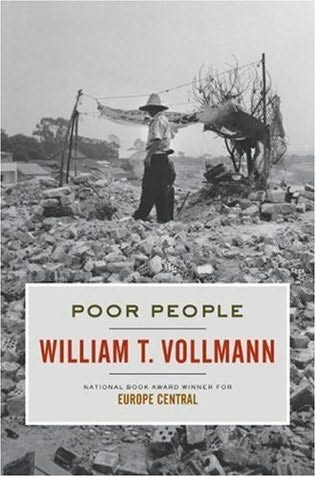
Poor People is not a pleasant read. Indeed, it is a very difficult and challenging read, and I don't doubt that its author intended it that way. There is nothing I can say in critique (or in praise) of this book that hasn't already been said by writers more articulate and with more experience and clout than me. For me, it's enough to read the title and listen to myself as I say it aloud and hear everything implicit and subtly lurking behind that phrase: “poor people. Poor, poor people. Poor! People!” In those words I hear pity, fear and inevitable relief, that the speaker by default cannot be considered as one of the “poor,” since she/he can speak of them as something seperate and apart, something radically other and different from themselves. Disconnected. If you can view others as poor and thus by default radically separate from yourself, are you automatically saying that you by definition must be considered rich?

I read this book in between all the microfinance-related reading I've been doing over the past two weeks or so in preparation for my rapidly impending internship with Kiva (I'm getting on a bus to head to San Francisco for training tomorrow). I've read some pretty interesting stuff (especially the discussions about the commercialization of microfinance and the tension in MF about being focused on economic development or the marketplace, poverty vs. profit). Depressingly enough, I don't think microfinance would offer much in the way of a solution to the “poor people” profiled in this book. To be given a loan to start a business or purchase supplies or improve your house, it's already implied that you have already have started with something, as opposed to absolutely nothing. The people in these book really have nothing: they're the the sickly old beggar women, the smelly drunk and indigent, the crippled, the beggars in subway stations holding out palms or rattling plastic cups full of coins, the refugees, the fevered mothers holding their babies and staring down at the ground before them. God, this book is depressing.

I did not particularly enjoy reading this book, which makes it hard for me to recommend it to people. I first stumbled upon it several years ago, in my stacks-shelving job at the college library. I flipped through the black and white portraits at the end and was intrigued by the number of photos that were of people from Colombia, and it's never really left my mind since. The images of beggar women in burqas in Afghanistan during Taliban rule are definitely remain the most affecting (Vollmann's discussion of poverty-as-invisibility ties in nicely to these images). The strongest bits of this book involve Vollmann-as-reporter, during which he simply profiles the folks he's interviewing. I liked the portrayal of the Russian family in which the husband was too sick from Chernobyl to work, and his foray into an off-limits oil refinery in Kazakhstan has the elements of a really angry documentary. He veers away from this simple reporting in the middle part of the book, instead going off on long tangents from his personal list of what defines poverty, such as “accident prone-ness” and “unwantedness.”

At one point in one of my flights and bus rides (it's hard to keep track of them lately!), I started doodling in my journal a list of WHY SHOULD WE FIGHT AGAINST POVERTY? The main reasons I came up with weren't so much academic as they were from my emotional gut. reason #1: Empathy: we're all born in this crazy ass world without really asking for it, and being that we're all in this sick mess together, we might as well help each other out... be a giver rather than a taker. Reason #2: Karma (in its most simplified definition): by helping others, you're helping yourself, and more importantly you're putting out a little positive energy out there into the black toilet hole of a universe for future use. Not exactly award-winning reasons, but for what it's worth that's what I succeeded in skimming off the top of my curdled-by-Greyhound brain.

I'm sure I'll have a lot more interesting things to say about poverty after I start Kiva internship, which I plan to blog about in more detail than I have so far in this space. In the meantime, one thing that really stood out for me in the wiki biography of Vollmann's life is how he dropped out of a Comparative Literature program at Berkeley “after one year with the intention of engaging life instead of just studying.” What an interesting phrase, “engaging life.” How does one go about doing that, pray? Is life something you just walk around and eventually find if you keep your mind open enough, or do you have to adopt a more proactive, aggressively-seeking approach?

For me at least, life as I've engaged it in the past week has been pretty pleasant, visiting my various girlfriends in Los Angeles and staying with my grandma in San Luis Obispo county. This evening my grandma and I looked at old photographs and I learned about Cosmo and Al, the guys my grandma “went with” before she met my grandfather. Poor Cosmo (a Navy fellow) was rejected on the account of insulting my great-grandfather's lawn, and Al (whom she “went with” for three years—long-term relationship, grandma!) went so far as to get her a ring, a fur coat and some kind of fancy box thing, all of which she rejected because “I didn't have feelings for him that way.” Poor Al.

(You can check out the non-profit(s) I'll be interning for until Christmas here and here.)

Monday, September 7, 2009

Attempts on Her Life: Truth and Self in "Portrait of a Lady"

Well obviously the apartment would be beautifully furnished. Obviously it would have high ceilings and tall windows and date in all probability from the end of the nineteenth century when the rise in speculative building coincided with the aspirations of the liberal bourgeoisie to create monumental architectural schemes such as I'm thinking particularly now I'm thinking of the Viennese Ringstrasse which made such an impression on the young Adolf Hitler as he stood one morning before the Opera.
--Or one of the great Parisian boulevards.
--Or one of the great, exactly, Parisian boulevards.

--from Martin Crimp's Complete Plays: Volume 2, page 209-212, “Attempts on her Life.”


I read this play while staying in my friend's apartment in a suburb in Paris. The other book I was reading at the time was Henry James' The Portrait of a Lady, another attempt of sorts on a lady's life. It felt highly appropriate to be reading Henry James during a two-week poor man's jaunt through England and Paris. The boulevards were definitely good representations of "the aspirations of the liberal bourgeoisie to create monumental architectural schemes;" "total Illuminati," Corey mused while contemplating them. They made me think of imperial imagery and the cult of the Roman Emperor, like we learned in my freshman year humanities class, in which dead emperors were made into gods and his cult was spread through coinage, architecture and fashion. There seems to be a lot of dangerous implications when you try to definine something absolutely.

This is the first Henry James novel I've ever read, other than his short stories in college and The Turn of the Screw in high school for AP English. I read David Lodge's novel Author, Author, an Amadeus-like story of James' failure at the theatre and his friendship with an author who was super famous at the time, but whom nobody remembers now (have *you* read George du Maurier?). His books always lined my mom's bookshelves at home, nestled in between Dickens and Vanity Fair. "Henry James is so subtle," my mom once told me (I don't know in what context, maybe we'd just finished watching Wings of the Dove or something). "You'll read a whole page, and then look up, and be like, I know that something really, really important just took place... butwhat?" That's as good of a summary of Henry James' style as I've ever heard. I mean, it says a lot that the key scene in this novel consists of Isabel sitting motionless in a chair (how did they turn this into a movie, again?).

Despite this initial fear that this novel was going to leave me feeling like I was an absolute idiot, in the end I was surprised at how much I enjoyed reading this novel. Maybe my brain has just gotten really big over the past year (ha, ha, ha!) but I honestly didn't find it that hard (I can haas literary smarts?). I definitely didn't have the same reaction as my housemate, who read the first page of Wings of the Dove and threw it across the room shouting "WHAT THE BLEEP?!" (Oh, biology majors.) I got really into the characters in Portrait of a Lady; I finished each chapter with a feeling of eager anticipation, like I was waiting for the next episode of a TV series. I would update the ever indifferent Corey on their conversations and decisions: "Oh oh, it looks like Isabel is going to accept Gilbert Osmond's marriage proposal. It's all downhill from here." "Henrietta the journalist really represents modern America! While Caspar Goodwood is a total embodiment of penetrative capitalism!"

This was an interesting book to read while traveling as a tourist. Isabel wanders through London, Paris, Rome, Florence, Venice, looking at old ruins and art, attempting to "collect" experiences like those little barbed seeds that cling to your clothes when you pass through a tall field. (Collecting is a big motif in this novel; much is made of Gilbert Osmond's art collection and his desire to keep Isabel and his daughter shut up in his nasty claustrophobic old house like expensive portraits.) There's a lot of annoying stupid rich Americans and Brits in this novel, traveling for no point or purpose, living off their inheiritances. Isabel is smart enough to see through the emptiness, commenting with typical astuteness that "doing all the vain things one likes is often very tiresome." (309) Why yes Isabel, it is very tiresome indeeed! She goes on to ponder:
The desire for unlimited expansion had been succeeded in her soul by the sense that life was vacant without some private duty that might gather one's energies to a point. She had told Ralph she had 'seen life' in a year or two and that she was already tired, not of the act of living, but that of observing. What had become of all her ardours, her aspirations, her theories, her high estimate of her independence and her incipient conviction that she should never marry?
This is my favorite quality of Isabel's: her introspection, her ability to ask those kinds of questions. When asked by the odious Madame Merle to define her idea of success, Isabel's response is "to see some dream of one's youth come true." (206) I like how Isabel philosophizes and reflects on her actions, and I'm sure it's this quality of hers that has captivated readers and literary critics for over a hundred years now.

Another thing I want to mention is the exchange Isabel has with Madame Merle in one particular section, as it sets up two different concepts of the ever popular topic in modernism, the Question of the Self. As Madame Merle puts it:
"When you've lived as long as I you'll see that every human being has his shell and that you must take the shell into account. By the shell I mean the whole envelope of circumstances. There's no such thing as an isolated man or woman; we're all each of us made up of some cluster of appurtenances. What shall we call our 'self'? Were does it begin? where does it end? It overflows into everything that belongs to us--and then it flows back again... One's self--for other people--is one's expression of one's self; and one's house, one's furniture, one's garment, the books one reads, the company one keeps--these things are all expressive." (207)
In contrast, Isabel replies, "I don't know whether I succeed in expressing myself, but I know that nothing else expresses me." (208) And thus we have two opposite viewpoints of how the self is constructed that are set up very intriguingly. A footnote from this page helpfully quotes a passage from Henry James' brother William, the famous psychologist, who writes that "properly speaking, a man has as many social selves as there are individuals who recognize him." Whoa! How do you express yourself truely, if there are so many "selfs" for you to express? Are you doomed to forever be divided into American Doll Possee fragments, or will you ever add up to a complete and wholly integrated person? And, more intriguingly, what does this imply about the problem of understanding--not just understanding yourself or other people, but understanding and interpreting ART (which can be understood as the expression of a self). AAAAAAAAAA! Now do you see why this novel isn't the typical Victorian-Realist marriage plot?!

Because this novel is so INTENSELY focused on the thoughts and meditations of the main female character (The Portrait of a Lady is an extremely appropriate title), I think the whole novel can be understood as an attempt to deal with the problem of the self: how to form it, understand it, and then communicate that self effectively with others. There's a lot of discussion about the importance of experience in this book, and I think that relates back to this idea of how do you go about constituting the self, which I see as Isabel's main struggle throughout the book. I remember reading in Derrida's The Truth of Painting, way back in junior the year, something about how the frame of a painting doesn't just close off the artwork, but also opens it up, because we're forced to view the artowrk in whatever context in which it's been presented, which in turn prevents our understanding of the artwork from ever being complete. I don't know if I'm remembering this correctly, but the basic gist is that the supposedly firm lines that "close" a portrait are ultimately misleading. This is what makes Gilbert Osmond such a creepazoid, he tries to define and trap Isabel in this aesthetic wifey little role (it goes deeper than that--doesn't it always in Henry James?--but again, that's the gist of it).

The last thing I want to touch base on is how Henry James is definitely not the author you'd read if you wanted to get an idea of how most people (that is, the working class as opposed to the rich and upper middle) were living--the coal miners, the tramps, the dishwashers, George Orwell's peeps, basically. Henry James' characters are such spoiled brats--I mean, these people really don't do anything. They just travel around Europe, looking at old ruins and collect art, in an attempt to--what? Better themselves? Improve their souls? One of the commendable aspects of Portrait of a Lady is that there are characters like Isabel and her dying cousin Ralph who actually ask themselves the essential question of what is the freaking point.

But typing up this blog entry has been a bit of a surreal experience, because I'm also simultaneously Skype chatting with someone from the microfinance office where I'll be interning this fall (yay multitasking!), in an attempt to sort out my living situation there (it looks like I'll be staying with the family of someone who works in the office, which is super bien). In the Egyptian section of the British Museum, there was this little information card talking about the lives of the farmers and workers who worked on the land and were sometimes employed on state construction projects (if my computer wasn't retarded, I'd upload the photo). To quote from the plaque: "They were not wealthy enough to be buried in decorated tombs. They were illiterate, and so their names and experiences are almost entirely lost, as in many societies. The study of human remains in poor cementeries is the only way of learning of the short lives of most ancient Egyptians."

It's weird to me, reading these Victorian novels of marriage and intrigue and travel through Europe, and think about all the short, illiterate lives that are being ignored, that have been lost to time. I think it's incredibly stupid and ignorant to criticize books for what they're not about, and that's definitely not what I'm doing. I just wanted to comment that it was just an interesting experience, to wander through these boulevards in Paris built by kings and dictators, to go home to my friend's apartment and read about characters doing the same thing, and now, I'm trying to sort out an internship where I'll be working with people whose lives definitely do not revolve around questions like "should I go to the British Museum today or the National Gallery?", or, "how is an art work simultaneously 'closed' by the artist for a deliberate aesthetic effect, yet opened up to interpretation by the audience?", or, "when we say we 'like' a painting, or a book, what does that mean? Does it mean that there was a certain 'truth' shining through the painting or the words on the page that somehow got through to us? And if so, how? How do you reveal the truth of a work of art, if the artwork itself is concerned with showing how it is difficult and even dangerous to try to limit things to a single mesage or meaning?" And so on and so forth. Yeah.

To close, here is another portrait of a lady, from the website I'll soon be working for.

Are you looking at her? Or is she looking at you?
Friday, May 22, 2009

Oh, Ernesto


The person who wrote these notes died upon stepping once again onto Argentine soil; he who edits and polishes them, 'I' am not I; at least I am not the same I was before. That vagabonding through our 'America' has changed me more than I thought.


The whole month of May has been swallowed by the 750-page behemoth that is Jon Lee Anderson's biography of Che Guevara. I've been keeping Corey fully updated on the different stages of Che's life for the past three weeks: “Che's bumming around in Guatemala with not much idea of what to do with himself. God, it makes me feel so much better about my life!” “Che just arrived in the Congo. Things are not looking good.”

This whole month of May feels like it just got swallowed. I could write something about how it's been a year since I've graduated and so now I have this great manifesto... but I don't, so I won't.

My favorite part of the book was the first part, entitled “Unquiet Youth,” mainly because it dealt with what I was most interested in: what Ernesto was like as a young man and what drove him to pick his particular life path. This was my favorite part because it was what felt most relevant to me personally, as a young person still trying to figure out the best way to manage my freedom, my privilege and my choices. It was almost with a sense of relief that I read about Ernesto's lack of direction and pervasive sense of uncertainty following his graduation from medical school. I thought it was really interesting that even though Ernesto was surrounded by all these radical Communists, Socialists and Marxists in Mexico and Guatemela, it wasn't until after (as opposed to before, or during) the American intervention/CIA overthrow that he made the decision that he wanted to be more involved. As he wrote in a letter to his mother, “The bad thing is that at the same time I haven't taken the decisive attitude that I should have taken a long time ago, because deep down (and on the surface) I am a complete bum and I don't feel like having my career interrupted by an iron discipline.” (162-163) I almost felt like cheering when I read this: Ernesto gives a big stamp of approval on bumming around for a couple of years!

I thought it was fascinating to read about the gradual formation and changes of Ernesto's sense of self. It was really interesting to me reading about how your childhood can have such a monumental effect on you throughout your life: as a little kid, Ernesto was so constantly sick with asthma, he was babied a lot by his mother, but also developed this incredibly fierce iron will to compete (like in rugby) and be considered as “good” as the other kids. As the biographer describes it, his asthma also led to his sense of isolation and resulting craving for camaraderie, which the author sees as the main reason for Ernesto's fierce adoption of the Cuban cause and intense loyalty to Fidel Castro. Being a guerrilla made him feel like he was a part of a group, that he had friends, he had comrades. God, it makes me wonder how my childhood is affecting my current life. It also makes me wonder if life can really be seen as a narrative this convenient, that this straight lines can be drawn from our childhood right up to the present day. I guess it's helpful to think so.

When Ernesto adopts 'Che' as his name, I couldn't help but think of Into the Wild and Alexander Supertramp. “Call each thing by it's proper name,” he writes in his journal near the end of the movie, signing his death note with his birth name, Christopher. Man, how hard is that, trying to figure out what your proper name is! Talk about easy say, hard do. It's something that might take a lifetime to do.

At one point, one of Che's comrades says, “In spite of everything, you can't help admiring him. He knows what he wants better than we do. And he lives entirely for it.” I think this is an accurate reflection of my own feelings. I could never, ever live like Che Guevara—hell, very few of us could! It takes an incredible iron will to do so. At times, he was a hardcore maniac to the point of insanity, justifying the executions in Cuba as “justice at the service of future justice.” (458) I thought it was funny how he was particularly enraged by “individualistic” university students with “middle-class' mentalities: “perhaps in the students he saw his self-absorbed former self, and it rankled him. He had given up his self, his 'vocation' for the revolution; why couldn't they?” The answer, Che, is we're all different. We are all different people with different paths in life, and it's not helpful to say that one path is better than others or is the “right” path or whatever. Some of us are constantly seeking happiness and contentment, others find it pretty quickly and effortlessly. That's just the way it is. That's what makes us so valuable as human beings, right? Our individual, crazy, unique messed-up selves, these ridiculous consciousness we're carrying around in the mushy gray matter enveloped behind our thick skulls?

In the biography there are some parts that indicate that Che felt isolated at times, like he was living this double life, due to his commitment to the “revolutionary cause.” At one point he says to Alberto (his old travel companion from The Motorcyle Diaries) “I live like someone torn in two, twenty-four hours a day, completely torn in two, and I haven't got anybody to tell it to. Even if I did, they would never believe me.” (608) As he writes to his mother, “I am still the loner I used to be, looking for my path without personal help, but now I possess the sense of my historic duty. I have no home, no woman, no children [I'm sure his wife and daughter were a bit bummed to read this], nor parents, nor brothers nor sisters, my friends are my friends as long as they think politically like I do and yet I am content, I feel something in life, not just a powerful internal strength, which I always felt, but also the power to inject others, and an absolutely fatalistic sense of my mission which strips me of all fear.” (433-434) I don't know if I could throw my life in a similarly all-in fashion in pursuit of one single goal.

It makes me feel so young saying this, but I remember watching The Motorcycle Diaries with my freshman year boyfriend in theaters on our very first date together and being extraordinarily moved. I was particularly struck by the montage of black and white photos at the end of the different people that Alberto and Ernesto. Here's an excerpt from my personal journal that I wrote on March 19th, 2005, (Gaaaah!) shortly after I came back from the spring break service trip to Juarez:

These are some things that I cannot quite get my head around yet:

1) The difficulty between making a connection between what you think and what you do. This is something I was discussing with Ian the other day in the rhodadendron (god help me, I can never spell that word) gardens. It’s very easy to think that “I”m liberal” or “I’m creative” or “I’m a good person”, but if you don’t acutally DO anything physical in this world that serves as a concrete, physical testament to that belief, well then it just doesn’t sound very realistic to say it anymore, innit? This is something that I admire very greatly about Che Guevara upon reading “The Motorcycle Diaries”: say whatever you might like about him, but he was extremely effective at forming a connection between his ideas and his actions. The equal images of a clenched fist and a mouth streaming ideas, resting side by side... I think I’m going to have to check out some books from the library in order to learn more about him and Cuba from a more academic, scholarly point of view, because all I’m going on here is the adoring worship of the people that I’ve been surrounded by throughout my life. I think it’s creepy that “The Motorcycle Diaries” affected me much more than I ever thought it would. At the time I just thought it was a big deal because it was my first American date or whatever, but look at me, I don’t know how many months later and still thinking about it. I guess it must have resonated very deeply within me, and I have this picture of my soul being struck like a guitar string and still quivering back and forth, months later.


I went on to rant a little about how I was changing my major to General Literature or Spanish as opposed to English and Creative Writing, because I felt it would be more useful. I used an interesting phrase, about "learning to balance the Howard Roark and the mother in me." A struggle that still continues to this day. God, I'd forgotten how excruciating reading old journal entries can be. If nothing else, they serve as a reaffirming validation that yes, it is possible for people to change, and yes, I *have* changed since I was a freshman. Thank god. Anyway, I just thought it was funny, reading what I wrote all the way back then, in context of me in the process of finishing this enormous biography.

It was fun reading about Ernesto's early life because his writings were equally melodramatic. I think he brought a very good definition to being a traveler rather than a tourist: roughing it, being dirty (his lifelong nickname was “El Chancho” (the pig) from how infrequently he changed his clothes and how nasty he consequently smelled), being as open and receptive as possible. I've been thinking lately that I want to try to be more like a “tourist” in my everyday life; that is, to adopt the same mind frame that I aspire to have while I'm traveling here in what I consider my “static” period: working, living in Portland. My definition of being a good traveler is to be as open as possible to new experiences, to try to stay away from judgment. When you're having an experience, to not so much worry about quickly judging it or summarizing it as “good” or “bad,” but instead try to reflect that “oh, this is an experience that I'm having,” and just kind of try to be in the moment, and then reflect upon it in full later. I think this is a good way to avoid the kind of stress you inevitably run into while traveling: late buses, mean people, bad food. I mean, I run into that kind of stuff here in Portland as well, but to some degree it feels less heightened, less intense than it does when I'm in a different country... maybe because I've been living here for a while now.

Here's to being a good tourist in everyday life.


Lying introspectively like Jorge Malabia on his back: a common motif among young brooding men of the Rio Plata region.

Thursday, May 7, 2009

April Books


Deep Economy: The Wealth of Communities and the Durable Future

A very well-written, readable and well-argued book. McKibben basically argues that we need to redefine our understanding of classic economics: namely that more doesn't always necessarily equal better, not just for sustainable reasons (we're running out of resources on our planet) but for personal reasons (more stuff, bigger businesses and expanding economies aren't making us happier). It's an interesting argument and he follows through with it pretty well with practical suggestions on how we can refocus our energies on building more local economies and communities. I really enjoyed McKibben's discussion of behavioral economics and the science of happiness, two topics I find really interesting and know very little about. There are a few moments that are a little too "oh god, you are such an environmentalist from Vermont," like when he suggests giving bus drivers your personal mix CDs to slap on the stereo. Also, McKibeen seems to be writing for an audience that he automatically assumes is anti neoliberal and free trade, so if you're not, that might be a problem for you. (Disclaimer: it wasn't for me, I'm just trying to be fair and balanced here.) However, overall McKibben does quite a good job of making practical suggestions for how to make the world a better place and how to be more hopeful in general, which is a nice change from the more general "oh-god-we're-all-doomed" feeling of recent months.

The one part of the book that I keep summarizing and quoting to all of my co-workers and friends is the section where McKibben talks about the science of happiness. He asks the very interesting question of what was the time in our lives when most of us would say that we were happiest. For most people, they would say volunteering, with family, with friends, etc.... being around others. Being *out* of yourself and your chatty little head, and instead feeling like you're a part of something bigger than yourself. That really hit the nail on the head for me, and put into words something I'd been struggling to articulate to myself for a while now: what has brought me some of the highest levels of joy in my life was when I felt like I was "out of myself," part of something larger, whether in the hugeness of nature or within a community of people (like Los Embajadores in Tijuana), not as this self-internalizing super efficient/proficient utility machine.

Whether my enjoyment of finally having this particular feeling put into words actually leads to me doing or deciding something concrete remains to be seen. I think of my advisor's advice to me of why not to go to graduate school, at least not for literature, and it really rings more and more true for me by the day. He was like "travel! Get out in the world! Work with kids!" This summer, I'm gonna garden.

Rating: Read This Book Before You Die


Keep the Aspidistra Flying (George Orwell)

An enjoyable if not earth shattering read. Orwell is the master of succinct, perfect sentences. Along with watching "Revolutionary Road," this book definitely helped put me in a weird mindset about the whole settling down into a comfortable career and lifestyle deal, while thinking that you're this person who's "better" than everyone else around you. The happy ending feels a little forced; if Orwell had been truer to the tone of earlier parts of the book, the characters' fate would have been a lot darker. Orwell said in a letter that when he wrote it, "I was half starved and had to turn out something to bring in £100," which explains a lot. All in all, a nice fictional companion to "Down and Out in Paris and London."

Rating: Read This If You're An Orwell Fan


El Juguete Rabioso / The Mad Toy (Roberto Arlt)

Another book about a character whose life is really affected by money (namely his lack of it). I would have really dug this book in high school, a lot, and probably would have had a little bit of a crush on Silvio, the main character.

The Mad Toy took me a long time to get through, despite its 142 pages. I don't really know why. I don't exactly know what to make of this book. I'm not sure what the title refers to, for one. I guess "the mad toy" is Silvio himself, and the title refers to the way in which he often finds himself inevitably being used as "a toy" by people in power and by the mentors he consistently keeps seeking (and failing) to find. The final chapter (ominously titled "Judas Iscariot"), in which Silvio deliberately betrays a mentor/friend, can be understood as Silvio's attempt to subvert this feeling of always feeling like a plaything to others whims, and instead claim some agency of his own (at the stake of his friend, which is troublesome).

The first chapter is about Silvio as a young boy and his adventures in inventing amateur weapons of war and his life of crime as a book thief, smuggling encyclopedias and Baudelaire out of the school library. I love the sentence that he uses to introduce an anecdote about one of his inventions, copying the language of the pirate and Dumas paperbacks he loves. "A resounding adventure was that of my cannon, and happy am I to recall it." I like to repeat this phrase quietly to myself. It adds so much, narrating the events in our lives with a deliberate aesthetic style!

Needless to say, it says a lot about Silvio that his first career is as a book thief. He goes on to try working as a bookstore assistant, an apprentice airplane mechanic for the military, and a paper salesman, without finding much satisfaction. However, what seems to keep him going is his ability to aesthetically narrate his life and his surroundings, infusing it with what he experiences as an inexplicable joy:
I'm not crazy, one thing is certain, though... I know that life will always be extraordinarily beautiful for me. I don't know whether other people will experience the force of life as I do, but inside me there is joy, a full, unconscious kind of joy. Everything surprises me. Sometimes I have the feeling that it's just an hour since I arrived on earth, and everything is flaming new, fresh, beautiful. (150)


Silvio's goals by the end of the book are to "see glaciers and mountains and clouds." That sounds pretty good to me. The last sentence of the book is "I tripped over a chair, and kept going." It reminded me a lot of the last sentence of Catch-22. You jump out of the way of the whore's knife, life tangles you up and catches you off guard, but you gotta keep going.

Silvio's final mentor figure is the policeman who receives his confession/ratting out his friend, but doesn't arrest him. The wisdom he imparts to Silvio is "we obey a brutal law that's inside us. That's it. We obey the law of the jungle." A very true thing it is, human brutality. And yet it's not the only true thing. We feel as human beings, profoundly and deeply. What is it that drives some people to not just see life as a drudgery and a chore, life as 9-5, as a series of steps: college, job, marriage, children, retirement death? What is it that drives some people to make the conscious choice to love life, to see it as sweet?

I'd like to keep joy inside me. I'd like to aesthetically narrate my life, my day-to-day.

Love, poetry, gratitude toward life, toward books, and toward the world would send an electrical charge through the blue sinews of my soul.
It wasn't me, but the god inside me, a god fashioned from pieces of mountain, forest, sky and memory.
(123)


Rating: Read This Before You Die


When Things Fall Apart: Heart Advice for Difficult Times by Pema Chödrön

A self-help book written by a Buddhist Canadian nun. I first heard of this book when my yoga teacher read aloud a passage at the end of one class that really connected to me. I recognized a lot of her advice from stuff my counselor gave me to read way back in junior year. She talks a lot about loving compassion, the importance of breathing in and out, exercising non-judgment. It's not just all theoretical, there's a lot of practical advice in her. All in all, a very wise book by a very wise lady. Even if you're not in a time of your life where things are falling apart, there's definitely some stuff in here that you could use.

Rating: Read This Book Before You Die

In April I also read Phillip K. Dick's Flow My Tears the Policeman Said and Ubik, both good reads if you're a Dick fan (hee), but not necessarily vital. I also read Faulkner's The Wild Palms, which hopefully I'll be able to devote an entire post to this weekend. And that was my April.

Sunday, February 15, 2009

History as the Only Refuge: "Artificial Respiration"


Man, this is one of my favorite books. I've never read anything else quite like it. It's like reading all the notes and theories and ideas from my advisor's classes condensed into a single volume of fiction (which would make sense, since Piglia was his advisor at Princeton). I read it over the summer in Spanish and have now recently re-read it in English, in a version translated the same guy who translated the Onetti versions I used for the T (why am I still talking about this thing a year later? Suddenly I understand why you get more than one year for your PhD dissertation... nine months is just not enough time, not at all).

The best way to describe Piglia's fiction is literary criticism masquerading as fiction. Or perhaps fiction masquerading as literary criticism. I can definitely see someone reading this and throwing it across the room, complaining loudly that "nothing ever happens in this book!" That is definitely true. The last 100 pages or so consist of a Polish expat espousing on his theories on the relationship between Kafka and Hitler, the theories of Wittgenstein and other such deliciously philosophical nuggets. I for one loved it, and I think whoever says that these parts of the book are irrelevant or distracting from the main storyline are missing the entire point (upon second reading, I now seriously think the Kafka-Hitler section is the key to the whole book, and not just because how the description of Kafka's death from tuberculosis in a sanatorium provides a key to the book's title).

In the introduction, Balderston cites a useful quote from Piglia on the importance of literary coding in his work:
"Piglia argues that it is a mistake to read Artificial Respiration as a simple product of a period of state terror. "I believe," he says, "that coding is the work of fiction in any context... I believe that fiction always codes and constructs hieroglyphs out of social reality. Literature is never direct... What I do believe is that political contexts define ways of reading."
Codes and attempts to decipher play an important part in this book (isn't that all what literary criticism is anyway? An attempt to "decode"?). As the Polish character says near the end of the novel, "To read, one must know how to associate." More than anything else, AR asks us to associate, to decode--to be good, active readers, which is imperative considering the subject at hand.

It's interesting that Piglia mentions the period of state terror in which AR was written, because I can definitely imagine someone (albeit someone a bit clueless and stupid) reading this book and just plain not getting the state terror angle at all, because it is never directly referred to, not at all, not once. One thing that makes this translation particularly useful to read is that Balderston includes all these endnotes explaining Piglia's references to different historical figures and events in Argentine history. You can definitely tell that Piglia was a historian by training. Balderston raises the interesting possibility that the books title refers to the Argentine Republic (Respiracionn Artificial--Republica Argentina). Is it be possible to read this entire book as a sort of retelling/narration of the history of Argentina itself? Probably yes x1000 (there's definitely enough endnotes to reinforce that argument).

Anyway, it's interesting to see that Piglia sees state terror as such an important presence in the work, and yet it is hardly mention. That deliberate silence in the novel completely changes everything, casting a giant shadow over everything that takes place, from the character that everyone waits for in the last 100+ pages who never appears, to the stand-in-for-the-reader character pouring over old letters and notes, looking for codes and hidden messages. It's like a giant Voldemort lurking on the edges of the pages, a dark He-Who-Shall-Not-Be-Named. As the Polish guy says, "To speak of the unspeakable is to put in danger to survival of language as the bearer of human truth." (213)

In reference to this silence of trying to speak of the unspeakable, the famous quote by Wittgenstein is cited several times by different characters: "What we cannot speak about we must pass over in silence." In AR, what cannot be spoken about refers to both events and knowledge. As I see it, all of AR revolves around the following question: how do you speak about the unspeakable? That's why the section that describes an imagined encounter better Kafka and Hitler is so important. Kafka is described as "the one who knows how to listen," (206) "attentive to the sickly murmurs of history," sitting at the cafe table, listening to Hitler's angry rants and passionate plans for his future domination. History = his-story. Kafka writes fiction that masquerades as coded messages from the past about the future; he speaks of the unspeakable. Piglia writes about the state terror of Argentina while not writing about it, and it doing so, he is making a lot of interesting implications about how it is possible to write about reality (the same dilemma Joyce attempted to tackle). He seems to be saying to do so is impossible, which is why he focuses so much on characters talking, on letters, on outlines and drafts for potential novels, on techniques that are the logical follow-up to Borgesian fictions. Wow, it all just kinda really blows my mind.

The last thing about this this book I want to briefly touch upon is the theme of the classical Bildungsroman. There's a lot of talk by the characters on the importance of experience in the formation of characters and lives (I think it is here where PIglia's fanboy Onetti homage is most evident). Let me share with you some of my favorites:
"Sooner or later, I thought, I am going to become a great writer, but in the meantime I should have adventures. And I thought that everything that happened to me, no matter how idiotic, was a way of accumulating that depth of experience on which I assummed great writers built their work... what can one have in life but two or three experiences? All of us invent a variety of stories (ultimately versions of the same story) so as to imagine that something has happened to us in the course of our lives: a story or series of stories that ultimately are all that we really have lived, stories we tell ourselves so as to imagine that we have had experiences or that something meaningful has happened to us. But who can guarantee that the order of the story is that of life?"
This is so related to my thesis that it makes me want to die.

Here's my other favorite quote, from the chapter narrated by the Senator, who is perhaps the most Faulknerian character in the appropriately most Faulknerian chapter:
"Sometimes, I think I understand it all.. The understanding lasts but a moment and in that moment no doubt what has happened is that I have fallen asleep when I thought I was thinking or understanding... how could I expalin that? How would I--how could I--do that? That's why I must stop talking now I, the Senator, should, for a moment, stop talking. What I cannot explain without words I prefer to keep silent," said the Senator, "as I am unable to explain without words."
This quote sounds a lot better in Spanish; it reads a little clunky it English, which is unfortunate.

I have six more pages of handwritten notes about AR, but I think it's best that I stop here. It's books like these that make me glad I'm alive.

Thursday, October 30, 2008

some ponderings regarding "a portrait"

- "It seemed strange to him at times that wisdom and understanding and knowledge were so distinct in their nature that each should be prayed for apart from the others." (Joyce, James. "A Portrait of the Artist as a Young Man." Time Inc: New York, 1964. 163) Man, I wish I'd read this sentence in time with my thesis... I was wondering about the distinction myself. Thank you, Joyce, for proposing a similar dilemma.

- "His destiny was to be elusive of social and religious orders. The wisdom of the priest's appeal did not touch him to the quick. He was destined to learn his own wisdom apart from others or to learn the wisdom of others himself wandering among the snares of the world." (Joyce 178) The idea of "his own wisdom"... very interesting concept, that for all of us, there is a personalized wisdom to seek out there (or in here *knocks skull*)

- "Words. Was it their colors? He allowed them to glow and fade, hue after hue... No, it was not their colors: it was the poise and balance of the period itself. Did he then love the rhythmic rise and fall of words better than their associations of legend and color? Or was it that, being as weak of sight as he was shy of mind, he drew less pleasure from the reflection of the glowing sensible world through the prism of a language manycolored and richly storied than from the contemplation of an inner world of individual emotions mirrored perfectly in a lucid supple periodic prose?" (183)

I love this sentence! especially from "he drew" onwards.

- "Now, as never before, his name seemed to him a prophecy... he seemed to hear the noise of dim waves and to see a winged form flying above the waves and slowly climbing the air. What did it mean? ... a prophecy of the end he had been born to serve and had been following through the mists of childhood and boyhood, a symbol of the artist forging anew in his workshop out of the sluggish matter of the earth a new soaring impalpable imperishable being?" (186) Joyce sure knows how to write those epiphany moments.

This evening I was thinking about how difficult it is to keep the big picture in mind. So much of our daily lives--going to the can, eating oatmeal, running to get to the bus stop on time to get to where we're going, fumbling a cellphone in order not to miss a phone call from a family member or friend, staying up too late because you're trying to read and understand and gain knowledge about the current events and workings of the world--if you had the *big picture* in mind all the time, it would be incredibly difficult to do these things. At least, for me. When I proposed this to Corey, he told me that when I ask him what he's thinking (as girlfriends tend to do to boyfriends, after long periods of silence in bed together), when he says "nothing," he really means "everything," or the universe (i.e. the workings of it). I told him that I found this hard to believe, "or maybe I'm just too wordly." I dunno. Maybe I am.

It's all about balance, I guess. I'm such an incredibly emotional roller-coaster person anyway... so much about my day-to-day life, hour-to-hour even, is about me trying (sometimes struggling) to master my emotional energies; to maintain (as my counselor at Reed once put it) a middle ground, as opposed to crazy highs and lows. Maybe that's what I need to focus on, the "worldly" concerns of my own emotional-mental life. The rest of it just seems so big... thinking about this feels like a balloon inside my skull that is getting blown up and starts pushing up against the side of my cranium, threatening to pop.

I really like something Jess said to me once, though. She said that in all her traveling and all her experience (ha! that word, again), she felt that her own personal "self" was the greatest and most important project to work on. We can't save the world or even sometimes solve the current problem we're grappling with, but as human beings, we are all always works in progress, you know? I like this idea because it takes away the fear of being too self-absorbed... instead, maybe micro over macro?


anyway. I'm mailing my ballot tomorrow, and then, as my sister oh so sagely put it, "the fate of the world is in other people's hands." The fate of my own emotional and mental state, however... !

"Welcome, O life! I go to encounter for the millionth time the reality of experience and to forge in the smithy of my soul the uncreated conscience of my race." (281)

"reality of experience!" Whatever *that* means....... another plane ticket bought to go here, to go there? Let me know if you find out, Stephen......

Wednesday, June 11, 2008

interesting passage from "war and peace"

“What have you attained with the guidance of the intellect alone? What are you? You are young, you are wealthy, you are cultured, sir. What have you made of all the blessings vouchsafed you? Are you satisfied with yourself and your life?’

‘No, I hate my life,’ said Pierre, frowning.

‘You hate it, then change it, purify yourself, and as you are purified, you will come to know wisdom. Look at your life sir. How have you been spending it? In rioutous orgies and debauchery, taking everything from society and giving nothing in return. You have received wealth. How have you used it? What have you done for your neighbors? Have you given a thought to the tens of thousands of your slaves…No. You have profited by their toil to lead a dissipated life. that’s what you have done. Have you chosen to taken part in the service where you might be of use to your neighbor? No. You have spent your life in idleness...There is no wisdom in all that, sir.’”

[courtesey of elyssa!]