(These names have all been changed.)
Sara, her mouth always half-open, barely able to walk, her head always flopping around like she was unsure how to keep it mounted on her body. Unable to really talk other than to say her sister's name over and over again: “Where Wanda?” Instead of being at the club, this girl almost certainly needed to be involved in some kind of developmental therapy program.
Wanda, the girl with the biggest brown eyes you'll ever see in your life. “What did you do today, Wanda?” I'd always asked. She'd think for a moment, then reply: “Pwayed.”
Taylor, the 6-year-old with a lisp who always ran with his hands held in a certain kind of way that made you think that he was almost definitely going to grow up to be homosexual. He loved singing a song about ants on a log. Playing Patty Cake was enough to send him into convulsions of ecstasy.
Jocelyn, one of my best buds at the Club. A little headstrong and stubborn. She had this way of hugging that consisted more of climbing all over your body like it was rock-climbing wall. When she smiled it looked like her teeth were all crowded together, like there wasn't enough room in her mouth for them all.
Alexis E., either Jocelyn's cousin, brother or foster sibling (it was always hard to tell family relations at the Club). “HI JUJEE!” he would always screech out whenever he saw me. Also a hanger-oner.
Brian A., one of my earliest buds at the Club. He was always crying over everything. I fetched a ladder to get his bouncy ball out of the nasty-ass vent. He wanted to be a tattoo artist when he grew up and was always drawing dragons and other crazy designs on the back of scrap paper. He was also completely obsessed with and addicted to playing computer games.
Alexis V., my earliest nemesis at the Club. Two suspensions later, he is pretty sweet. I think I just got off on the wrong foot early on with him just because of my own early nervousness and uncertainty about how to work with kids (needless to say, I've definitely learned a lot.) Our relationship thawed from him always mimicking what I said in a retarded-sounding voice and shouting “come here baby!” to us playing Speed and him helping me to make ice cream with the younger kids.
Adam, the 6-year-old who was taken away from his mom 'cause she was sexually abusing him. I learned this from his aunt after several incidents in which she had to be called because he kept unzipping his pants and rubbing himself on other kids. “Give me a kiss!” he was always saying to me, puckering his lips up. God, the whole situation was just so wrong in so many ways. Imagine how much therapy this kid is going to need later on.
Daniela, the sweetest angel girl. Scars on her face from the time she fell off her uncle's motorcycle. When she first showed up with the scabs I was speechless, thinking that someone (parent, schoolmate) had beat the shit out of her (which is usually the case when kids show up with injuries.) Always gave tours to the new kids and parents visiting the Club. She's gonna grow up to be something, just you wait and see.
Matthew, one of the autistic kids. Always shouted “Boo!” at me. He liked asking me, “Julie, Knock Knock,” and then responding to my “Who's there?” by saying things like “Do You Know Where Tinky Town Is?” Something about the way he spoke just demands capital letters.
Colin, one of the Club's biggest characters. Another one of the autistic kids (probably Asperger's.) When he's sweet, he is very, very sweet (except for his unfortunate boob-grabbing stage), but when he gets into one of his tempers, he is just wretched. This is the kid who screamed at me “You're the meanest staff EVER!” before throwing a chair at me. A wonderfully creative mind though—so imaginative. One of the best ways to get him to go to meeting was to tell him that he needed to go on an undercover mission for the Autobots (I know more Transformers lingo than I ever thought I would need). He's probably going to grow up to be an artist or author, or video game designer (maybe all three.)
Jonah, yet another one of the autistic kids. Definitely, definitely Aspergers. They were my homeboys, I guess. Glasses with a Pillsbury doughboy-like face. Man, this kid was difficult to deal with. A biter and a hitter. All he ever wanted to do was play on the computer or talk about Pokemon. Very smart though. He liked to run over to me making squeaking noises and give me a big hug.
Benito and Miguel, brothers: Benito so fat with his mouth permanently half open. Always showing up with their identical new shoes and haircuts, buzzcuts with star designs.
Alex and Francisco, brothers. Bullies, yet capable of being so sweet and creative. During my spiel about not picking flowers in people's yards while walking to the park, he raised his hand and said that he would like to add something, and told the other kids that they shouldn't pick flowers in the park because they were planted there by the federal government. Francisco had a shy, soft-spoken way of slightly dragging his feet behind everyone and absolutely loved soccer.
I could go on and on. The main thing is the names, all of them, so many of them. Araceli and Roman. Samantha and Florencia. Orlando and Salvador. Noe C., with his big smile. Bethlehem and Fatinah from Ethiopia. “I need my Julie!” Fatinah would always say, running over to give me a hug. Nate and Nubia from Somalia. Brisa from Guatemala, who left her plastic bag full of her wet towels and clothes at the park that I walked all the way back to fetch. Henry C. from Guatemala, so charming and yet so troubled, capable of calling someone a motherfucker and socking them, then laughing it up and hugging his skinny little arms around my waist minutes later. He disappeared; I wonder where he went. Chubby Juan, chubby Jesus and his skinny, spiky-haired eternally trouble-making younger brother Ziggy. (“ZIGGY!” is the most common shout you'll hear echoing off the Club hallways). James and Tristen, twins, always drinking out of the toilet. Aldo, Oscar and Leti, triplets. Alma with the unpronounceable last name, only 6-years-old and her face framed by dark hair, it was already clear she was going to grow up into a real beauty. Jacqui, all business-like, sharing her food (mostly spicy Cheetos) with the staff. Citlali, so pretty and such a quiet, well-behaved kid, who loved looking up the names of faeries on the Internet. Rigoberto, so good-natured and easy going, with this weird layer of dried skin circling all around his lips, I don't know if they were mega chapped or what. Pablo and Marta, who could barely speak English. Marcus, Alicia and A.J., siblings always traveling in a clique together, so polite yet withdrawn. That's the case with so many of the middle-schoolers; their social cliques just become their entire world, and everything else (school, family, the future) just falls by the wayside.
So many kids, most of them related to each other somehow. I never, ever thought I would remember the names and faces and individual personalities of 400+ children. I've been reading a lot of Borges, Piglia and Cortazar short stories lately, which have appropriately mirrored that labyrinthic feeling. There's a lot of stuff in there about circles without centers, doubles, mirrors, mysterious deaths, tigers roaming without explanation through houses, ghosts without faces. It all feels strangely and compelling appropriate as I get ready to leave for England on Monday with Corey. I want to bring Jonathan Strange and Mr. Norrell and Mrs. Dalloway along with me to reread; somewhere along the way I want to find the time to read Nabokov's Pale Fire and Calvino's If On A Winter's Night A Traveler. I want to continue exploring labyrinths in fiction, I guess.
I really like this quote from Borges' short story "Tlön, Uqbar, Orbis Terius": "The metaphysicians of Tlön are not looking for truth, nor even for an approximation of it; they are after a kind of amazement. They consider metaphysics a branch of fantastic literature. They know that a system is nothing more than the subordination of all the aspects of the universe to some one of them... Tlön may be a labyrinth, but it is a labyrinth plotted by men, a labyrinth destined to be deciphered by men."
Will I ever decipher the labyrinth of the time I spent with these kids?
Saturday, August 15, 2009

Sunday, August 9, 2009
the circle game
There is always something terrifying about purchasing plane tickets, in all their stark finality:
I've been doing this thing since April where every day I write down in a little notebook What I Did That Day. No analysis, no introspection, just bare naked facts. My drive to record things amazes me, sometimes: how much do I really need? Paper journal, livejournal, this blog, and this notebook? Anyway, it's interesting to flip backwards and see What I Did on a certain day of the month. For example, here is What I Did on the 9th:
Tori Amos' cover of Joni Mitchell's "The Circle Game" started playing on my shuffle just now as I type this, which is a little eerie. "We're captive on a carousel of time," indeed. I like this quote from this NY Times blog on happiness, on the difficulty of happiness and being in time:

This emphasis on the present moment links in nicely with the quote from Rayuela which I used to close the last entry: "We must establish ourselves in the present once more." I think the central struggle of "Rayuela" (which I finally finished last week) is exactly that, how to fully enter the present moment of time. Oh god, I don't even know where to begin saying even a quarter of what there is to say about this book. (I feel like so many of my reviews begin with that sentiment.) I do know that I am definitely going to have to read this again. (Again, another phrase that is popping up more and more often here.) What do I say about Morelli, the author-like figure who dominates the 99 "expendable" chapters that readers "hopscotch" through?
My favorite thing about this novel was definitely the rapport between the groups of friends. Cortázar does an excellent job of capturing the rambling dialogue of friendships that have lasted a long time. This characteristic is closely related to the other aspect I liked best about the novel, which was how much it reminded me of Bolaño. As I wrote earlier, characters sitting around, drinking, bitching, wandering, pontificating: it all feels very relevant to the mid-20's, post-college lifestyle.
I have no idea where I read this (somewhere online--I swear!), but I read a quote by Cortázar, in which he said that "Rayuela" was his homage to people of his bohemian generation, and how they dealt with whole getting old and feeling irrelevant and purposeless. He also said that it was interesting that it was the young Latin American youth of the 60's who ended up really connecting with his book, as opposed to his generation. (I am gonna try to find the source for this quote, I swear.)
I dunno, it all makes me think of this letter from my favorite advice column, and how the advice he gives is really true. When I read old entries from this blog, or my paper journal, or my livejournal, or any of the 1001 ways that I've tried to record all the craziness that goes on in the small box of consciousness that I call Myself and My World, what keeps coming up for me, again and again, is how I've changed. In this case, change is definitely, definitely a good thing. I am so unspeakably and inexplicably glad and relieved that for whatever reason, over the past year I have significantly drifted away from the crushing pressure of the assumptions that Cary Tennis critiques in his column. Doing well at tasks does notbring us happiness. These preconceived, ridiculous standards and notions of what it means to "succeed" and be a successful college graduate are just... they make me want to vomit in my mouth a little. I'm smart enough to know now that it's not a game... but if it were, I'd definitely say that I'm winning. (And not in what you'd consider the traditional way, either.)
And so again: here's to not always looking to the future and instead embracing the prsent. It's Wacky Water Week with the 8 & 9-year-olds this week at the Club, and it's gonna be a week they'll never forget.
September 12th- Fly from PDX to L.A.August and September are gonna be some crazy months. Corey and I leave for England on August 17th. We get back on September 2nd. I work for one more week, and then I leave. AAAAAAH! Change can be scary. But change is good, I think.
- Visit Cara, Laura, other California people (Ana?)
September 16th- bus to San Luis Obispo to visit my Grandma
September 20th- bus to San Francisco
September 21st-25th- Intern training in San Francisco
September 26th- Fly from L.A. to Laredo
11pm that night CROSS BORDER INTO MEXICO (either that or sleep in the airport)
December 23rd- Fly from Laredo to PDX
I've been doing this thing since April where every day I write down in a little notebook What I Did That Day. No analysis, no introspection, just bare naked facts. My drive to record things amazes me, sometimes: how much do I really need? Paper journal, livejournal, this blog, and this notebook? Anyway, it's interesting to flip backwards and see What I Did on a certain day of the month. For example, here is What I Did on the 9th:
April 9th- sick day. Sleep a lot.And for an even more entertaining reference, here is What I Did in August of 2008, when we were in Ecuador!
May 9th- Wake up early to go to coast with Solange and Aiden [visiting friends from Paris]. Long drive to Cannon beach. Play music from ipod. Beach windy, weather beautiful. Farmer's market in morning. Gumbo for dinner delish. Catch 4 fat mice in traps.
June 9th- Wake up from nightmare of falling in black void. Corey comforts me. Alarm at 6.20 AM. Roll out of bed and catch Max. Buy sandwiches at Safeway, $33. Big sandwich makes me sick, leave it by library for homeless. Arrive at work, program planning with Allie + Jose in Learning Center. All computers broken, I greedily grab #9, the only one that works. Trip to Starbucks with Alex for a soy latte. Talk about her caffeine overdose and hospitalization.
July 9th- Wake up late, 6.20. Bagel + coffee breakfast. Write sketch of book review and start typing up story. Take kids to Shute Park, Plaid Pantry field trip to buy seeds for bird feeders. Animal presentation by Zoo people underwhelming. Take 10-12 year olds to park in afternoon, Alexis left behind, cries. Long Max journey home. Caught without ticket by Max officer, given ticket. Cry hysterically on phone with Corey, feel better. Hang out with Laura at Laughing Planet and Hotboxx as she leaves for CA the next day.
August 9th- Rainy in morning. Wet boat ride to Cojimies, [seaside town where the Corvina or Sea Bass festival was taking place] meet up with Mariana [our tour guide friend]. 4-hour lunch. Beer and rum. [I didn't mention this, but Corey had the most amazing lunch, a soup filled with lobsters and crab and shrimp and Queen conch. Mmmmmmmmmmm.] B+J [Travel mates] leave for Quito. Corey and I watch volleyball game, dance to salsa band. Chris [other travel mate] harassed by drunk man. Bed early at 12:30pm.Man, isn't the passage of time crazy?! I've been really fascinated with that lately: how time passes, who you were three months ago, three years ago, ten years ago. I was talking with my sister yesterday about 1999 and it's interesting the things we came up with when discussing what that year meant to us. The year we got really into movies saw Fight Club, American Beauty, Boys Don't Cry. The year we first started listening to Tori Amos. The start of 8th grade. Oh man. What do you think of, when you think of who and where you were in 1999?
Tori Amos' cover of Joni Mitchell's "The Circle Game" started playing on my shuffle just now as I type this, which is a little eerie. "We're captive on a carousel of time," indeed. I like this quote from this NY Times blog on happiness, on the difficulty of happiness and being in time:
"To really live is to accept that you live “for the time being,” and to fully enter that moment of time. Living is that, not building up an identity or a set of accomplishments or relationships, though of course we do that too. But primarily, fundamentally, to live is to embrace each moment as if it were the first, last, and all moments of time... I find it impressive how thoroughly normal it is be so tentative about the time of our lives, or so asleep within it, that we miss it entirely. Most of us don’t know what it actually feels like to be alive. We know about our problems, our desires, our goals and accomplishments, but we don’t know much about our lives."
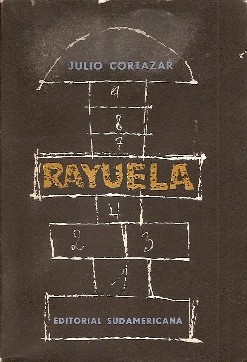
This emphasis on the present moment links in nicely with the quote from Rayuela which I used to close the last entry: "We must establish ourselves in the present once more." I think the central struggle of "Rayuela" (which I finally finished last week) is exactly that, how to fully enter the present moment of time. Oh god, I don't even know where to begin saying even a quarter of what there is to say about this book. (I feel like so many of my reviews begin with that sentiment.) I do know that I am definitely going to have to read this again. (Again, another phrase that is popping up more and more often here.) What do I say about Morelli, the author-like figure who dominates the 99 "expendable" chapters that readers "hopscotch" through?
My favorite thing about this novel was definitely the rapport between the groups of friends. Cortázar does an excellent job of capturing the rambling dialogue of friendships that have lasted a long time. This characteristic is closely related to the other aspect I liked best about the novel, which was how much it reminded me of Bolaño. As I wrote earlier, characters sitting around, drinking, bitching, wandering, pontificating: it all feels very relevant to the mid-20's, post-college lifestyle.
I have no idea where I read this (somewhere online--I swear!), but I read a quote by Cortázar, in which he said that "Rayuela" was his homage to people of his bohemian generation, and how they dealt with whole getting old and feeling irrelevant and purposeless. He also said that it was interesting that it was the young Latin American youth of the 60's who ended up really connecting with his book, as opposed to his generation. (I am gonna try to find the source for this quote, I swear.)
I dunno, it all makes me think of this letter from my favorite advice column, and how the advice he gives is really true. When I read old entries from this blog, or my paper journal, or my livejournal, or any of the 1001 ways that I've tried to record all the craziness that goes on in the small box of consciousness that I call Myself and My World, what keeps coming up for me, again and again, is how I've changed. In this case, change is definitely, definitely a good thing. I am so unspeakably and inexplicably glad and relieved that for whatever reason, over the past year I have significantly drifted away from the crushing pressure of the assumptions that Cary Tennis critiques in his column. Doing well at tasks does notbring us happiness. These preconceived, ridiculous standards and notions of what it means to "succeed" and be a successful college graduate are just... they make me want to vomit in my mouth a little. I'm smart enough to know now that it's not a game... but if it were, I'd definitely say that I'm winning. (And not in what you'd consider the traditional way, either.)
And so again: here's to not always looking to the future and instead embracing the prsent. It's Wacky Water Week with the 8 & 9-year-olds this week at the Club, and it's gonna be a week they'll never forget.
Sunday, July 26, 2009
Rayuela, Part I
It's so hot in Portland right now there's little else I want to do other than sit in front of the fan and eat popsicles from the little Mexican tiendita. Corey and I will probably swallow our hypochondria and go swimming in the public pool down the street later this afternoon.
In a way, I guess it's good that this feels like an exceptionally hot summer in Portland (according to Corey and other long-time PDX dwellers; this is only the second summer I've spent in Portland). Last week I learned that for my internship in the fall with Kiva, I'll be interning with Fundación para la Vivienda Progresiva (FVP), in Nuevo Laredo, Mexico. So it looks like I'm heading back to the U.S.-Mexican border after all... interesting how these things work out. I'm going to have to make myself some cut-offs and buy some more wife-beaters to prepare for life in the desert.
I like how my life's narrative is increasingly becoming defined by the quest for the random and marginal... I'm not exactly sure how all these experiences I'm seeking are supposed to add up to make a coherent, cohesive whole, but then again I'm not sure if I want it to.

This quest for the weird and marginal feels particularly relevant to me, maybe due to the current Big Book I'm reading, Julio Cortázar's Rayuela (or Hopscotch). My sister read this book way back in the day in high school, and then read it again three years ago in Spain. She told me that although she enjoyed it when she read it the first time and knew with certainty that it was a great book, she didn't "get it." As I read it for myself now, I can easily see how there's a lot of stuff here that would make a nice big whooshing sound as it flew over a ninth-grader's head (like what happenned to me and Lolita when I read it in eighth grade and totally didn't "get" the beautiful, erotic love story). I've been reading it in Spanish, and while it's been slow going, almost frustratingly so at times, it's been much more rewarding than reading it in English.
The most exciting aspect of this book is its similarity to the Choose Your Own Adventure series. As the little note by the author on the first page informs us, there are two different ways of reading the novel. In Reading #1, you can read it straight through to Chapter 56, “at the close of which are three garish little stars which stand for the words The End.” (All excerpts from the novel in English are taken from Gregory Rabassa's 1986 translation.) In Reading #2, you begin with Chapter 73 and then hop around the chapters (including Chapters 57-155, described as “expendable), based on the little number printed at the end of each chapter. If you confront the list at the beginning, the one that lists the order in which you'll read all the chapters for Reading #2, you'll discover that you'll eventually be suspended in an infinite loop, hopping back and forth between Chapter 58 and Chapter 131. I'm only on Chapter 37, ending Park One (Del lado de alla/“From the Other Side”) and beginning Part Two (Del lado de aca/“From This Side”), but I'm interested in seeing where I'm going to end up inevitably suspended. It's all really quite ingenious.
Other competitors for the Trippy WTF literary devices category include chapter 28, which skips from page 162 to page 179, without explanation. As this is the chapter when an important character is found dead, I'm assuming these missing pages have something to do with this. To make things even weirder, in the English translation I have checked out for reference, these pages are included. I haven't read them for fear of “spoiling” something that will later be revealed to me as the book progresses, but still, how strange! Where did these pages come from? Are they still waiting for me somewhere, lurking in the back of the pages I have yet to read? Where on earth did the English translator get them from? What a weird situation. At least it highlights the dramatic contrasts that can be found between reading a book in the original language versus the translation (the other translation problem I have with is the translation of “papas fritas” as “fried potatoes”--wouldn't this be French fries? What do you call “fried potatoes” in France?).
Chapter 34 is also an excellent candidate for one of the weirdest reading experiences of my life. So that you can try it out for yourself, here's an excerpt:
"IN September of 1880, a few months after the demise of my
AND the things she reads, a clumsy novel, in a cheap edition
father, I decided to give up my business activities, transferring
besides, but you wonder how she can get interested in things
them to another house in Jerez whose standing was as solvent
like this. To think that she's spent hours on end reading tasteless
as that of my own; I liquidated all the credits I could, rent out
stuff like this and plenty of other incredible things, Elle and
the properties, transferred my holdings and inventories, and
France Soir, those sad magazines Babs lends her. And moved to
moved to Madrid to take up residence there. My uncle (in truth
Madrid to take up residence there, I can see how after you swal-
my father's first cousin), Don Rafael Bueno de Guzman y Ataide,
low four or five pages you get in the groove and can't stop read-"
(Rabassa 191) If you figured out that you're supposed to read this by skipping every other line, then you're a lot smarter than me (to be fair I was reading it in Spanish, and I kept plunging gamely on with the hope that this was some kind of avant-garde rap and that it would begin to make sense to me eventually. The broken-up words like “swal-” and “read-” were what eventually gave it away). How clever, no? As you go on reading this chapter, you realize that the odd lines are from one of the trashy novels that Magda loves to read, and the even lines are Horacio's interior monologue as he reads the very same lines that you've just read, criticizing the book as he reads it (like with the Madrid sentence in the passage above). How clever, no? I don't know if I've ever come across a better attempt to reproduce the experience of reading, by means of spatial arrangement right there on the page. On the last page the lines from the trashy novel drop off and you're left with Horacio, imagining himself and Magda wandering around the city but never meeting, “two points lost in Paris that go from here to there, from there to here, drawing their picture, putting on a dance for nobody, not even for themselves, an interminable pattern without any meaning.” (197) There you have Part 1 of Rayuela in a nutshell: aimless wanderings, a quest for a missing center, the lack of meaning, the concern with geometry.
This is a good book to be reading following the graduation of college. There's a lot of sitting around and Bolano-esque talking, smoking cigarettes, drinking, wandering through the streets of Paris and the eating of fried eggs and potatoes (I love it when authors inform us of what their characters like to eat; Bolano and Murakami are masters of this). There's a lot in the book about wandering around without any direction. The main narrator so far is Horacio Oliveira, an Argentinian writer who lives in Paris with his Uruguayan girlfriend, La Maga. He spends a lot of time either walking around Paris with la Maga, hanging out with his group of bohemian friends who call themselves “El Club,” and having weird and random adventures, like in Chapter 23 when he attends a concert by an eccentric modernist pianist. Part 1 ends with a death, Maga's disappearance, and Horacio's Dante-like descent into degradation and sordidness, which ends with him getting deported back to Argentina. We'll see what Part 2 has in store for him.
Horacio is definitely looking for something. As la Maga tells him, “I think I understand you... You're looking for something you don't know. I've been doing the same thing and I don't know what it is either. But they're two different things.” (76) I like the part when Horacio ponders that “this mate might show me where the center is.” (78) There's this the very Borges-esque thread running throughout the novel, the Argentinean preoccupation with the search for an absent center, the desire to come back to an origin, the desire to understand, the desire for meaning. Ironically enough, while searching for these very structured concepts, Horacio also stubbornly rejects “the idea of unity [which] was worrying to him because it seemed so easy to fall into the worst traps.” (79) Much is made of Maga's lack of intellectualism, but as Oliviera observes, while he imposes “the false order that hides chaos, pretending that I was dedicated to a profound existence while all the time it was one that barely dipped it toes into the terrible waters. There are metaphysical rivers, she swims in them ... I describe and define and desire those rivers, but she swims in them. I look for them, find them, observe them from the bridge, but she swims in them. And she doesn't know it.” (95) There's a lot to unpack there, but suffice it to say, it sure does sound pretty. There's also a lot of Buddhist-related meditations on death and connectedness and the importance of the present moment, which surprised me.
There's lots more I could say about this, but I think I'll leave it at that, mainly it's currently the hottest part of the day and it looks like we'll be going swimming after all. Time to return to the present moment.
“My hand pokes around the bookcase... I take down Roberto Arlt... Today fascinates me, but always from the point of view of yesterday (did I say phascinate?), and that's how at my age the past becomes present and the present is a strange and confused future where boys in baggy sweaters and long-haired girls drink their cafes-cremes and pet each other with the slow gracefulness of cats or plants.
We must fight against this.
We must establish ourselves in the present once more.” (94)

Monday, July 13, 2009
mid-year review
I thought I'd do a little mid-year review of the books I've read to date.
Amazing: 2666 (Bolaño), Ghosts (Cesar Aira), Last Evenings on Earth (Bolaño), La casa verde (Mario Vargas Llosa), El juguete rabioso (Roberto Arlt), A Mercy (Toni Morisson), The Seven Madmen (Roberto Arlt), Revolutionary Road (Richard Yates), Los Rios Profundos (José Maria Arguedas), The Ministry of Special Cases (Nathan Englander)
Good: Distant Star (Bolaño), Dinner at the Homesick Restaurant (Anne Tyler), The Wild Palms (William Faulkner), Keep the Aspidistra Flying (George Orwell), By Night in Chile (Bolaño), Eleven Kinds of Loneliness, The Easter Parade (Richard Yates), Nazi Literature in the Americas (Bolaño)
Trippy, Need to Reread: An Episode in the Life of a Landscape Painter, How I Became a Nun (Cesar Aira), The Name of the Rose (Umberto Eco), Los adioses (Onetti), The Brief Wondrous Life of Oscar Wao (Junot Diaz)
Philip K. Dick: The Three Stigmata of Palmer Eldritch, Ubik, Flow My Tears the Policeman Said
Good Non-fiction: This Republic of Suffering: Death and the American Civil War (Drew Gilpin Faust), True Crime: Rodolfo Walsh and the Role of the Intellectual in Latin American Politics (Michael McCaughan), When Things Fall Apart (Pema Chodron), Deep Economy (Bill McKibben), The Meaning of Life (Terry Eagleton), Che Guevara: A Revolutionary Life (Jon Lee Anderson), Team of Rivals: the Political Genius of Abraham Lincoln (Doris Kearns Goodwin), First Stop in the New World (David Lida)
Comics: The League of Extraordinary Gentlemen (Alan Moore), The Dark Knight Returns (Frank Miller), Understanding Comics: the Invisible Art (Scott McCloud), Fables Volume 1: Legends in Exile (Bill Willingham)
Ultimate Comfort Food: Eat, Pray, Love (Elizabeth Gilbert)
Comfort Food (Sort of Bad But You Enjoy it Tremendously Despite Yourself): Deaf Sentence (David Lodge), Pilgrims (Elizabeth Gilbert)
Okay, I Guess... Sort of Boring, Actually: Banker to the Poor (Muhammed Yunus), Home Truths (David Lodge), The Absolutely True Diary of a Part-Time Indian (Sherman Alexie)
Just plain bad: Thirteen Moons (Charles Frazier), Dry (Augusten Burroughs), The Price of Fire (Benjamin Dangl), The Last Full Measure (Jeff Shaara)
Re-read: Siddhartha (Herman Hesse), The Accidental Tourist, Saint Maybe (Anne Tyler), Ender's Game (Orson Scott Card), Harry Potter and the Prisoner of Azkaban (J.K. Rowling)
I Can't Believe It Took Me This Long to Re-read This After 6th Grade When I Obviously Didn't Get It. Amazing Read: Lolita (Nabokov)
Read in English after having first read it in Spanish. Amazing Read: Artificial Respiration (Ricardo Piglia), Don Quixote (Cervantes, Edith Grossman translation)
Read in the Boys & Girls Club during brief, rare intervals of desperately snatched peace: The Tales of Beedle the Bard (J.K. Rowling)
Couldn't/Didn't Finish: Pride and Prejudice (Jane Austen), Barefoot Gen (Keiji Nakazawa), Dreams from my Father (Barack Obama), The Means of Reproduction (Michelle Goldberg)
Yeesh.
Sunday, July 12, 2009
Aira's ghosties

Little kids used to scare me. Though maybe "intimidate" is a better word. Kids are so emotional, you know? These little events upset us so much and remain deeply ingrained in our memories and psyches as moments of momentous injustice that we never, ever forget. I remember crying as a 5-year-old when a girl wouldn't share her potato chips with me (we're friends now on a social networking site, another testament to the weirdness that is the Internet). I guess I really, really wanted those potato chips (it was also the first day of kindergarten, so I was probably already pretty emotionally drained). There are so many moments at my job when I'm dealing with a kid who is just incredibly upset by something that seems so trivial to an adult (someone cutting ahead of you in a line is a big one).
The kids themselves in this novel aren't as scary as the situation they're in. Childhood was an important theme in Aira's How I Became a Nun (perhaps more important than I realized when I first read it) and plays a similarly prominent role in the most recent of his works that I've read,Ghosts. Ghosts is my favorite of the three Aira novles I've read, maybe because it's the one written in the most realistic tone. The focus of the novel is on a Chilean immigrant family living in an apartment building under construction. The father is the night watchmen. A lot of references are made to his heavy drinking, but all in all, this feels like a happy family. The children run up and down the stairs, play in the empty swimming pool, but an uneasy, ominous feeling hangs over everything.
And then there are the ghosts. Aira's treatment of the ghosts is what makes this novella worth reading. It's an understatement to say that I've never read anything quite like it before. They first appear sitting on the sharp metallic edge of the giant satellite dish, "on which no bird would have dared to perch, three completely naked men were sitting, with their faces turned up to the mdday sun; no one saw them, of course." Here is the first full descriptive passages of the titular ghosts, from page 12:
The naked men shouted louder and louder as if competing with each other. They were dirty like builders, and had the same kind of bodies: rather stocky, solid, with small feet, and rough hands. Their toes were spread widely, like wild men's toes. They were behaving like badly brought-up children. But they were adults. A builder who happenned to be passing by with a bucketful of rubble on the way to the skip stretched out his free hand and, without stopping, grasped the penis of one of the naked men and kept walking. The member stretched out to a length of two yards, and then three, five, ten, all the way to the sidewalk. When he let it go, it slapped back into place with a noise whose weird harmonics went on echoing off the unplastered concrete walls... The two ghosts laughed more loudly and frenetically than ever.
Yeah.
It feels significant that the rich folks that are being given a tour of their future apartment can't see the ghosts, but the workers can. Aira never explains where the ghosts come from, how the workers first saw them, or how long it took for them to get used to naked men floating around the air and through walls. In a way, this is probably the best way to handle the ghosts. It's like an extreme version of Kafka or Garcia Marquez, where we come to accept the fantastical elements of a story because they're written in such a matter-of-fact, realistic way. In the end, we accept the ghosts because the characters accept them in such an unquestioning, logical fashion. For instance, the next passage in which the ghosts appear (after the member-pulling) concerns the father's innovative wine-cooling system: "It consisted of resolutely approaching a ghost and inserting a bottle into his thorax, where it remained, supernaturally balanced. When he went back for it, say two hours later, it was cold." (29) How practical!
The sense of impending doom (or "climate of malevolence") (67) that hangs like a cloud over the children throughout the novel comes not so much from the ghosts (who come off more like a "flying puppet show" than a genuine menance or threat), but from how dangerous it is to have the children roaming around unsupervised in a roofless building with exposed electrical wiring. During a standard trip to the supermarket, the mother is described as "that anomaly, not nearly as rare as is often supposed: a mother immune to the terrifying fantasy of losing her children in a crowd." (23) Is this attitude is an effect of becoming numb to the presence of the ghosts? Needless to say, we're being set up: by the novel's end, one of these kids is done for.
In David Lodge's essay "The Novelist Today: Still at the Crossroads?" from his book The Practice of Writing (I've been on a huge David Lodge kick lately and have several of his lit theory books lying around the house for Corey to trip over and curse), he writes about how fabulation in works such as The Satanic Verses "aims to entertain us with the humorous extravagance and inventiveness of its story while offering this as a kind of metaphor... for the extreme contrasts and conflicts of modern experience." (7) This could be applied very aptly to Aira, especially since humor plays such an important role in his fiction. My favorite character in Ghosts is Abel Reyes, the night watchman's nephew, who embarks upon a Kafkaesque grocery shopping quest to buy lunch for the workmen. I love how he obstinately refuses to use a shopping basket and with arms full of bread and meat picks up the Coca Cola bottles with the index finger and thumb of each hand, "which was all he had free." (20) I'm tempted to type up the entire passage that describes him: he is described as looking eleven years old despite being fifteen, "thin, ugly, awkward." Much is made of his long gross hair that makes him look like a girl: "Being young, foreign and therefore naive, he didn't realize that the Argentineans with long hair belonged to the lowest social stratum, and were precisely those who had condemned themselves to never escape from it... In Chile, [with hair that long] he would have been interviewed on television, or, more likely, thrown into prison." (18) It's funny, but "thrown into prison" catches us off guard slightly, as we ponder how true this might be.
Even though Abdul Reyes sadly disappears from the pages of Ghosts following his shopping expedition, I think his appearence sets up the subplot of Patri, the teenage daughter, whose musings and interactions with the ghosts comes to dominate the second half of the book. The other characters are consistently reminding Patri that she is reaching a "marriageable" age and worrying aloud about her lack of a social life, neither of which seem to interest her much. When her choice of men are people like Abdul Reyes, it's unsurprising that Patri's interest is piqued by the "virility" of the ghosts, who invite her to a party. The results of said party are not spoiler-friendly, and I leave it up to you, dear reader, to discover for yourself. I will say that Patri's interactions with the ghosts definitely represents a sort of crossing-over journey for her, from childhood to womanhood.
That's why I feel like childhood is one of the more important themes of the book. The children are made to seem just as freaky and otherwordly as the ghosts in this novel: "compared to an adult, they were always tiny. They were human in every way, but on another scale. And that alone could render them unrecognizable, or give the impression that they had been produced by the baffling distortions of a dream." (51) For Patri, the ghosts also appear to her "as the opposite of obscenity, as a kind of innocence." (54) I won't attempt to unpack the long interlude about Australian aborigenes and Polynesian interactions with sleep, dreams and rite of passage that takes up a good 10-15 pages in the middle of the book, but anyway, it all feels connected in an important, obscure way (while simultaneously feeling quite random and disorienting).
So what are we left with in the end? Are the ghosts an appropriate metaphor for the impossibility of coping with the modern experience? Are the ghosts spirits of laborers or immigrants who died working on the building, or in one of Argentina's military regimes? The last sentence of the novel is "Man and ghost stared at each other," (139) and apart from Patri, it could be the first time that any of the characters really "sees" the ghosts (and, more significantly, the ghosts see the living). There are quite a number of scenes concerned with "seeing" throughout the novel, such as when the characters turn off the lights during the New Year's Eve party in order to see the stars, or on the next to last sentence of the book, when one of the ghosts hands over a pair of glasses.
Lodge writes that one of the prominent marks of contemporary writing is a pronounced concern with communication, as opposed to self-expression (as with the romantic writers) or with innovation and creation of symbols (as with the modernists). Maybe this concern with communication is the result of genuine communication becoming an illusion; maybe it's the result of the saturation of communications: internet, phones, twitter, blogging, Skype, faxes, e-mail... on and on and on. We live in a hyper-communicative age. I like to think that, like anything, this is a power that can be used for good just as easily as it can be used for evil. For better or worse, it's the world we live in.

We'll just have to see, I guess.
Wednesday, July 1, 2009
mad clubbing
This week has been full of
 I've also been reading Arlt's The Seven Madmen, the 1984 edition translated by Naomi Lindstrom. (Arlt is really ripe for a rippingly good, modern-day translation, in the style of "The Savage Detectives" or Elizabeth Grossman's "Don Quixote.") I've only read Part I, but some stuff has really stood out for me. In Piglia's Respiracion artificial, one of his characters has a long rant about how Arlt is a bad writer, but how that's ok (it goes much more in depth than that). But yeah, that was definitely my first impression of this novel: I could never have gotten away with using some of these similes in the few creative writing classes I took. Take this gem of a sentence: "He felt each spasm of grief hopping like an owl from branch to branch in his misery." (25) How visual is that? Or how about this one: "Like a horse with its guts torn out by a bull, mucking around in its own viscera, every step he took drained his lungs of their lifeblood." (17) O dear.
Strangely enough, the book this has reminded me the most of is Fight Club. The main character, Erdosain, is fired from his dead-end job as a bill collector for embezzling six hundred pesos and seven centavos on the same day that his wife leaves him for a creepy dude called El Capitan. In order to get the money he needs to avoid jail, as well as refind structure and sense to his life, he turns to a strange figure called the Astrologer, who is this book's Tyler Durden mastermind character. The Astrologer has this ridiculously convuluted plan that is never clear: we're not sure if it involves the Ku Klux Klan or Lenin-loving Marxists. In the words of the book cover summary, his plan is "a terrorist conspiracy to help the unemployed that will lure workers to mountain stronghold factories and enslave them. For start-up capital, a chain of bordellos is proposed. To finance these, the murder of Erdosain's wife's rich cousin is planned." Believe me, it's never made as clear as all that.
The main character, Erdosain, reminds me of a hero from a novel by Camus or Satre, bringing way back to memories of middle and high school days of me lying on my stomach on my bed reading dusty, battered books pulled out of my parents' shelves, based on how interesting the cover art looked to me, as well as the novel's fame (Nausea, the Stranger). On page 6, Erdosain is already asking of himself, "What am I doing with my life? What kind of soul do I have? What have I made of my life?" (6-7, 12) That ought to be the first indication that this novel isn't going to be your regular, run-of-the-mill crime caper or pulp fiction that Arlt supposedly adored.
Anyway, in the one of his ponderings, Erdosain makes an interesting point:
The other thing the novel touches upon that I found interesting (which I won't write about too much now because it's nearing 10:30 and I'm exhausted and need to get to bed) is the characters' search for truth and (in Erdosain's own words) that wonderful phrase, "the meaning of life." Ha! Let me end this with a quote from the Astrologer:

- Seemingly endless shopping for supplies at the Dollar Tree and Fred Meyer: measuring spoons, alka seltzer, baking soda, white vinegar, corn starch, half-and-half, plastic zip lock bags...
- Playing in the fountain in downtown Hillsboro and getting head-to-toe soaking wet, much to the delight of the kids
- Breaking up a fight started by this foster home kid who'd entered this obstinate Beserker rage that reminded me of the Bloodwrath of the badgers from Salamandastron in the Redwall novels.
- Life-saving yoga classes in the evening on Alberta street.
- Dodging and praying not to run into Max ticket officers. It's like clockwork: I don't buy one, I get checked, I buy one, I'm never checked. I'm just waiting for Laura to get back from Montana so she can help me arrange having one of her college student housemates buy me one for 1/2 the price.
- Dealing with the wrath of the kitchen lady (NEVER borrow a kitchen lady's garbage can, and then forget to return it.)
- Daily 6AM wake-ups.
- Missing Corey, in Las Vegas for the World Series of Poker until Thursday.
- Missing talking to my sister about stupid stuff.
- Getting tons of e-mails now from Kiva. The internship has officially begun. It's both exciting and a little scary at the same time. Another new chapter and crazy adventure is coming up here pretty soon...
- Half-heartedly applying for part-time jobs, even though I really really enjoy my current schedule of 30-35 hours per week. I have yet to work the "standard" 40-hour a week job; those hours sound so crazy and soul-sucking to me...
- Learning to play "Once Upon a Dream" from Disney's Sleeping Beauty movie on the keyboards, as well as playing the babyfied version of Moonlight Sonata over and over and over and over again.
- Getting helped out by A., probably the Club's biggest problem child, while making ice cream (he helped bring ice cubes from the kitchen). VICTORY! Small steps! Small steps!
- Never-ending program planning and refining. Animal Camp is next week for 10-12 year olds and it's been a nightmare to plan for, especially after the two field trip places I had lined up canceled on me. Groan...
 I've also been reading Arlt's The Seven Madmen, the 1984 edition translated by Naomi Lindstrom. (Arlt is really ripe for a rippingly good, modern-day translation, in the style of "The Savage Detectives" or Elizabeth Grossman's "Don Quixote.") I've only read Part I, but some stuff has really stood out for me. In Piglia's Respiracion artificial, one of his characters has a long rant about how Arlt is a bad writer, but how that's ok (it goes much more in depth than that). But yeah, that was definitely my first impression of this novel: I could never have gotten away with using some of these similes in the few creative writing classes I took. Take this gem of a sentence: "He felt each spasm of grief hopping like an owl from branch to branch in his misery." (25) How visual is that? Or how about this one: "Like a horse with its guts torn out by a bull, mucking around in its own viscera, every step he took drained his lungs of their lifeblood." (17) O dear.
Strangely enough, the book this has reminded me the most of is Fight Club. The main character, Erdosain, is fired from his dead-end job as a bill collector for embezzling six hundred pesos and seven centavos on the same day that his wife leaves him for a creepy dude called El Capitan. In order to get the money he needs to avoid jail, as well as refind structure and sense to his life, he turns to a strange figure called the Astrologer, who is this book's Tyler Durden mastermind character. The Astrologer has this ridiculously convuluted plan that is never clear: we're not sure if it involves the Ku Klux Klan or Lenin-loving Marxists. In the words of the book cover summary, his plan is "a terrorist conspiracy to help the unemployed that will lure workers to mountain stronghold factories and enslave them. For start-up capital, a chain of bordellos is proposed. To finance these, the murder of Erdosain's wife's rich cousin is planned." Believe me, it's never made as clear as all that.
The main character, Erdosain, reminds me of a hero from a novel by Camus or Satre, bringing way back to memories of middle and high school days of me lying on my stomach on my bed reading dusty, battered books pulled out of my parents' shelves, based on how interesting the cover art looked to me, as well as the novel's fame (Nausea, the Stranger). On page 6, Erdosain is already asking of himself, "What am I doing with my life? What kind of soul do I have? What have I made of my life?" (6-7, 12) That ought to be the first indication that this novel isn't going to be your regular, run-of-the-mill crime caper or pulp fiction that Arlt supposedly adored.
Anyway, in the one of his ponderings, Erdosain makes an interesting point:
"I'm nothing in everyone's eyes. But still, if tomorrow I throw a bomb or murder Barsut, [his wife's rich cousin] suddenly I'm everything, the man who exists, the man for whom generations of criminologists have prepared punishments, jails, and theories... That's really weird! And yet, only crime can affirm my existence, just as evil is all that affirms the presence of man on earth.. Really, this is all so weird. Still, despite everything, there is darkness and mankind's soul is sad. Infinitely sad. But that can't be how life is. If tomorow I figured out why that can't be how life is, I'd pinch myself and disinflate like a balloon spewing out all these lies I'm filled with." (81)Depressingly enough, this reminded me of the whole Michael Jackson debacle. I can't believe how swiftly news of the frontlines of Iran has been banished from headlines to make room for story after story of a dead entertainer (the L.A. Times receives a particularly big FAIL in this regard--I mean, I know it's L.A., but come on! Seriously?). Also, somewhat depressingly, this passage made me think of some kids where I work. It's tough dealing with troubled individuals from what are defnitely some very messed-up home lives, because so much of your time and energy and attention and focus goes into trying to prevent these kids from having one of their explosive temper tantrums or freakouts (or calming them down when they do). This summer, it feels like there's just been an explosion of eccentric individuals (all worthy of their own novel) at the workplace. Isn't it weird how, in the end, these are the kids who seem to "exist" the most strongly for me, the ones who take up my daytime time and attention to the point where they've even started making appearences in my dreams?
The other thing the novel touches upon that I found interesting (which I won't write about too much now because it's nearing 10:30 and I'm exhausted and need to get to bed) is the characters' search for truth and (in Erdosain's own words) that wonderful phrase, "the meaning of life." Ha! Let me end this with a quote from the Astrologer:
"In the old days we could have taken refuge in a monastery or traveled to unknown and marvelous lands. But today you can eat a morning sherbet in Patagonia and be eating bananas in Brazil in the afternoon. [This book was published in 1929, mind you.] What are we supposed to do? I read a good deal, and believe me, in every book from Europe now I find that same undercurrent of pain and bitterness you describe in your own life." (87)

Saturday, June 27, 2009
June Books

Revolutionary Road by Richard Yates
This book punched me in the gut and wouldn't stop. Those who say this is just another Updike/Cheever-esque angst-ridden rant about life in the suburbs is so, so wrong. It's not angst that Revolutionary Road is channeling. It's rage. Yates is one pissed-off MF. And it's not suburbia life that Yates is angry about (that would be far too simplisitic), it goes much deeper than that.
I read the majority of this book while The Real Housewives of Orange County played on my friend's TV set. "Close the book, you're being rude!" one of my friends told me. Maybe I was, but I couldn't help it--I couldn't put it down. I honestly can't think of a more appropriate context in which to have read it, either: women getting their Botox shots, taking their pilates class, buying their teenage daughters cars, while Yates writes (of the audience leaving a play in the opening chapter):
"There was nothing to watch now but the massed faces of the audience as they pressed up the asiles and out of the main doors. Anxious, round-eyed, two by two, they looked and moved as if a calm and orderly escape from this place had become the one great necessity of their lives; as if, in fact, they wouldn't be able to begin to live at all until they were out beyond the rumbling pink billows of exhaust and the crunching gravel of this parking lot, out where the black sky went up and up forever, and there were hundreds of thousands of stars."
This image of the infinite universe stretching out expansively overhead with "hundreds of thousands of stars" is contrasted with the petty, poisonous squabbles going on below. How sad that none of these people ever thought to take a pause, take a breath and crane their necks upwards. I just love these end-of-chapter gems that Yates sprinkles throughout the book.
I've wanted to read this book since I saw the film back in April, on Corey's laptop on the flight back from New Orleans. Along with Faulkner's The Wild Palms, it made me really, really grateful for the freedom I have over my body. It's really true: if you can't decide what you want to do with your won body--who to give it to, what to give from it--then shit, girl, you are really not free at all.
Most of RR is narrated from the point of view of the husband, Frank Wheeler, who comes off as pitiful and pathetic, rather than hateful. April Wheeler may be selfish and self-absorbed, but at least she's trying to figure out who she is and want she wants, you know? I can't believe that someone out there had the balls to think that this would make a good film: "Woooo, a movie about a couple who were once in love but now can't seem to stop fighting because they don't know who they are or what their desires are anymore!! WEEEE!" No wonder so many people I know didn't like it--it certainly hits close to home, and this fear of connecting to the book or film can definitely be related to the fear that it will somehow relate to your life.
I think the universal theme of Yates' book can be summed up in the words of John Givings, the madman character, who waltzes in at two critical points to turn the Wheeler's lives upside down. In response to Frank's sardonic comment about "the hopeless emptiness of everything in this country," John responds, "Hell, plenty of people are on to the emptiness part... but it takes a whole hell of a lot more guts to see the hopelessness." (164) Yates has got the guts. He taps into the feeling of "this is wrong, this is not working for us, this is not the way things should be, this is not the way we should be going" that I think really sums up the past 8 years of the Bush administration. Frank and April's attempt to escape to Paris can be analogous to people getting out there and voting for Barack Obama: the feeling that they've had enough of this trap, that there had to be a different way of life out there.
In the end, I think Yates has two main messages in his work: 1) people are very lonely, and death is the loneliest experience of them all, and 2) counterculture rocks in a life-saving way. After reading and watching RR, I am now more than ever extremely grateful for the counterculture movement that arose in the 60's as a reaction to the McCarthy conformity of the 50's, which in turn was a reaction to the infiltration of the military mindset into everday life of the 40's. Here's to the sketchy figures like Arnold Friend in Joyce Carol Oates' "Where are you going, Where have you been." Yay for my friends like B. with their shaved heads, mascara and huge piercings. Yay for tattoos and piercings, for non-goal and professional advancement oriented careers, for environmentalism, for psychedelic culture, for Look at This Fucking Hipster, for Vice Magazine, for the Oregon Country Fair, Renn Fayre and Burning Man, for progressive leftist anarchist feminist hippies, for Naomi Klein and George Orwell, and for all the good bike-riding yoga-goers of Portland, Or.
Take this one for a knock-out punch:

"But the worst part--the worst part of the whole weekend, if not of his life to date--was the way April was looking at him. He had never seen such a stare of pitying boredom in her eyes. It haunted him all night, while he slept alone; it was still there in the morning, when he swallowed his coffee and backed down the driveway in the crumpled old Ford he used for a station car. And riding to work, one of the youngest and healthiest passengers on the train, he sat with the look of a man condemned to a very slow, painless death. He felt middle-aged." (61)

The Meaning of Life by Terry Eagleton
A good, fast read. I liked the idea of dissecting the question "what is the meaning of life" in less than 90 pages. I liked Eagleton's approach to the task, by discussing the phrase word by word (what do you mean by "meanng"? what do you mean by "life"?). He points out, very astutely, that the question itself of "what is the meaning of life?" is not a very good one, as it presumes/anticipates that the answer to that question needs to be very compact, like "42." How can you get a good answer if you don't have a good question? A very good point.
I also liked his discussion of how just there are good and bad questions, there are also good and bad answers. For example, "asphyxiating dormice" is not a very good answer to the question WISTMOL (my abbreviation). Literature nerd that I am, I enjoyed how he used examples from literature (like Beckett and Macbeth) in order to back up his arguments. In the end, Eagleton seems to say that people have come up with several answers as to what constitutes a meaningful life: love, happiness, altruism, nature, family, friends, art, etc. He uses the memorable example of a jazz band in order to describe how important it is to have a balance of all these different things, how you can sort of pick and choose between them, but you don't necessarily need to have one thing take center stage all the time. Our lives are never straightforward narratives, he argues, and few and far in between are the people whose lives have neatly wrapped-up introductions, climaxes and epilogues.
I also liked his discussion of Aristotle's definition of happiness (man, if I were to take HUM 110 again, I would so rock that class--that whole experience = wisdom thing, I guess), of how happiness is not a state of mind, but rather is connected to actions. Yeah, this is a good read, very thoughtful and involving, the kind of book where you could underline passages on every single page.
To this date, in June I've also read:
--The Easter Parade by Richard Yates (a fast, pleasant read, if not particularly challenging or moving)
--Eleven Kinds of Loneliness by Richard Yates (good Carver-esque short stories, none really earth-shattering)
--Dry by Augusten Burroughs (Boring. The only interesting part is his description of smoking crack.)
--The Absolutely True Diary of a Part-Time Indian by Sherman Alexie (Cute for teens. Cartoony. A lot of unrealistic parts. Did he *really* have to suddenly transform into this amazingly successful basketball player? Even if I were 15, I'm pretty sure I would still only find this merely mediocre.)
--An Episode in the Life of a Landscape Painter by Cesar Aira (another WTF?! mindbender from Aira. Aira is gonna have to get an entire post to himself here pretty soon. This is yet another book that easily captures the title of one of the weirdest I've ever read. Whatever Aira is smoking, I want some of it. There's a lot to unpack in here: a 19th-century landscape painter travels to Argentina, gets hit by lightning, and continues wandering the country with his horrendously scarred face covered by a woman's funeral shroud. Is this a manifesto about art? A reflection on foreign influences in Argentina? The question of civilization vs. barbarity written as fiction? All this and more, in less than 90 pages. It's really quite impressive. I think if I reread it (and in one slow, drawn-out sitting, as opposed to broken up fragments from me getting on and off the bus and other constant interruptions) I would get a lot more out of it.)
Right now I'm currently reading Aira's Ghosts and Arlt's The Seven Madmen, still feelin' the Rio Plata love. What next? Cortazar's Rayuela? Moby Dick? Should I try to finish Ulysses, once and for all this time? (eeeeh...) It's gonna be a long summer on the Max...
Subscribe to:
Posts (Atom)
