I exported this blog to wordpress: http://doubtsbestally.wordpress.com/
Check it out!
Friday, November 13, 2009

Monday, November 2, 2009
ishmael: thinking about gardens
It's Week 5 (beginning Week 6) here in Nuevo Laredo, which means my time here is rapidly approaching the half-way over mark. TIME! How do we go about measuring and conceiving it?? Every week that passes, I greet with astonishment: “Gosh, I can't believe I've been here for three weeks. Holy cow! A whole month in Nuevo Laredo! Hijole. Five weeks, over as quickly as it came...”
I've been a little obsessed with time lately. Time management of the present moment, how we conceive time and how we measure it personally. It's been a theme this year of mine, to flip through old journal entries and feel fascinated as I read what I did on the 2nd day of last month, two months ago, six months ago. Man, how crazy is it that I can read journal entries from 2006, or god forbid, 2005 or even further back than that, and recognize this distinct “voice” I had, as though I were reading a narrator in a novel! Within that recognition is also the acknowledgment that this voice of 2006 and backwards is no longer me: it was me, but it is no longer the voice that I use now. I guess this means in ten years, when I'm reading this blog entry (I wonder how that is going to work, exactly) I'm going to be freaking out even more.
The main event that got me thinking about time is fairly simple: I watched The Full Monty, the amusing British comedy lent to me in a stack of DVDs by my boss. The last time I watched The Full Monty was in 1997, when it first came out, when my sister and I were first really getting into seeing movies and renting them from blockbuster. Twelve years ago, I was twelve. When I was twelve, I couldn't even SAY the sentence “I remember twelve years ago when...”, because I would have remembered nothing! So this is one of the first times in my life when I could say “I remember twelve years ago...” What is it going to be like to say “I remember thirty years ago”? Or forty? Fifty? That was the main thing I wanted to ask my grandma, when she was showing me old photographs of her with her high school boyfriends. Did you ever think you would end up here Grandma? I wanted to say. Did you ever think you would be a Grandma? Did you ever think you would be eighty-five? Time, dude. It's a puzzler.
What else did I do when I was twelve? I was in sixth grade. I saw Titanic. I got really into reading all the movie reviews in the New York Times. I remember playing a game with my sister, where we would go to a page and then we would have to pick the one movie out of all the adds listed there that we wanted to see. (During Oscar season this game was fun, once February and March hit it definitely became an exercise in the lesser of two evils.) I guess I would say sixth grade was the time when I sort of became aware of culture, popular culture, and began wanting to integrate myself into it. Sixth grade was also the year I bought my first CD (the Titanic soundtrack—thanks, Mom!). I think it was also the summer before sixth grade that my sister and I first began buying music for ourselves in the form of cassette tapes: the Backstreet Boys, Hansen. Cassette tapes, dude!! Fortunately, we bought a cassette tape of Grammy nominees of '96 and Paula Cole, Fiona Apple and Shawn Colvin were on it, and our path for preferring sensitive female singer-songwriters with pianos or guitars seemed to be set.
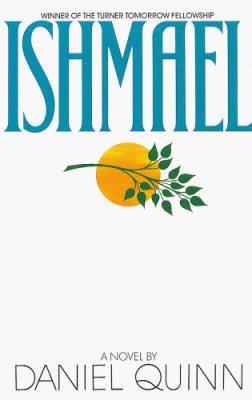
Another thing I did in sixth grade was read Ishmael. My brother was reading it for a class of his—social studies? World History? God knows, some hippie Canadian teacher assigned it to him. I always read my older brother's books and textbooks; I read one huge English Lit textbook of his from cover to cover, starting with Milton and ending with the play version of The Diary of Anne Frank. Reading “older kids' books” always felt tremendously exciting to me. I would always sneak into his room when he wasn't there and read them while lying on my stomach on his bed, my chin hanging off the edge and the book on the floor (I still read like this sometimes, but it makes all the blood rush to my head).
I was definitely way too young for Ishmael at the time. I think the only part I really “got” was the part about the creation myth, in the first 40-50 pages. I thought that was really clever, when the jellyfish said, all proudly, “And then, there were jellyfish!” as its conclusion to its story about the creation of the universe. It was an eye-opening moment, to say the least. I'd definitely never really thought about the world like that before, that we had a specific way of narrating about our place in the world. Even during Humanities 110 class, years later, in between the slides of the Greeks and Romans projected at the front of the auditorium, I would still think every once in the while “and then there were jellyfish...”
So these were some of the things I thought about while re-reading Ishmael in the Estacion Palabra reading cultural center, while little kids shouted and whooped while making Halloween decorations in the children's sections. At some point a girl dressed up as a pirate walked up to me and offered me candy; I took a green lollipop which broke as I was trying to unwrap it (I ate it anyway). I rushed through the last 60 pages in fear that I wouldn't be able to finish it before it got dark; I wanted to walk home while there was still some light outside.
It was a good book, and I enjoyed reading it. Ishmael places an interesting emphasis on how the control and use of food supply is so important for defining culture and the formation civilization. It feels very much ahead of its time for a book written in 1992, especially Quinn's commentary about First World farmers fueling Third World population explosion. It's missing the specificity and urgency that Michael Pollan brought to the argument, but it's definitely there. It feels very relevant.
It's an interesting book to read at this point in my life, as well as in this point of history. I love reading the articles about food and good eating and urban farming and agriculture that seem to be consistently appearing on the NY Times and Salon and Slate and so on... When I walked into Powell's to buy The Wings of the Dove and The Brothers K and other huge books to lug along with me to Mexico, in the front displays there was book after book about permaculture and bike riding and green living and good eating. It made my heart feel really warm. It made me want to believe that our consciousness is changing, that a very definitive, clear shift is taking place... I don't want to think that it's just Portland, either (though Portland is definitely a place where a lot of good things happen!)
I also think it's interesting how Ishmael focuses so much on this idea that things can't continue on this path for much longer, or else we're pretty much doomed. Doomed in what sense? The apocalypse is pretty scary to think about (I can't watch zombie movies for exactly that reason) but I find it SO interesting that the more people I meet who are interested in things like gardening, permaculture, gathering culinary mushrooms and sustainable development also seem to be very much comfortable (not sure if that's the right word? Aware, maybe) with the idea of apocalypse. I could go on a rift about apocalypse that adapts themes from my postmodern fiction class, but I think I will leave it at that and take it up in another blog entry.
The last thing I want to say about reading Ishmael is how freaking interesting it was to me to read this book and be like yup, this is definitely how I feel; yup, this is definitely a conclusion that I've reached. Consuming the world as our prison industry that keeps us trapped: check. Man belongs to the world instead of the other way round: check. Human settlement isn't against the law, it's subject to the law: check, check. Teaching is enough, you can't begin anywhere unless you begin changing people's minds: triple check unto infinity. I would even go so far that you can't begin anywhere unless you begin changing your mind. Oh my God, how can I possibly go about helping others unless I know how to help myself?! I think more than anything, this is the biggest lesson that I have learned in the past three years. It sounds so basic and self-explanatory, right? And yet, it is really revolutionary, but once you begin practicing kindness to yourself, it proceeds to open the door to oh so many other things...
I also REALLY liked how Ishmael tried to be positive at the end, so that I wasn't left with this feeling of “Great, we've messed up this planet and now we're screwed, start building the bunker.” Instead he does a good job of trying to make us feel good. He mainly does this by saying that we need a new vision of ourselves that's more inspiring that being scolded about how we need to recycle more and pollute less. Somehow, it's more helpful to view all of this as necessary. This lesson can be personal: If we didn't go through all of this, then we wouldn't have learned. It's more helpful to think that humans needed to go through all this, to be “the first species to experience it without being the last,” as Quinn puts it, in order to KNOW how to do things DIFFERENTLY. So instead of beating ourselves up about the past and thinking we're screwed, instead we can LEARN from our EXPERIENCES. How's that for constructive thinking?!
What I like best about this mentality is how well it works in regards to viewing ourselves as individuals. We can view our flaws and mistakes as these terrible things: “God, I've messed this thing up, this one side of my personality is like this, so now I'm basically screwed!” But instead of this vision of ourselves, we can have a vision of seeing these flaws as necessary. If you didn't have these tendencies, then how would you learn? And you can always learn. Now is never a better time.
The one last thing I want to say is that I found it incredibly ironic how after reading this book I went home to my apartment ate some ramen, the only food available in my apartment. Definitely not part of the Slow Food movement. But I figure that you gotta accept the gifts that are available to you... There's a time and a place for certain things. For example, in Portland, I can learn about gardening and permaculture and botany from Corey, who has really been quite influential and formative in setting me down this path. Oh, to date a botanist...
 Urban gardening in Nuevo Laredo appears mostly in the form of papaya trees in people's front yards. Homegrown chiles are definitely the most popular.
Some songs about gardens:
Thursday, October 22, 2009
"The highway is alive tonight": Murakami and Steinbeck in Nuevo Laredo

This novel begins with such a normal scene: the narrator in the kitchen, boiling spaghetti and listening to an opera, “which has to be the perfect music for cooking pasta.”(5) There's absolutely no indication in the first 100+ pages that the story is going to end as weirdly as it does.
This was absolutely the most perfect book in the world for me to read at this particular point in my life. The friend who gave it to me told me he'd read it during a time in which his “flow was obstructed,” and I guess the same goes for me. There was just something so warm and reassuring about reading this book. I would be in the office or in the field all day in Nuevo Laredo, learning all these new concepts and absorbing all these incredibly draining, intense experiences, and yet, at the end of the day it would all be okay, because I knew I could come home to my little apartment, sit on my beat-up couch, eat my cornflakes and yogurt and read another 100 pages of Wind-Up Bird. It was like coming home to cuddle a stuffed animal, albeit one that talked a lot about the Japanese military efforts in Manchukuo.
I loved reading this book. *Loved* it. I wanted to hug it to the chest and clap my hands gleefully with happiness, like a happy seal. I love all the different Joycean techniques Murakami employs to tell his tale: computer chats, letters, newspapers, hallucinatory dream sequences. It feels important that the story begins with a very straightforward, realistic narrative that is almost boring in its simplicity: a man begins searching for his wife's missing cat. In the last couple of chapters, you're no longer sure if what's going on is happenning in this world, a parallel universe, inside somebody's head, or inside several people's heads (that's about as spoiler free as I can be). Also, as a history geek, I loved reading the parts about the Japanese army in Mongolia or the Japanese occupation of Manchuria and the prison camps in Siberia. There's so many parts of the world and of history that I have yet to learn about...
My absolutely favorite thing in the world about Murakami is all his descriptions of what the characters eat. A ham, tomato and cheese sandwich. Stir fried green peppers. Coffee, constantly. These little details sounds so simple, and yet they add so much to the story: it grounds it in something that's so real and very much every day. The literary cliche gods help me, but I have to call it Kafkaesque: we believe all the crazy things that happen later, because everything that happens early on is so credible, to the point of being monotonous almost. It really is clever technique.
This is a very postmodern novel in the sense that it deals a lot with the question of the self. As in, do we actually have one? Can you ever actually “know” yourself, let alone another person? More than anything else, I think this is the central question of the novel. It reminded me a lot of Tori Amos' concept album, American Doll Posse, in which she assumes the persona of five different female archetypes, each representing a different side to the female personality. This idea of having several different selves, as opposed to one that is already neatly, conveniently formed, is a theme I believe I've already brought up in this blog. I really like the idea of having this “wise self” inside of me, this very pure, intuitive wisdom that I can turn to, time and time again, in order to reassure myself and calm myself down, make myself feel like everything is going to be all right. What about all my other selves? Is complete integration an illusion? Is being mildly fragmented the best that any of us can ever hope for? The question feels even more relevant if you consider victims of trauma like war (as in Wind-Up Bird) or rape (as in American Doll Posse). Trauma can shatter you, splinter you apart. How do you go about rebuilding yourself, making yourself whole again?

This idea of rebuilding and coming together appears in a very different form of John Steinbeck's The Grapes of Wrath, the other book I looked forward to coming home and reading these past few weeks. Steinbeck is about as straightforward as narrative realism gets, not much I can call postmodern here (though please feel free to correct me!). I liked how this book made me want to listen to Bruce Springsteen (which makes sense, since Bruce Springsteen has obviously read Steinbeck. I was surprised by how easily you could update The Grapes of Wrath to a 21st-century tale of immigration to the U.S., if you just substituted the Joads for a Mexican family, changed Okies to mojados, throw in a scene of crossing the Rio Grande.
Oh, it just makes me sad, it makes me angry, it makes me want to—I don't know, I was going to write “run into the street, burn something, write to a Congressman,” but to be completely honest, what it makes me want to do is read more. I want to read more about the history of labor movements in the early 20th century, I want to read more about the development of 21st-century immigration policy, I want to read more about socialism. I want to sit up late reading drinking my carrot juice, underlining passages in pencil and maybe even scrawling a note to myself in the side margins (yes, I am thus revealing myself to be a book vandal!). I want to read and think and write my thoughts down and them talk about them, late into the night with other people. And then I want them to give me more books to read and tell me, “I think that you would like these ones.” More than anything else it makes me feel hopeful and happy to think that there are other people like this in the world, other people who can relate to the feeling of your heart beating as you hand a book over to another person, the words in your throat bursting with eagerness as you say “oh! This one—you really need to read this one!” What would the world be like, after all, without all these people who want to read great books and think silly thoughts about them and then go out and do completely random-seeming things like intern for a microfinance institution in a border city?

Nobody's fooling nobody about where it goes.
Monday, October 12, 2009
Gabo in Nuevo Laredo

Even though this is my third week of living in Nuevo Laredo, I feel like the main thing I want to talk about is all the food I've been eating because that's one of the things I find most exciting about being in Mexico. Like yesterday I went to this giant market with my co-workers and their kids that everyone calls las pulgas (the fleas). There's a saying that "para calidad, hay que ir a liverpulgas" because apparently there's a trendy department store in either Mexico or Texas that's called Liverpool... hence the ironic play on words "liverpulgas." For lunch we had a big steaming bowl of menudo, or soup made of lining from a cow's stomach. I'm not going to lie to you... it was hard to finish. I poured on the little green chilis and onions and cilantro like nobody's business. But yeah, I'm proud to say that unlike the tripe tacos (I could only eat one, and it made me horribly ill), I ate the whole bowl of menudo. Go me. And then we walked for what seriously felt like 2 kilometers through the stalls. I ended up only buying one shirt even though I seriously need more, I'm sure all my co-workers have noticed by now that I wear the same rotating set of six shirts every week.
The main thing I wanted to write about here, though, isn't so much the food or what it's like to live in Nuevo Laredo or what I'm doing here (you can read all that on the Kiva Fellows blog). What I wanted to say here was that yesterday I found a plaza right near my apartment that not only looks like a good place to go running, but more importantly, there is a LIBRARY right near by! Well, I guess it's not really a library, because you're not allowed to check books out, it's a "center to promote reading." But they have shelves and shelves of books of photography and novels in Spanish and English. I spent an hour reading "Richard the III," struggling to understand how everyone was related but loving the hell out of it. I only left because the place closed.
The coolest thing is that it's named after none other than Gabriel Garcia Marquez, autor nacional de la tierra de mi alma. Yes, apparently he donated serious monies to build the place and came to the inauguration naming ceremony and everything. Apparently (according to the informative plaques inside the building) Gabo has a special affection for Nuevo Laredo because it was the first part of Mexico that he passed through.


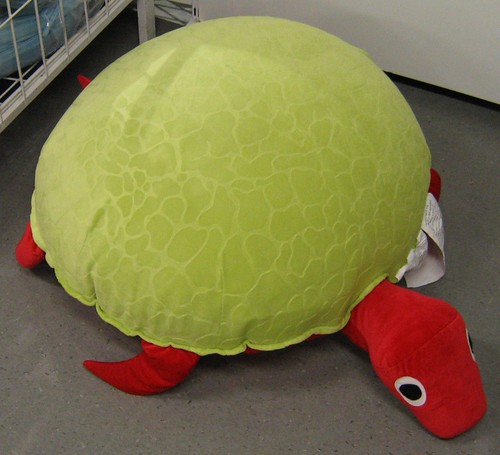
The reading center built right by the railway track, which is where he took the train with his family. It's an awesome, well-lit space with a snazzy little cafe. And a children's center that is filled with the EXACT SAME inflatable green turtles from IKEA that I wrestled mightily to blow up for the Boys & Girls Club! A strangely small, surreal world indeed. I wish I'd taken a picture for proof.
 Garcia Marquez's books translated into different languages such as Estonian, Czech and Danish.
  Reading = Growing
  Lovely old copies of Don Quixote behind a glass case.
Oh, it just all brought tears to my eyes, the sight of books lined up on shelf after shelf. It just seemed like such a tranquil, lovely scene of beauty in the middle of a city that gets such a bad rep from everyone. It's discovering places like this that makes me so glad and grateful to have the opportunity to travel to cities that are brusquely dismissed as "not worth it" or "unsightly and dirty" in guidebooks. Lago Agrio and Coca in Ecuador. Tijuana and Nuevo Laredo in Mexico. Cali in Colombia isn't exactly spoken of as a haven of beauty either. But I love these cities! It's what I'm used to, what I grew up with. Cracked sidewalks covered in grass. Dogs with the dirtiest, most disgusting eye sockets you can imagine, all runny with pus and so gross it just makes you want to vomit. Street food. Sugary drinkable yogurt. Men hissing ooh beautiful white girl wherever I go (okay, this I can live without).
I think something a lot of people get out of traveling is the feeling that they're suddenly experiencing what it's like to see themselves through someone else's eyes. When I moved to Portland I experienced the opposite effect; it was like suddenly and magically becoming invisible. Suddenly, I could blend in, I wasn't the white girl with the hair that always inevitably stood out in the crowd anymore as an obvious foreigner. In Portland I can lie and say that I've grown up in Oregon my entire life and that I'd learned Spanish in high school and no one would ever be the wiser. How weird, right?. How funny that when I travel to Spanish-speaking countries I get the feeling like I'm coming home, that I'm returning to a comforting site of familiarity, that "standing out" as the obvious clueless foreigner is the state I'm more used to.


Some cartoon drawings hanging on the walls of the reading center.
Saturday, September 19, 2009
"poor" people
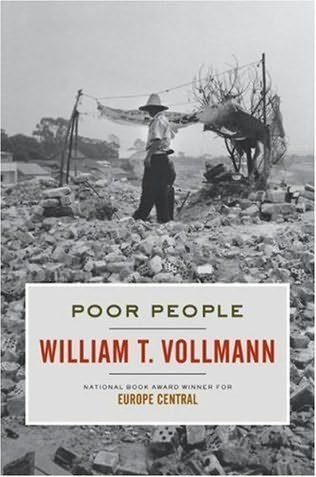
Poor People is not a pleasant read. Indeed, it is a very difficult and challenging read, and I don't doubt that its author intended it that way. There is nothing I can say in critique (or in praise) of this book that hasn't already been said by writers more articulate and with more experience and clout than me. For me, it's enough to read the title and listen to myself as I say it aloud and hear everything implicit and subtly lurking behind that phrase: “poor people. Poor, poor people. Poor! People!” In those words I hear pity, fear and inevitable relief, that the speaker by default cannot be considered as one of the “poor,” since she/he can speak of them as something seperate and apart, something radically other and different from themselves. Disconnected. If you can view others as poor and thus by default radically separate from yourself, are you automatically saying that you by definition must be considered rich?
I read this book in between all the microfinance-related reading I've been doing over the past two weeks or so in preparation for my rapidly impending internship with Kiva (I'm getting on a bus to head to San Francisco for training tomorrow). I've read some pretty interesting stuff (especially the discussions about the commercialization of microfinance and the tension in MF about being focused on economic development or the marketplace, poverty vs. profit). Depressingly enough, I don't think microfinance would offer much in the way of a solution to the “poor people” profiled in this book. To be given a loan to start a business or purchase supplies or improve your house, it's already implied that you have already have started with something, as opposed to absolutely nothing. The people in these book really have nothing: they're the the sickly old beggar women, the smelly drunk and indigent, the crippled, the beggars in subway stations holding out palms or rattling plastic cups full of coins, the refugees, the fevered mothers holding their babies and staring down at the ground before them. God, this book is depressing.
I did not particularly enjoy reading this book, which makes it hard for me to recommend it to people. I first stumbled upon it several years ago, in my stacks-shelving job at the college library. I flipped through the black and white portraits at the end and was intrigued by the number of photos that were of people from Colombia, and it's never really left my mind since. The images of beggar women in burqas in Afghanistan during Taliban rule are definitely remain the most affecting (Vollmann's discussion of poverty-as-invisibility ties in nicely to these images). The strongest bits of this book involve Vollmann-as-reporter, during which he simply profiles the folks he's interviewing. I liked the portrayal of the Russian family in which the husband was too sick from Chernobyl to work, and his foray into an off-limits oil refinery in Kazakhstan has the elements of a really angry documentary. He veers away from this simple reporting in the middle part of the book, instead going off on long tangents from his personal list of what defines poverty, such as “accident prone-ness” and “unwantedness.”
At one point in one of my flights and bus rides (it's hard to keep track of them lately!), I started doodling in my journal a list of WHY SHOULD WE FIGHT AGAINST POVERTY? The main reasons I came up with weren't so much academic as they were from my emotional gut. reason #1: Empathy: we're all born in this crazy ass world without really asking for it, and being that we're all in this sick mess together, we might as well help each other out... be a giver rather than a taker. Reason #2: Karma (in its most simplified definition): by helping others, you're helping yourself, and more importantly you're putting out a little positive energy out there into the black toilet hole of a universe for future use. Not exactly award-winning reasons, but for what it's worth that's what I succeeded in skimming off the top of my curdled-by-Greyhound brain.
I'm sure I'll have a lot more interesting things to say about poverty after I start Kiva internship, which I plan to blog about in more detail than I have so far in this space. In the meantime, one thing that really stood out for me in the wiki biography of Vollmann's life is how he dropped out of a Comparative Literature program at Berkeley “after one year with the intention of engaging life instead of just studying.” What an interesting phrase, “engaging life.” How does one go about doing that, pray? Is life something you just walk around and eventually find if you keep your mind open enough, or do you have to adopt a more proactive, aggressively-seeking approach?
For me at least, life as I've engaged it in the past week has been pretty pleasant, visiting my various girlfriends in Los Angeles and staying with my grandma in San Luis Obispo county. This evening my grandma and I looked at old photographs and I learned about Cosmo and Al, the guys my grandma “went with” before she met my grandfather. Poor Cosmo (a Navy fellow) was rejected on the account of insulting my great-grandfather's lawn, and Al (whom she “went with” for three years—long-term relationship, grandma!) went so far as to get her a ring, a fur coat and some kind of fancy box thing, all of which she rejected because “I didn't have feelings for him that way.” Poor Al.
(You can check out the non-profit(s) I'll be interning for until Christmas here and here.)
Monday, September 7, 2009
Attempts on Her Life: Truth and Self in "Portrait of a Lady"
Well obviously the apartment would be beautifully furnished. Obviously it would have high ceilings and tall windows and date in all probability from the end of the nineteenth century when the rise in speculative building coincided with the aspirations of the liberal bourgeoisie to create monumental architectural schemes such as I'm thinking particularly now I'm thinking of the Viennese Ringstrasse which made such an impression on the young Adolf Hitler as he stood one morning before the Opera.--from Martin Crimp's Complete Plays: Volume 2, page 209-212, “Attempts on her Life.”
--Or one of the great Parisian boulevards.
--Or one of the great, exactly, Parisian boulevards.
I read this play while staying in my friend's apartment in a suburb in Paris. The other book I was reading at the time was Henry James' The Portrait of a Lady, another attempt of sorts on a lady's life. It felt highly appropriate to be reading Henry James during a two-week poor man's jaunt through England and Paris. The boulevards were definitely good representations of "the aspirations of the liberal bourgeoisie to create monumental architectural schemes;" "total Illuminati," Corey mused while contemplating them. They made me think of imperial imagery and the cult of the Roman Emperor, like we learned in my freshman year humanities class, in which dead emperors were made into gods and his cult was spread through coinage, architecture and fashion. There seems to be a lot of dangerous implications when you try to definine something absolutely.
This is the first Henry James novel I've ever read, other than his short stories in college and The Turn of the Screw in high school for AP English. I read David Lodge's novel Author, Author, an Amadeus-like story of James' failure at the theatre and his friendship with an author who was super famous at the time, but whom nobody remembers now (have *you* read George du Maurier?). His books always lined my mom's bookshelves at home, nestled in between Dickens and Vanity Fair. "Henry James is so subtle," my mom once told me (I don't know in what context, maybe we'd just finished watching Wings of the Dove or something). "You'll read a whole page, and then look up, and be like, I know that something really, really important just took place... butwhat?" That's as good of a summary of Henry James' style as I've ever heard. I mean, it says a lot that the key scene in this novel consists of Isabel sitting motionless in a chair (how did they turn this into a movie, again?).
Despite this initial fear that this novel was going to leave me feeling like I was an absolute idiot, in the end I was surprised at how much I enjoyed reading this novel. Maybe my brain has just gotten really big over the past year (ha, ha, ha!) but I honestly didn't find it that hard (I can haas literary smarts?). I definitely didn't have the same reaction as my housemate, who read the first page of Wings of the Dove and threw it across the room shouting "WHAT THE BLEEP?!" (Oh, biology majors.) I got really into the characters in Portrait of a Lady; I finished each chapter with a feeling of eager anticipation, like I was waiting for the next episode of a TV series. I would update the ever indifferent Corey on their conversations and decisions: "Oh oh, it looks like Isabel is going to accept Gilbert Osmond's marriage proposal. It's all downhill from here." "Henrietta the journalist really represents modern America! While Caspar Goodwood is a total embodiment of penetrative capitalism!"
This was an interesting book to read while traveling as a tourist. Isabel wanders through London, Paris, Rome, Florence, Venice, looking at old ruins and art, attempting to "collect" experiences like those little barbed seeds that cling to your clothes when you pass through a tall field. (Collecting is a big motif in this novel; much is made of Gilbert Osmond's art collection and his desire to keep Isabel and his daughter shut up in his nasty claustrophobic old house like expensive portraits.) There's a lot of annoying stupid rich Americans and Brits in this novel, traveling for no point or purpose, living off their inheiritances. Isabel is smart enough to see through the emptiness, commenting with typical astuteness that "doing all the vain things one likes is often very tiresome." (309) Why yes Isabel, it is very tiresome indeeed! She goes on to ponder:
The desire for unlimited expansion had been succeeded in her soul by the sense that life was vacant without some private duty that might gather one's energies to a point. She had told Ralph she had 'seen life' in a year or two and that she was already tired, not of the act of living, but that of observing. What had become of all her ardours, her aspirations, her theories, her high estimate of her independence and her incipient conviction that she should never marry?This is my favorite quality of Isabel's: her introspection, her ability to ask those kinds of questions. When asked by the odious Madame Merle to define her idea of success, Isabel's response is "to see some dream of one's youth come true." (206) I like how Isabel philosophizes and reflects on her actions, and I'm sure it's this quality of hers that has captivated readers and literary critics for over a hundred years now.
Another thing I want to mention is the exchange Isabel has with Madame Merle in one particular section, as it sets up two different concepts of the ever popular topic in modernism, the Question of the Self. As Madame Merle puts it:
"When you've lived as long as I you'll see that every human being has his shell and that you must take the shell into account. By the shell I mean the whole envelope of circumstances. There's no such thing as an isolated man or woman; we're all each of us made up of some cluster of appurtenances. What shall we call our 'self'? Were does it begin? where does it end? It overflows into everything that belongs to us--and then it flows back again... One's self--for other people--is one's expression of one's self; and one's house, one's furniture, one's garment, the books one reads, the company one keeps--these things are all expressive." (207)In contrast, Isabel replies, "I don't know whether I succeed in expressing myself, but I know that nothing else expresses me." (208) And thus we have two opposite viewpoints of how the self is constructed that are set up very intriguingly. A footnote from this page helpfully quotes a passage from Henry James' brother William, the famous psychologist, who writes that "properly speaking, a man has as many social selves as there are individuals who recognize him." Whoa! How do you express yourself truely, if there are so many "selfs" for you to express? Are you doomed to forever be divided into American Doll Possee fragments, or will you ever add up to a complete and wholly integrated person? And, more intriguingly, what does this imply about the problem of understanding--not just understanding yourself or other people, but understanding and interpreting ART (which can be understood as the expression of a self). AAAAAAAAAA! Now do you see why this novel isn't the typical Victorian-Realist marriage plot?!
Because this novel is so INTENSELY focused on the thoughts and meditations of the main female character (The Portrait of a Lady is an extremely appropriate title), I think the whole novel can be understood as an attempt to deal with the problem of the self: how to form it, understand it, and then communicate that self effectively with others. There's a lot of discussion about the importance of experience in this book, and I think that relates back to this idea of how do you go about constituting the self, which I see as Isabel's main struggle throughout the book. I remember reading in Derrida's The Truth of Painting, way back in junior the year, something about how the frame of a painting doesn't just close off the artwork, but also opens it up, because we're forced to view the artowrk in whatever context in which it's been presented, which in turn prevents our understanding of the artwork from ever being complete. I don't know if I'm remembering this correctly, but the basic gist is that the supposedly firm lines that "close" a portrait are ultimately misleading. This is what makes Gilbert Osmond such a creepazoid, he tries to define and trap Isabel in this aesthetic wifey little role (it goes deeper than that--doesn't it always in Henry James?--but again, that's the gist of it).
The last thing I want to touch base on is how Henry James is definitely not the author you'd read if you wanted to get an idea of how most people (that is, the working class as opposed to the rich and upper middle) were living--the coal miners, the tramps, the dishwashers, George Orwell's peeps, basically. Henry James' characters are such spoiled brats--I mean, these people really don't do anything. They just travel around Europe, looking at old ruins and collect art, in an attempt to--what? Better themselves? Improve their souls? One of the commendable aspects of Portrait of a Lady is that there are characters like Isabel and her dying cousin Ralph who actually ask themselves the essential question of what is the freaking point.
But typing up this blog entry has been a bit of a surreal experience, because I'm also simultaneously Skype chatting with someone from the microfinance office where I'll be interning this fall (yay multitasking!), in an attempt to sort out my living situation there (it looks like I'll be staying with the family of someone who works in the office, which is super bien). In the Egyptian section of the British Museum, there was this little information card talking about the lives of the farmers and workers who worked on the land and were sometimes employed on state construction projects (if my computer wasn't retarded, I'd upload the photo). To quote from the plaque: "They were not wealthy enough to be buried in decorated tombs. They were illiterate, and so their names and experiences are almost entirely lost, as in many societies. The study of human remains in poor cementeries is the only way of learning of the short lives of most ancient Egyptians."
It's weird to me, reading these Victorian novels of marriage and intrigue and travel through Europe, and think about all the short, illiterate lives that are being ignored, that have been lost to time. I think it's incredibly stupid and ignorant to criticize books for what they're not about, and that's definitely not what I'm doing. I just wanted to comment that it was just an interesting experience, to wander through these boulevards in Paris built by kings and dictators, to go home to my friend's apartment and read about characters doing the same thing, and now, I'm trying to sort out an internship where I'll be working with people whose lives definitely do not revolve around questions like "should I go to the British Museum today or the National Gallery?", or, "how is an art work simultaneously 'closed' by the artist for a deliberate aesthetic effect, yet opened up to interpretation by the audience?", or, "when we say we 'like' a painting, or a book, what does that mean? Does it mean that there was a certain 'truth' shining through the painting or the words on the page that somehow got through to us? And if so, how? How do you reveal the truth of a work of art, if the artwork itself is concerned with showing how it is difficult and even dangerous to try to limit things to a single mesage or meaning?" And so on and so forth. Yeah.
To close, here is another portrait of a lady, from the website I'll soon be working for.
 Are you looking at her? Or is she looking at you?
Sunday, September 6, 2009
life, London, this moment in June

I just got back last Wednesday from a two week trip to England and Paris to visit friends and family. While walking through the streets of London, through Trafalgar Sqaure and down Tottenham Court Road (how grandiose and epic and historical those names sound!), I loved reciting fragments from Mrs. Dalloway to myself, muttering these precious sounding phrases under my breath: what she loved, life, London, this moment in June. What a lark! What a plunge! Feeling as she did, that something awful was about to happen. For Heaven only knows why one loves it so. (3-4) I felt secretive and powerful, walking around and muttering these phrases absentmindedly to myself, as though I was one of those ancient pagan female magicians mentioned in the footnotes of Jonathan Strange and Mr. Norrell, casting a spell of protection, or maybe just chanting a mantra.
She always had the feeling that it was very, very dangerous to live even one day. (8)
This is such a beautifully written book that no matter how many times I reread it, it never fails to shock me that Virginia Woolf killed herself. This is the number one book that I think of when I think of joyful writing, of writing that hums and writhes and wriggles in ecstasy from sheer joy and lust for life. It seems so puzzling that someone who could have written this also simultaneously decided that life, this life, was not worth living.
This book reminds me of something Tori Amos said about her most recent album: she said that she wanted it to be like a snapshot of time of what it was like to be a woman in this day and age. In Amos' case, she's chronicling the economic recession; in Woolf's case, her focus is on Victorian society of post World War I. I'll never really "know" what it was like to be a woman in that time and age (let's stay away from the giant can of metaphysical worms). But Mrs. Dalloway is as engaging of a snapshot of a very specific historical period as they come. There's tons of stuff to unpack here about post World War I society trauma and repression--you can easily make a parallel to the Iraq War, too (that's another thing about this book that really got me: how easily you can apply it to life today, how contemporary it feels). "It was over; thank Heaven--over," (5) Mrs. Dalloway thinks of the War, but of course it's not (it never is), not for anybody.
No character better embodies the sense of the war not being over than the interestingly named Septimus Smith (his name is reminiscent of numbers, which feels important in a novel where the passage of time, the constant ebb and flow of "the hour, irrevocable" (117) and the ringing of the clocks is constantly emphasized). Septimus seems to suffer from such an excess of feeling that at times it sounds like an extremely bad acid trip: leaves were alive; trees were alive. And the leaves being connected by millions of fibres with his own body; ... the spaces between them were as significant as the sounds. This problem of "over-feeling" seems to emerge as a reaction to his initial condition following the death of his friend Evans in the war, in which he "could not feel." And then, with such hyper awareness and overdose of sensory input, it's little wonder that Septimus found it difficult to get through the day.
Septimus' plight made me think of Aldous Huxley's The Doors of Perception,: "If the doors of perception were cleansed every thing would appear to man as it is, infinite." That seems to be Septimus' problem; the infinity and deeper meaning of everything appears as too glaringly apparent to him, to the point where he can't condense his experiences or make any sense of them anymore and they just become overwhelming. Upon viewing a motor car that contains someone in the Royal Family (perhaps the Queen? It's never made clear), for Septimus it appears to him as "this gradual drawing together of everything to one centre before his eyes, as if some horror had almost come to the surface and was about to burst into flames, terrified him. The world wavered and quivered and threatened to burst into flames. It is I who am blocking the way, he thought." (15) He almost sees the centre, but not quite. At the moment when Septimus throws himself off the balcony, he cries out "I'll give it to you!" (149) Is he referring to this ungraspable center, always out of his reach?
In the end, death seems to be the only way of bringing it all together, as Peter Walsh muses while the ambulance carrying Septimus' dead body whirs by: "a moment in which things came together; this ambulance; and life and death." (152) Mrs. Dalloway discovers this for herself as well, upon hearing of Septimus' death of her party: "Death was defiance. Death was an attempt to communicate; people feeling the impossibility of reaching the centre which, mystically, evaded them; closeness drew apart; rapture faded, one was alone. There was an embrace in death." (184) In the end, Mrs. Dalloway "felt glad that he had done it; thrown it away... He made her feel the beauty, made her feel the fun."(186) With this sentence, I feel like Woolf herself is saying that she's glad that it is Smith who is doomed, the artist, madman and poet, as opposed to Mrs. Dalloway, the socialite everywoman, the woman of the earth. In Mrs. Dalloway, death emerges as a moment with a potential for understanding and knowledge, however brief. As Muriel Spark wrote, "Remember you must die," and as Ali Smith writes (in her Mrs. Dalloway rewrite of sorts Hotel World, a highly recommended book), "Remember you must live, remember you most leave, remainder you mist leaf."
This is a good book to read every other year or so, especially around the time when you grow a year older. (I just celebrated my birthday a few days ago.) There's a lot of juicy "what-have-you-done-with-your-life? times-a-passin'!" passages. "How remorseless life is! A little job at Court!" (74) Remorseless indeed. It's scary, overcoming so-called banality. I think that's Woolf's main point by making the titular character someone who could easily be mistaken for someone shallow and lacking depth: a housewife who likes to give parties, "the perfect hostess," who at the same time is capable of these most incredibly poetic reveries:
"a grown woman coming to her parents who stood by the lake, holding her life in her arms which, as she neared them, grew large and larger in her arms, until it became a whole life, a complete life, which she put down by them and said, 'This is what I have made of it! This!' And what had she made of it? What, indeed?" (43)What, indeed. How do you define what makes a meaningful or non-banal life? To whose judgement do you need to subject it to? How do you know that you're making the right decisions, that you're taking your life in the direction it needs to go in?
Then (she had felt it only this monring) there was the terror; the overwhelming incapacity, one's parents giving it into one's hands, this life, to be lived to the end, to be walked with serenely; there was in the depths of her heart an awful fear. (185)
I dunno. It may sound cliched and silly, but lately I'm really digging the mindset that it is REALLY not about the destination at all, it's gotta be about the path. It sounds so mundane and banal when you put it like that. What I mean is that we really don't get anywhere. We're just on the road. You can get some things, some goals, some destinations you'd like to arrive at in your life--but you will never get it all. There is no idealized plateau where everything is suddenly going to click into place for you, click, and all of a sudden everything makes sense and you wake up every morning feeling content and fufilled and satisfied and you never have to worry about feeling otherwise. I mean, c'mon--that is NEVER going to happen (as this excellent clip discusses). That is as utopian of a vision of humanity as you're going to get.
But I like what Richard Dalloway thinks about his days as an idealistic youth:
"He had been a Socialist, in some sense a failure--true. Still, the future of civlisation lies, he thought, in the hands of young men like that; of young men such as he was, thirty years ago; with their love of abstract principals; getting books sent out to them all the way from London to a peak in the Himalayas; reading science; reading philosophy. The future lies in the hands of young men like that, he thought." (50)I couldn't agree with him more.
Still, the sun was hot. Still, one got over things. Still, life had a way of adding day to day. (64)
During this particular reread, another theme that stood out for me was the idea of simultaneous connection and isolation between people. I especially like the part where Richard Dalloway visualizes his connection to his wife as a "spider's thread of attachment." (115) It feels important when Richard buys Clarissa flowers instead of jewelry for a present and embarks on a grandiose mission, "walking across London to say to Clarissa in so many words that he loved her." (115) Richard confronts the problem of how difficult it is to say exactly what you mean: "The time comes when it can't be said; one's too sigh to say it." He thus comes to embody a very modern problem concerning language, that "it is a thousand pities never to say what one feels." (116) Or more specifically, to be unable as weel ignorant as to how to say what you feel. How do you give words to a feeling like "I love you" in face of a dilemma such as Richard's: "thousands of poor chaps, with all their lives before them, shovelled together, already half forgotten; it was a miracle. Here he walking across London to say to Clarissa in so many words that he loved her." Needless to say, when the moment comes, he fails at his mission. But it feels somewhat redemptive that on the last page, Richard becomes capable of telling his daughter that he is proud of her: "He had not meant to tell her, but he could not help telling her." (194) So there's some hope there, at the end, of being capable of speaking, of putting feelings into words.
Subscribe to:
Posts (Atom)